
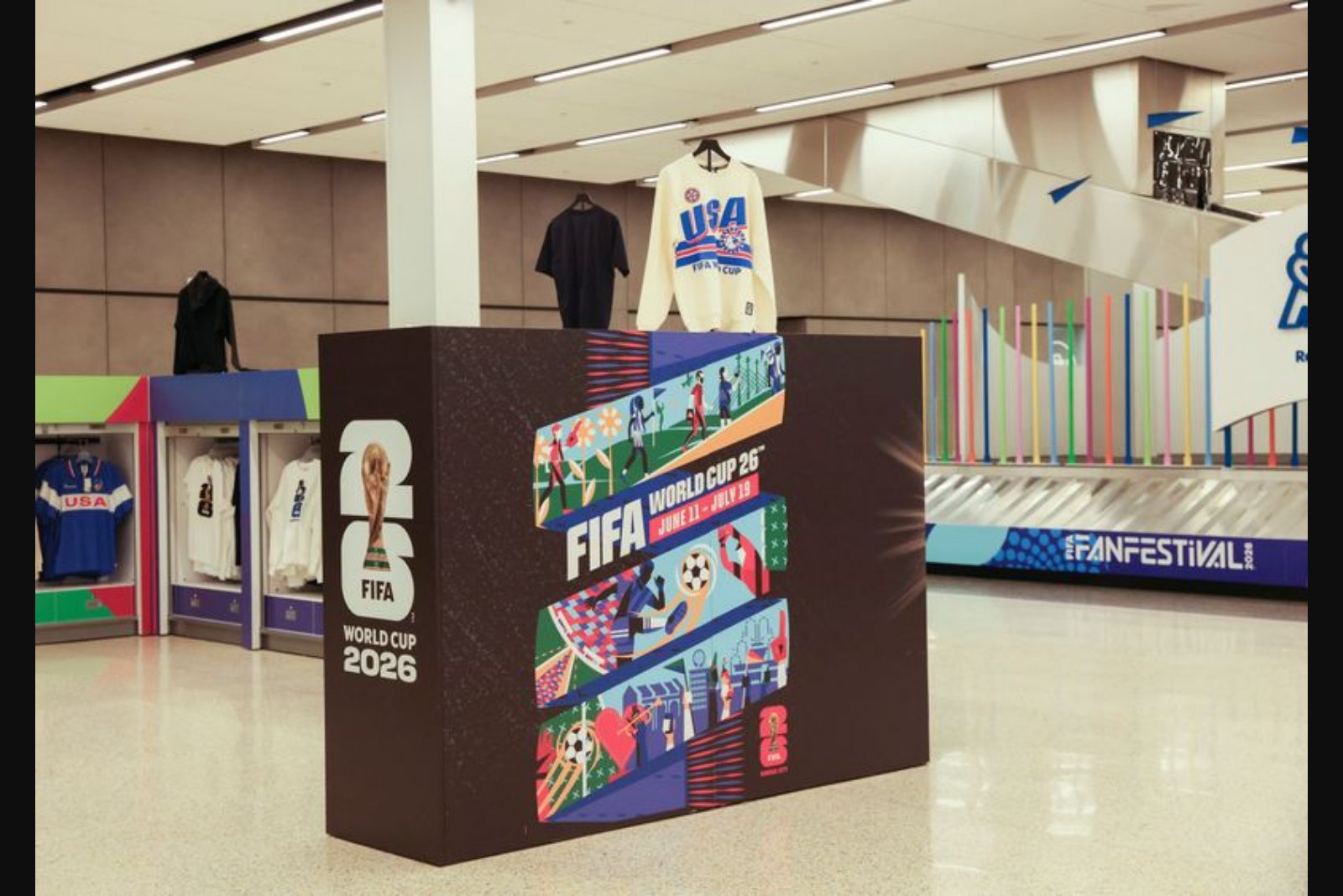
Kansas City, Missouri, is preparing for an extraordinary transformation as the global soccer tournament approaches. Although it is the smallest of the 11 U.S. host cities for the World Cup scheduled for June 11 to July 19, KC will be the temporary home for three of the tournament’s top-seeded teams - Argentina, England and the Netherlands - and their traveling supporters.
The city’s Missouri side, the more populous and better-known of the twin-state metropolis that straddles the Missouri and Kansas rivers, will stage six World Cup matches, including a quarter-final, at Arrowhead Stadium, headquarters of the NFL’s Kansas City Chiefs. Argentina, the reigning champions, will base their training on the Kansas side; England will set up nearby at a hotel. The presence of such high-profile teams is set to concentrate attention, visitors and spending in a city more often associated with jazz, barbecue and professional football.
KC’s selection as a base camp for multiple elite teams reflects both practical considerations and infrastructure investments. Teams have prioritized minimizing travel time between cities during the tournament, and Kansas City’s central location suits that requirement. Over the past 15 years the metropolitan area has channeled hundreds of millions of dollars into modern training complexes and stadiums, creating facilities that teams and coaches now consider world-class.
In February Argentina became the first national squad to confirm Kansas City as its base camp, pointing to distances between host cities and available amenities as deciding factors. Lionel Messi, who may be competing in his last World Cup, will lead Argentina as they begin title defense with a June 16 match against Algeria at Arrowhead Stadium. England will use Swope Soccer Village - a former training ground for Sporting Kansas City - and will travel to Dallas, New York and Boston for their three group-stage fixtures. The Netherlands will train at the KC Current’s facility; coach Ronald Koeman has described that site as the "best option" for his team after an April visit.
Local officials and soccer insiders say the city’s sports culture and recent investments have made it a credible and attractive choice for top teams. Jake Reid, vice president of the Kansas City host committee, encapsulated the city’s contrast between expectation and reality: "I think you come in and you expect Midwest cows walking down the street," he said, "But it’s got such a great arts and culture scene," and the people "just make you feel welcome."
Local flavor and visitor expectations
Kansas City lacks the nightlife of New York, the varied restaurant scene of Los Angeles and the beaches of Miami, yet residents and local business leaders expect visitors will be pleasantly surprised by what the city offers. Barbecue remains a central draw: visitors are likely to queue for brisket burnt ends or smoked pork at institutions such as Arthur Bryant’s and Joe’s Kansas City Bar-B-Que, the latter notable for operating out of a gas-station storefront that earned recognition from the late celebrity chef Anthony Bourdain.
Music and culture will also be on offer. Fans can find jazz sessions at The Blue Room in the historic 18th & Vine District. Movie fans willing to travel outside the metropolitan area can visit the Oz Museum in Wamego, Kansas. Those attractions form part of the broader hospitality and entertainment package that hosts hope will satisfy international visitors whose expectations may be rooted in larger coastal cities.
Celebrity, sports crossovers and the "Swift effect"
Kansas City’s national profile has been elevated in recent years by its NFL success and celebrity connections. The Chiefs have won three recent Super Bowls and their star tight end, Travis Kelce, is engaged to pop superstar Taylor Swift. Local soccer executives say that Swift’s presence in the area has helped raise the spotlight on the city’s sports scene. Dani Welniak, vice president of communications for the KC Current, said: "We’re so excited that she’s a part of the Kansas City sports scene now, and I really hope and believe that she will show up for some of these World Cup matches because it is going to be a spectacle."
Players and club staff have noted how visible sports culture is around the city. KC Current forward Kyra Carusa described the environment succinctly: "Sports culture in Kansas City is contagious," she said. "It’s exciting. It’s everywhere." The Netherlands, often described as a leading team that has not secured a World Cup title, will practice at the KC Current’s training facility ahead of their matches.
Logistics, crowds and commercial impact
Visit KC, the city’s official nonprofit promoter, projects that some 650,000 people will descend on Kansas City during the World Cup. The expected influx creates opportunities across hospitality, retail and food and beverage sectors. Yet there are questions about how that expectation will match reality; an early May report by the American Hotel and Lodging Association found that hotel bookings were lagging behind expectations.
City officials and business owners are preparing for a surge in demand for services ranging from hotel rooms to restaurants and local attractions. Reid suggested that teams based in larger media markets could face heavier public attention and more intrusive fan activity, saying that for teams used to New York or Los Angeles "it’s going to be a little bit crazier, there’s probably a little bit more people hounding you." Kansas City, he added, "feels like home."
At Joe’s Kansas City Bar-B-Que regulars and staff are already bracing for visitors. A server called for a customer to pick up an order of pork spare ribs that fully covered the plate as regular Camilla Thomas, 29, warned visitors to "come prepared." She added: "It’s going to be much bigger portions than anyone in Europe is going to be used to."
What remains uncertain
Despite the investments and the presence of elite teams, some uncertainties remain. The degree to which anticipated crowds will translate into hotel occupancy and consumer spending is so far unclear, given the reported lag in bookings. How smoothly the city’s services absorb an influx projected at 650,000 visitors will be a critical variable for local businesses and municipal planners.
Nonetheless, Kansas City’s accumulation of modern soccer facilities, central geography and an ingrained sports culture have combined to make it a preferred choice for several top teams. As the World Cup approaches, the city is preparing to showcase both its athletic infrastructure and its distinctive local culture to a global audience.