
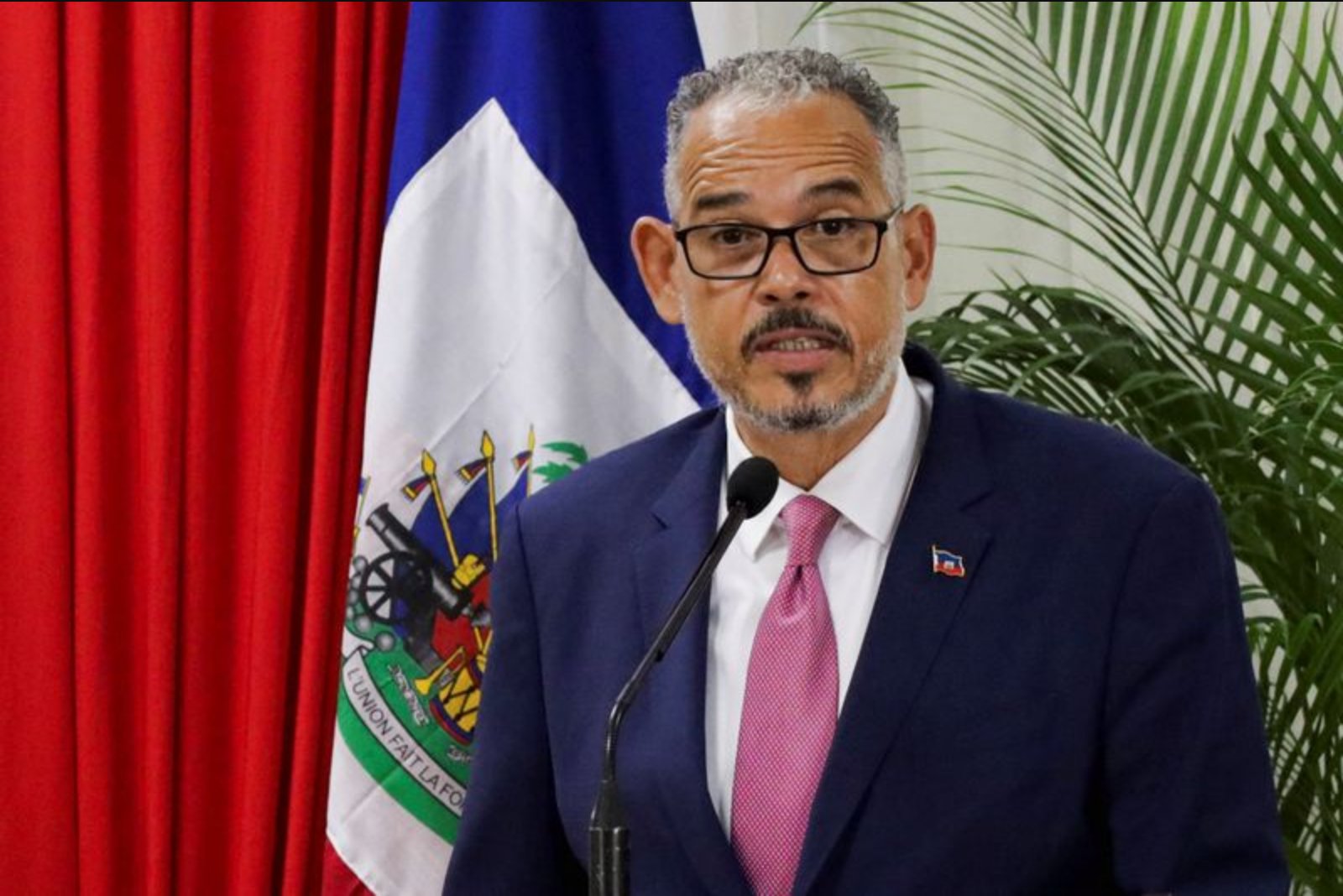
Haiti’s current security conditions fall short of what is required to stage presidential elections in August, Prime Minister Alix Didier Fils-Aime said in an interview broadcast on Monday, raising fresh doubts about the long-awaited vote that would be the country’s first presidential ballot in a decade.
Fils-Aime made his assessment during a radio interview with the editor-in-chief of Le Nouvelliste on Magik9, saying the nation cannot meet the security threshold needed for an August contest and that he would prefer elections by the end of the year. He also said, "On February 7, we would have an elected president." He took office from a transitional presidential council on February 7 of this year.
Armed groups have tightened their hold over Port-au-Prince and expanded operations into rural and central areas, a spread that officials say has killed thousands and displaced more than a million people in recent years. Those shifts in control have repeatedly forced authorities to delay electoral timelines and have complicated efforts to guarantee a free and fair process.
Preparations for a presidential contest have been interrupted by the rising insecurity: voter registration was due to begin on April 1, while the electoral council had previously set a first-round vote for August 30 and a runoff in December. More than 280 political parties had been approved to take part in the process.
Fils-Aime questioned the utility of an excessively wide field of presidential contenders, saying the government will not present the public with what he described as an "encyclopedia" of options. In the interview he said, "Choice is a good thing but too much choice is not necessarily what is needed. I would love for us to have elections with 10 to 15 presidential candidates."
The prime minister said discussions are ongoing with political parties about an electoral decree, but he noted concern with the budget the electoral council has proposed for organizing the vote, indicating the financial plan has not yet met his approval.
The precarious security situation has also affected the private sector. Business owners have recently reported a fresh wave of gang attacks in different parts of the country. Delphine Gardere, CEO of Haiti’s 154-year-old rum maker Rhum Barbancourt, said one of her employees was shot dead overnight in the capital.
International support is also tied to the electoral process. Both the United Nations and the United States have linked their commitments to assist Haiti’s security forces to the holding of elections, making progress on the political timetable an explicit condition of outside support.
Haiti’s last elected president, Jovenel Moise, was assassinated in 2021 after he delayed organizing elections. His death left a political vacuum that coincided with gangs enlarging their influence across most of Port-au-Prince and beyond. The recent statements from the prime minister underscore how entrenched insecurity continues to shape the political timetable and practical ability to carry out nationwide votes.
As the government weighs the timing and structure of any upcoming poll, key obstacles remain: insecurity on the ground, unresolved funding for the electoral council, and the logistical task of registering voters under deteriorating conditions. The prime minister’s remarks signal official reluctance to proceed with the previously scheduled August date until those constraints can be meaningfully addressed.
For now, the public timetable has slipped. Officials and political actors continue to discuss the format and budget for the vote, even as the country grapples with ongoing violence that has disrupted everyday life and complicated the prospects for restoring an elected presidency within the near-term windows earlier set by the electoral calendar.