
As diplomacy between Washington and Tehran seeks to wind down attacks on international shipping and ease pressures on the global economy, a separate but closely related front has intensified along the Israel-Lebanon border. Hezbollah and Israeli forces have escalated a drone-focused campaign that is unfolding openly - often with footage published by the combatants - and that is complicating prospects for a durable peace.
In recent weeks, the Iran-backed group has fielded low-cost First Person View (FPV) kamikaze drones - platforms described by analysts and operators as simple to assemble and capable of being steered via fiber-optic cables. Hezbollah has deployed these systems in strikes against Israeli troops occupying a buffer zone inside southern Lebanon, operations that have continued during a tentative ceasefire announced on April 16, which followed a truce in the broader Iran-related fighting.
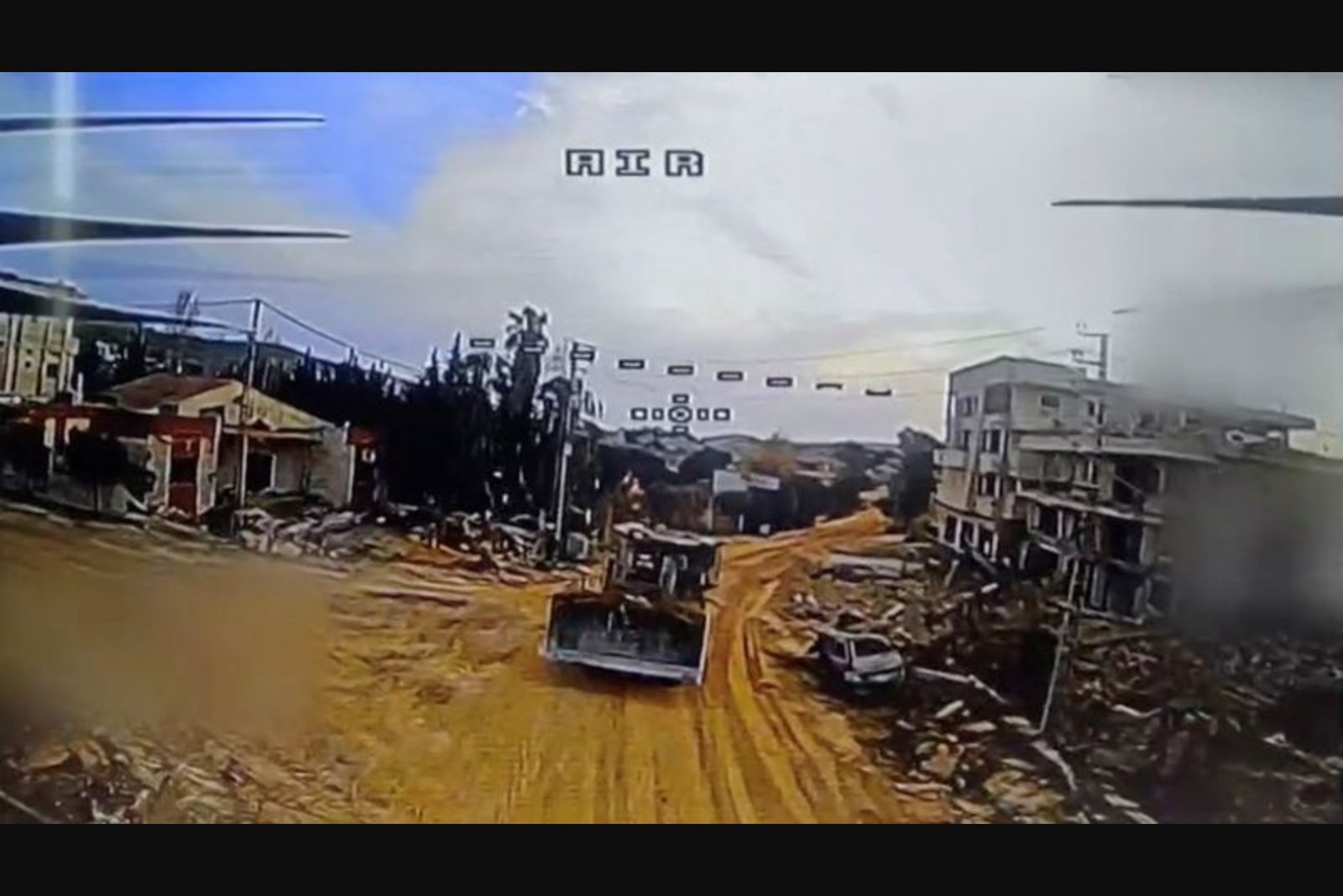
Hezbollah has released videos documenting more than 45 FPV drone attacks, with 28 of those posted in the roughly four weeks since the ceasefire went into effect. Before the ceasefire the footage mostly showed drones striking static positions or vehicles such as tanks and excavators, and Israel reported no fatalities from those earlier strikes. Since the ceasefire, however, Hezbollah has shifted to targeting groups of soldiers, and the Israeli authorities say that three soldiers and one contractor have been killed in attacks that followed the truce.
The ceasefire left Israeli ground forces in a so-called buffer zone extending up to 10 km (six miles) from the border. That confined terrain, which Israeli troops occupy, is familiar to Hezbollah fighters and has been assessed by the group as vulnerable to FPV strikes. Hezbollah’s public communications have reflected a belief that inflicting continued casualties through these drone operations could exert pressure on Israeli forces more effectively than the diplomatic talks Hezbollah opposes.
Youssef el-Zein, Hezbollah’s head of media relations, told reporters the group believed Israeli troop losses from FPV drone operations could prompt a withdrawal more quickly than negotiations. "We know the enemy’s supremacy, but we also know their points of weakness. We are taking advantage of the points of weakness to create that balance," he said, characterizing the presence of Israeli forces in southern Lebanon as "an opportunity, and not a threat," because of their increased susceptibility to targeting.
The emergence and widespread use of FPV attack drones is not unique to Lebanon. The tactic gained traction several years ago, notably in Ukraine thousands of kilometres away, where front lines have adapted countermeasures - for example, netting - to blunt drone attacks. Dmytro Putiata, a drone warfare expert serving with Ukraine’s Unmanned Systems Brigades, observed that operators are largely inexperienced but are learning. "They are amateurs, but they are learning," he said, noting the cross-border flow of tactical insights.
Hezbollah’s public footage includes early examples dated March 22, three weeks after the group began its exchanges with Israel following the expansion of the Iran-related fighting. The first imagery showing components of the drones themselves, including warheads, was dated April 11. Analysts who have reviewed the imagery say the systems appear assembled from parts commonly produced by Chinese firms and sold on online marketplaces, according to Konrad Iturbe, a Spanish-based drone expert with experience flying and modifying commercial quadcopters.
Technical details provided by a Hezbollah commander and other sources indicate a basic FPV drone can be assembled for under $400. The drones deployed along the Lebanon border have been geolocated to towns spanning the entire border strip, demonstrating broad operational use. A foreign security official and a Ukraine-based drone operator who asked not to be named said footage from April 11 showed a Russian PG-7L high-explosive anti-tank warhead adapted to the drone - a warhead Hezbollah already possessed, according to the foreign official. Fitting such warheads to a drone converts them into longer-range, precision weapons.
Hezbollah commanders described a specialized drone unit that coordinates with the group’s procurement team to source parts from various markets. Those parts are reportedly checked for signs of Israeli interference, according to a Lebanese military source briefed on Hezbollah’s drone employment. The group has remained on alert since Israeli forces detonated thousands of its communication devices in 2024 after those devices were booby-trapped, an episode that heightened Hezbollah’s focus on secure communications and equipment integrity.
One technical element appearing in the April 11 footage was a spool consistent with a container holding about 10 km (six miles) of fiber-optic cable - a tether that links the drone and the pilot. That fiber-optic connection, Hezbollah sources say, is central to the tactic because it allows operations that Israeli radar and electronic warfare systems struggle to detect. "The objective is that Israeli radar systems cannot detect them, effectively blinding the enemy," a Hezbollah commander said.
Israel has acknowledged the challenge presented by the FPV drones. Prime Minister Benjamin Netanyahu said on May 3 that he had ordered the creation of a special project to counter the drone threat, noting such measures would take time. The Israeli military reports near-daily launches of explosive drones at its forces in southern Lebanon and has said these attacks have caused casualties among troops; Army Radio reported that as many as 40 soldiers have been hurt.
Israeli defence officials, speaking on condition of anonymity to discuss sensitive matters, described the FPV systems as difficult to detect and defeat because they are small and are flown "low and slow" by crews who are familiar with local topography. Those officials said that while high-tech countermeasures are under development - informed by more than a year of study of drone use in Ukraine - there is no quick fix. New defensive deployments could arrive within weeks to months, they said.
In the interim, Israeli forces are pursuing a mix of countermeasures. Low-tech options such as nets are slated for deployment, and enhancements to soldiers’ rifles are expected to aid in taking down drones. The military has also used the Iron Dome missile interceptor system and stepped up radar detection capabilities. A newly developed Air Force drone interception system was tested in April but failed, officials said. Both sources emphasized that the most effective defence remains striking the crews operating the drones.
Israel has released videos it says show FPV strikes on Hezbollah fighters - including footage from April 13 showing a target covering his face as a drone approaches, and imagery from April 29 purportedly showing a fighter on a motorbike being struck. The Israeli military has not published images of its own drone systems.
Experts who have reviewed the available imagery note shifts in Hezbollah flying techniques. Konrad Iturbe said some pilots appear to have moved from static, fixed-angle approaches toward maneuvers involving pitching down, accelerating and striking vehicles from above - tactics that increase the lethality of the weapon when successfully executed. He summarized the trend succinctly: "Lesson clearly learned here."
Still, open-source footage and analysis suggest Hezbollah’s public videos largely show strikes on armoured vehicles rather than sustained efforts to target individual soldiers, and there are relatively few instances of multiple, coordinated strikes on the same target or of follow-up surveillance from a second drone. Forensic imagery analyst William Goodhind cautioned that while isolated clips of vehicles being struck serve political narratives effectively, they "do not necessarily translate into military effect."
The drone campaign has broader diplomatic implications. Iran and mediator Pakistan have said any agreement between the United States and Iran to halt attacks on shipping must include a cessation of Israeli strikes in Lebanon, arguing that continued Israeli action there risks reigniting the wider Iran conflict. U.S.-mediated direct talks between the Lebanese government and Israel were scheduled to resume on Thursday and Friday, but progress has been slow, and Israel has insisted that Lebanon disarm Hezbollah - a demand that risks reopening hostilities in a country that previously endured a lengthy civil war.
Hezbollah’s public assessment, as voiced by its media representative, implies that the group sees battlefield pressure - in the form of drone-caused casualties to Israeli troops - as a more effective lever than formal negotiations in forcing Israeli concessions. That posture complicates diplomatic efforts aimed at separating the ceasefire dynamics in Lebanon from the wider Iran-linked confrontation.
For now, the conflict in southern Lebanon remains characterized by a mix of modestly priced, rapidly assembled drone technology and continuing attempts to counter it with both improvised and advanced systems. The public, visual nature of the drone strikes - footage released by both Hezbollah and Israel - has amplified the psychological element of the campaign even as military analysts assess the true tactical impact.
As both sides adapt - with Hezbollah refining its FPV tactics and Israel pursuing layered defensive measures and targeted counterstrikes - the trajectory of the confrontation will influence diplomatic calculations around broader U.S.-Iran talks and the prospect of a durable cessation of hostilities in the region.