
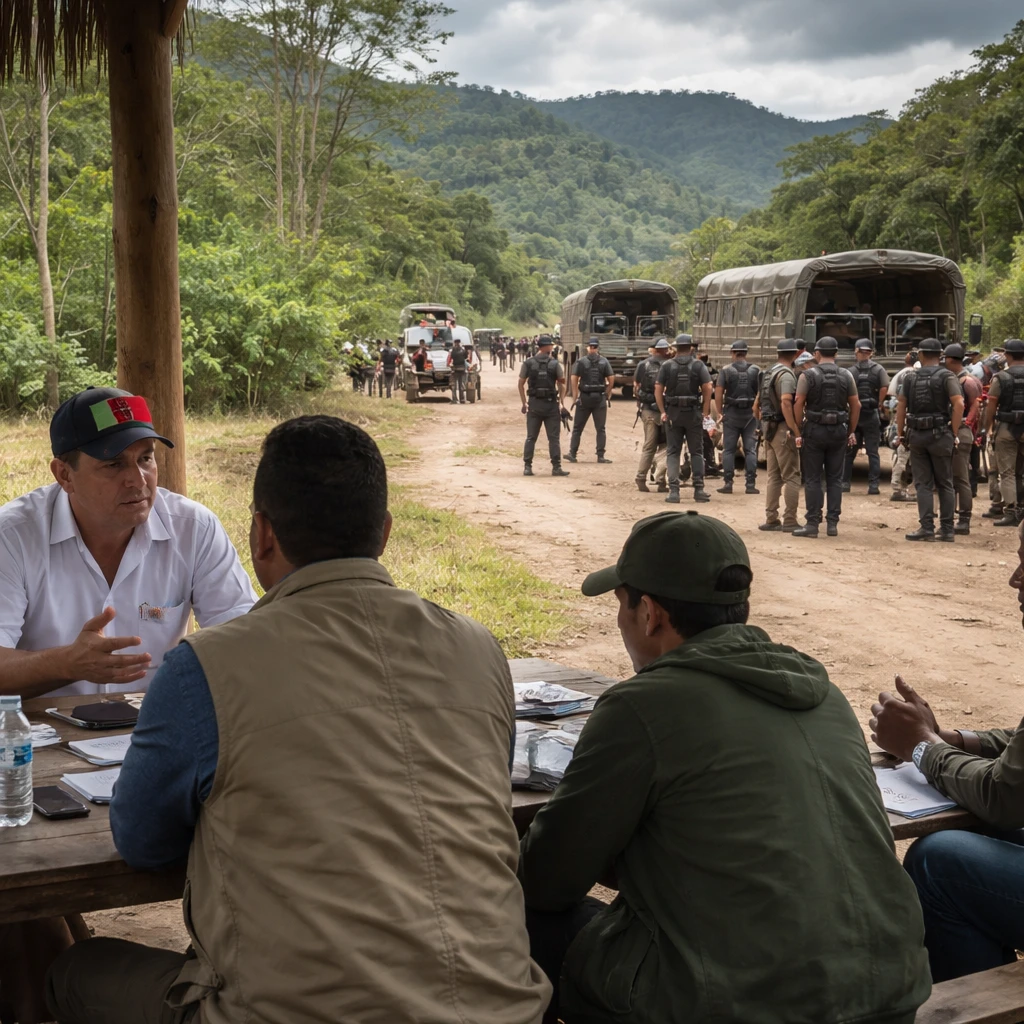
Colombia's government on May 8 took the step of suspending arrest and extradition warrants for 29 leaders of the Clan del Golfo, the country's largest illegal armed group, according to a government official. The measure is part of ongoing peace negotiations between the state and the organization.
The suspension includes the group's top commander, Jobanis de Jesus Avila, known by the alias Chiquito Malo. He is wanted by the United States on drug trafficking charges, and Colombian authorities had been offering a reward exceeding $1 million for his capture.
Alongside the suspension of warrants, the government authorized the relocation of roughly 400 members of the Clan del Golfo to specified relocation areas, Alvaro Jimenez, the government's chief negotiator with the group, told Reuters. Jimenez said the decision is intended to ease the peace process and to facilitate entry into the temporary relocation zones starting June 25.
The move follows an agreement reached in December under which Colombia's government and the Clan del Golfo agreed to establish three temporary relocation zones. That agreement was designed to concentrate the armed group's estimated 7,000 combatants in defined areas as a means to reduce violence and criminal activity in the country.
Friday's resolution, however, addresses only two of the relocation areas, both located in the provinces of Choco and Cordoba. The relocation of about 400 combatants marks the first execution of the December arrangement.
International actors are participating in the mediation of the process: Qatar, Spain, Norway, and Switzerland are acting as mediators in the talks between the Colombian government and the Clan del Golfo. In December, the United States designated the Clan del Golfo as a terrorist group.
The government leading the initiative is that of President Gustavo Petro, who took office in 2022 after a career that included membership in the now-defunct M-19 rebel group. Petro campaigned on a pledge to bring about "total peace" and to end a conflict that has lasted six decades and resulted in more than 450,000 deaths, according to the government statement.
Despite the government's stated aims, the negotiations have yielded limited tangible advances to date. In some regions, President Petro has announced large-scale social and military interventions that have so far produced limited success, the government official said. Additionally, Petro's administration is approaching a transition point: he will conclude his term in three months.
The government framed Friday's suspensions and relocations as tactical measures to advance the negotiated process. The scope of the resolution is constrained to the specific legal and geographic steps described, and the broader peace agenda remains subject to the continuing talks and mediation efforts.
Summary
Colombian authorities suspended arrest and extradition warrants for 29 Clan del Golfo leaders, including Jobanis de Jesus Avila - alias Chiquito Malo - who faces U.S. extradition on drug trafficking charges and had a reward of over $1 million for his capture. The resolution also allows relocation of approximately 400 combatants to two temporary zones in Choco and Cordoba, with entry into the zones planned to begin June 25. The December agreement originally envisaged three temporary relocation zones to concentrate roughly 7,000 combatants. Qatar, Spain, Norway, and Switzerland are mediators in the talks. The U.S. designated the Clan del Golfo as a terrorist group in December. President Gustavo Petro's government, which came to power in 2022, has sought "total peace" but has recorded few tangible advances and limited success from social and military interventions. Petro will leave office in three months.
Key points
- The government suspended arrest and extradition warrants for 29 Clan del Golfo leaders, including the group's leader Chiquito Malo.
- About 400 combatants are authorized to relocate to two temporary areas in Choco and Cordoba, with entry into the zones to start June 25.
- Mediation involves Qatar, Spain, Norway, and Switzerland; the December agreement aimed to concentrate an estimated 7,000 combatants in three temporary zones.
Risks and uncertainties
- Negotiations have produced limited tangible advances so far, creating uncertainty about the prospect of lasting results - this bears on state security and public-sector stability.
- Relocation currently covers only two zones, not the three originally agreed, leaving open how effectively the concentration of combatants will reduce violence - a factor relevant to regional security and rule of law.
- The approaching end of President Petro's term in three months introduces political transition uncertainty that could affect continuity of the peace process and related policy measures.