
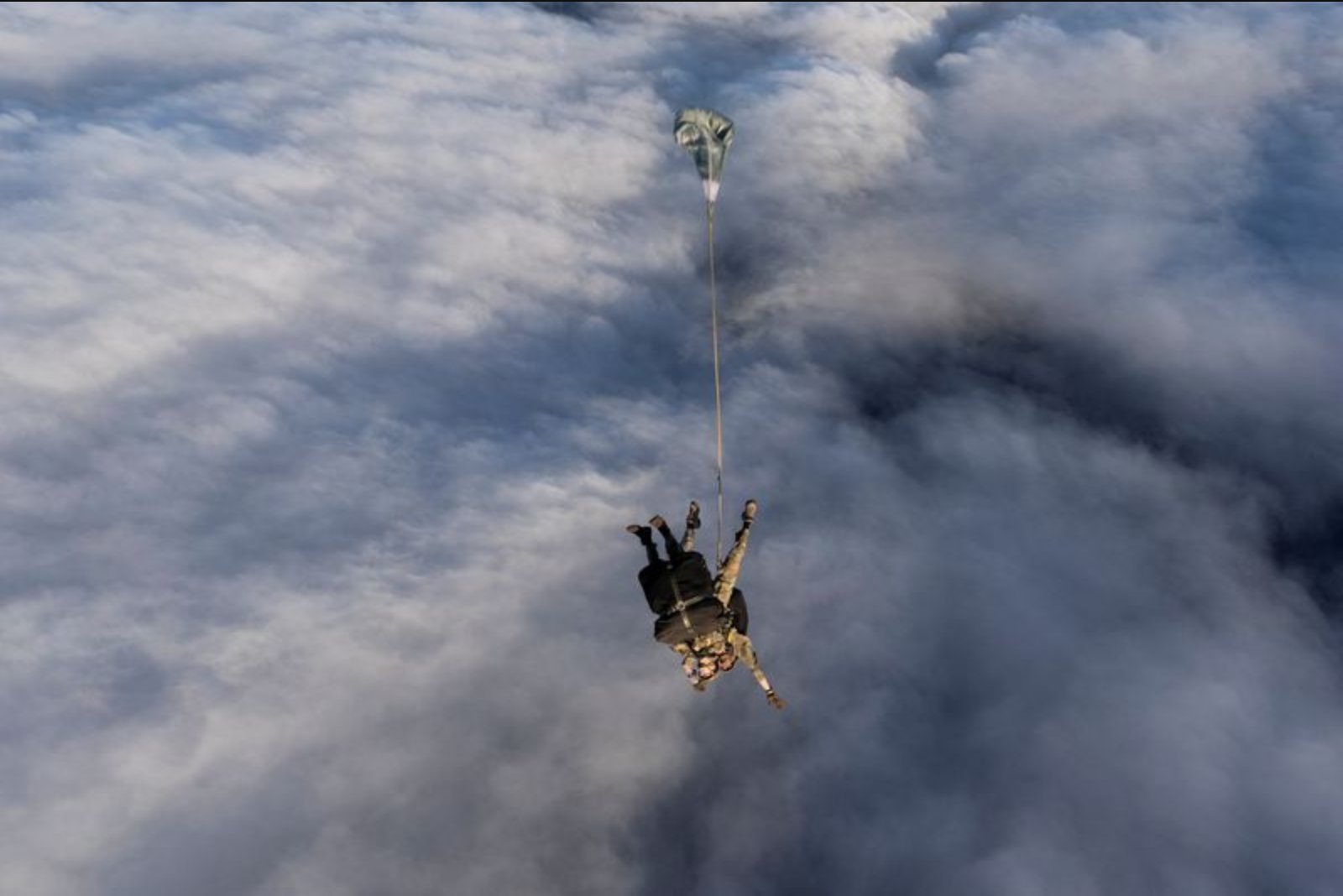
MADRID, May 10 - British paratroopers, accompanied by military medical personnel and vital medical equipment, have been parachuted onto Tristan da Cunha following confirmation of a suspected hantavirus case on the remote territory. The team included six paratroopers and two military clinicians from 16 Air Assault Brigade.
The personnel jumped from an RAF A400M transport aircraft after a long-range flight that began at RAF Brize Norton air base in Oxfordshire. The aircraft covered 6,788 km (4,218 miles) from Brize Norton to Ascension Island before continuing approximately 3,000 km due south to Tristan da Cunha. During the transit the A400M was refuelled mid-flight by a supporting RAF Voyager.
Alongside the personnel, oxygen supplies and other medical aid were dropped onto the island on Saturday. The Ministry of Defence said the operation marked the first time UK military medical staff have been deployed in a humanitarian role by parachute - delivering both clinicians and equipment directly to a location otherwise difficult to reach by other means.
The supplies were primarily intended to support a British man who UK health authorities say was a passenger on a cruise ship that experienced a hantavirus outbreak and that docked at Tristan da Cunha between April 13 and 15. The World Health Organization reported that the man reported symptoms compatible with hantavirus on April 28 and that he is stable and in isolation.
The Ministry of Defence explained the urgent need for the airdrop, stating, "With oxygen supplies on the island at a critical level, an airdrop with medical personnel was the only method of getting vital care to the patient in time." The package of supplies and clinicians was therefore intended to bridge a capability gap while protecting both the patient and the island community.
Tristan da Cunha is home to roughly 200 people and is located halfway between South Africa and South America. It is described as the world's remotest inhabited island, more than 2,400 km and a six-day boat journey from St Helena, its nearest inhabited neighbour. The island typically relies on a two-person medical team for routine health needs and normally has no air access because it lacks an airstrip, meaning it is ordinarily reachable only by sea.
Prior to the parachute operation, polymerase chain reaction (PCR) tests had been flown to Ascension Island on May 7 by military aircraft. Those tests were destined for another British man who had disembarked from the same cruise ship on Ascension and who was subsequently medically evacuated to South Africa.
Brigadier Ed Cartwright, Officer Commanding 16 Air Assault Brigade, commented on the deployment's likely local impact, saying, "The arrival of paratroopers, medical personnel and medical supplies from the sky has hopefully reassured the people of Tristan da Cunha."
The operation combined long-range air logistics, mid-air refuelling support and parachute insertion to deliver time-sensitive clinical care and oxygen where conventional transport options were not feasible. The Ministry of Defence framed the mission as an urgent humanitarian response to a public-health situation on a highly isolated community.
Key points
- Six paratroopers and two military clinicians from 16 Air Assault Brigade parachuted onto Tristan da Cunha, delivering oxygen and medical supplies.
- The A400M flight originated at RAF Brize Norton, covered 6,788 km to Ascension Island and then about 3,000 km to Tristan da Cunha, with mid-air refuelling by an RAF Voyager.
- The supplies were intended primarily for a British cruise-ship passenger who reported symptoms compatible with hantavirus on April 28 and is in isolation; PCR tests were previously flown to Ascension Island on May 7 for another passenger who was evacuated to South Africa.
Risks and uncertainties
- Medical capacity on Tristan da Cunha is limited - the island normally relies on a two-person medical team and lacks an airstrip, constraining response options and potentially affecting healthcare sector resource needs.
- Logistical challenges inherent in servicing extremely remote locations may increase reliance on military or specialised aviation support, with implications for defence and aviation operational planning and costs.
- Uncertainty remains around broader public-health implications tied to the cruise-ship outbreak; monitoring and diagnostic capabilities for remote communities may be strained, influencing demand for diagnostic supplies and emergency medical logistics.