
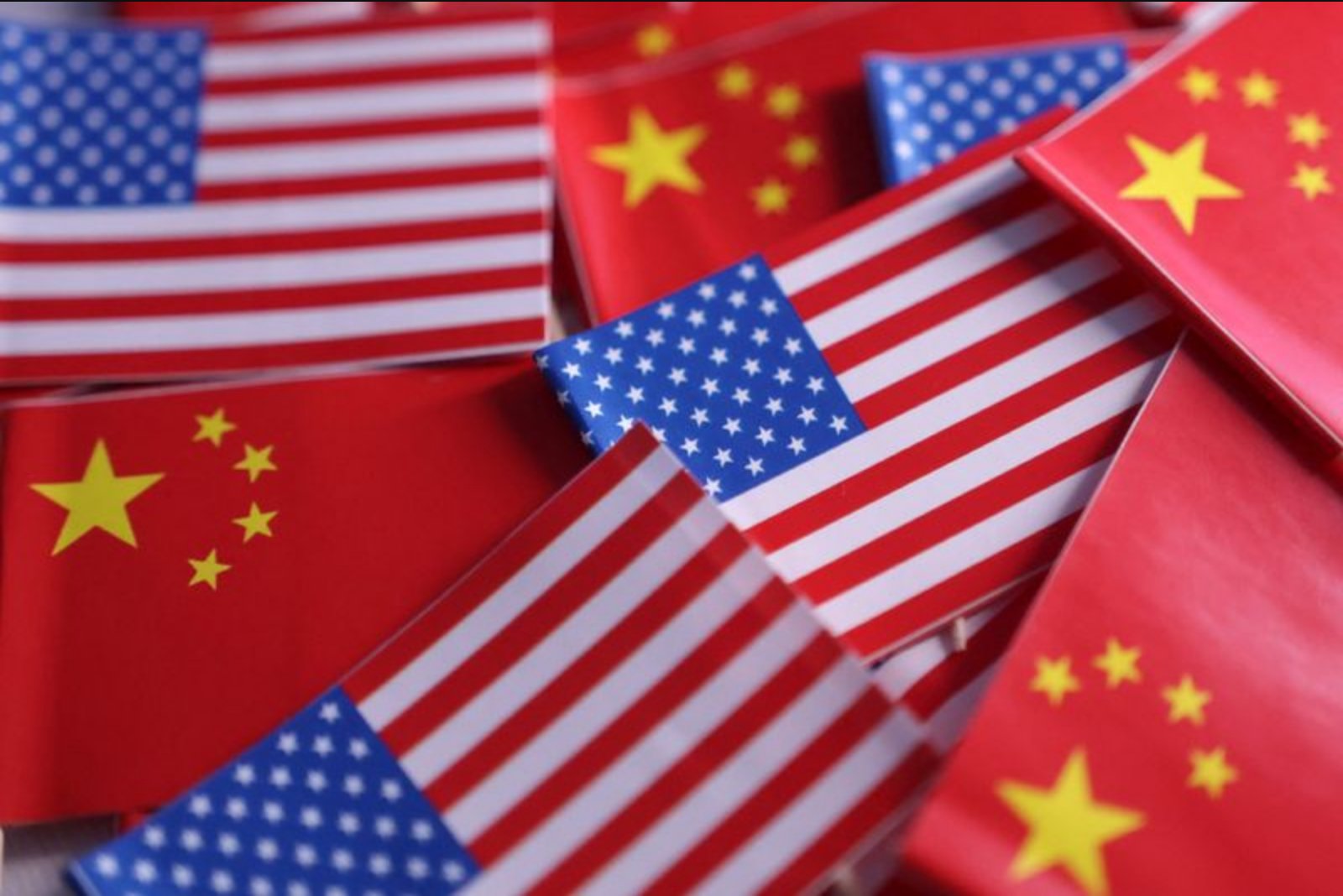
May 12 - U.S. President Donald Trump will meet Chinese counterpart Xi Jinping this week for talks in Beijing certain to feature the issue of democratically-governed Taiwan, which China claims as its territory, although Taipei rejects those claims.
Historical timeline
1949 - The Chinese Communist Party, led by Mao Zedong, seized control in Beijing after defeating Chiang Kai-shek’s government in the civil war. Chiang’s Republic of China forces retreated to Taiwan.
1950 - Taiwan became an ally of the United States during the Korean War. At that time Washington deployed a fleet in the Taiwan Strait to deter potential attacks from Mao’s forces.
1954-1955 - During the First Taiwan Strait Crisis, Beijing fired artillery at some islands controlled by Taiwan off China’s southeastern coast. The fighting cost Taipei control of several islands and prompted the relocation of remaining forces and civilians to Taiwan.
1958 - The Second Taiwan Strait Crisis saw months of artillery barrages by Beijing against Taiwan-held outlying islands of Kinmen and Matsu, both located close to the Chinese mainland. Taipei responded using weapons supplied by the United States. China did not capture any of the islands under Taiwan control.
1979 - The United States formally endorsed the "One China Policy" and shifted diplomatic recognition from Taipei to Beijing. Chinese leader Deng Xiaoping proposed the ideas of "one country, two systems" and "peaceful reunification" as alternatives to the use of force in resolving Taiwan’s status.
1979 - In the same year, the U.S. Congress enacted the Taiwan Relations Act. That law set out Washington’s expectation that the future of Taiwan be determined peacefully and committed the United States to helping Taiwan obtain the means to defend itself.
1982 - U.S. President Ronald Reagan issued the Six Assurances to Taiwan, which included a pledge not to alter the Taiwan Relations Act.
1995 - Taiwan President Lee Teng-hui traveled to the United States for a reunion at Cornell University. The visit drew criticism from Beijing and heightened tensions between Taipei and Beijing.
1996 - The Third Taiwan Strait Crisis occurred as Taiwan held its first direct presidential election. Beijing launched missile tests into waters near Taiwan; the United States deployed aircraft carriers to the area. Lee Teng-hui won the election by a wide margin in March.
2000 - Chen Shui-bian of the Democratic Progressive Party (DPP) was elected president of Taiwan, marking the first peaceful transfer of power from the Kuomintang (KMT) to the DPP.
2005 - Beijing passed an anti-secession law in March making secession by Taiwan illegal. In April of that year, leaders of the KMT and China's Communist Party held a meeting - the first such contact since 1949.
May 2008 - Ma Ying-jeou of the KMT, who favored closer ties with China, became president of Taiwan. He de-emphasized political disputes with Beijing and pursued agreements covering areas from tourism to direct commercial flights.
2016 - In January, Tsai Ing-wen of the DPP won Taiwan’s presidency on a platform that emphasized resisting pressures from China. In June, Beijing suspended all official communications with Taiwan.
December 2016 - Then-U.S. President-elect Donald Trump spoke by telephone with Taiwan’s leader, Tsai Ing-wen, breaking a decades-long diplomatic practice.
March 2018 - President Trump signed legislation encouraging senior U.S. officials to visit Taiwan and for Taiwanese officials to meet American counterparts. Beijing expressed strong displeasure at the move.
July 2022 - U.S. President Joe Biden and Xi Jinping held a two-hour telephone conversation in which President Biden reiterated that U.S. policy had not changed and that the United States opposed unilateral actions that would alter the status quo or undermine peace and stability across the Taiwan Strait.
August 2022 - U.S. House Speaker Nancy Pelosi visited Taipei despite warnings from Beijing. Chinese authorities conducted military exercises around Taiwan after her departure.
April 2023 - Following a trip by Taiwan’s president, Tsai Ing-wen, to Los Angeles where she met then-U.S. House Speaker Kevin McCarthy, China staged three days of military drills around Taiwan. Chinese officials described the exercises as testing integrated military capabilities under combat conditions, including precision strikes and blockade operations.
May 2024 - Shortly after Lai Ching-te’s inauguration as Taiwan’s president, China began what it described as "punishment" drills around the island, saying the actions were in response to "separatist acts."
December 2025 - The Trump administration approved arms sales to Taiwan totaling $11 billion, the largest such package to date. Later that month, China conducted its most extensive war games around Taiwan to that point, in exercises framed as demonstrating Beijing’s capacity to sever external assistance in a conflict.
Context and immediate framing
The events listed above outline a sequence of diplomatic shifts, military confrontations and high-profile interactions that have punctuated relations among the United States, China and Taiwan. The sequence begins with the outcome of the Chinese civil war in 1949 and continues through several straights crises in the 1950s, policy pivots and legal frameworks in the 1970s and 1980s, electoral and diplomatic flashpoints in the 1990s and 2000s, and recurrent military drills and arms transfers in the 2010s and 2020s.
What to watch in the near term
- Diplomatic engagement between the U.S. and China, including the May 12 meeting in Beijing.
- Military activity in and around the Taiwan Strait, as recent years have seen drills and exercises timed to political developments.
- U.S. policy actions affecting Taiwan, including legislation and arms transfer approvals.
Key points
- Longstanding strategic dispute - The U.S.-China-Taiwan relationship has been shaped by a persistent sovereignty dispute dating to 1949 and reinforced through military crises and diplomatic realignments.
- Military and defense implications - Repeated Chinese drills around Taiwan and substantial U.S. arms sales underscore defense-sector implications, with potential impacts on defense contractors and supply chains.
- Diplomatic signaling - High-level visits and phone calls have repeatedly altered the tone of relations, affecting diplomatic channels and the conduct of official communications.
Risks and uncertainties
- Escalation risk - Periodic military exercises and missile tests around Taiwan, as documented in multiple years, create an environment of elevated security risk that affects defense and shipping sectors.
- Policy volatility - Changes in U.S. legislative actions and executive decisions, including significant arms approvals, introduce uncertainty for defense procurement and international arms markets.
- Communication breakdowns - Episodes in which Beijing suspended official communications with Taipei illustrate an ongoing uncertainty in diplomatic channels, with potential repercussions for trade and cross-strait exchanges.