
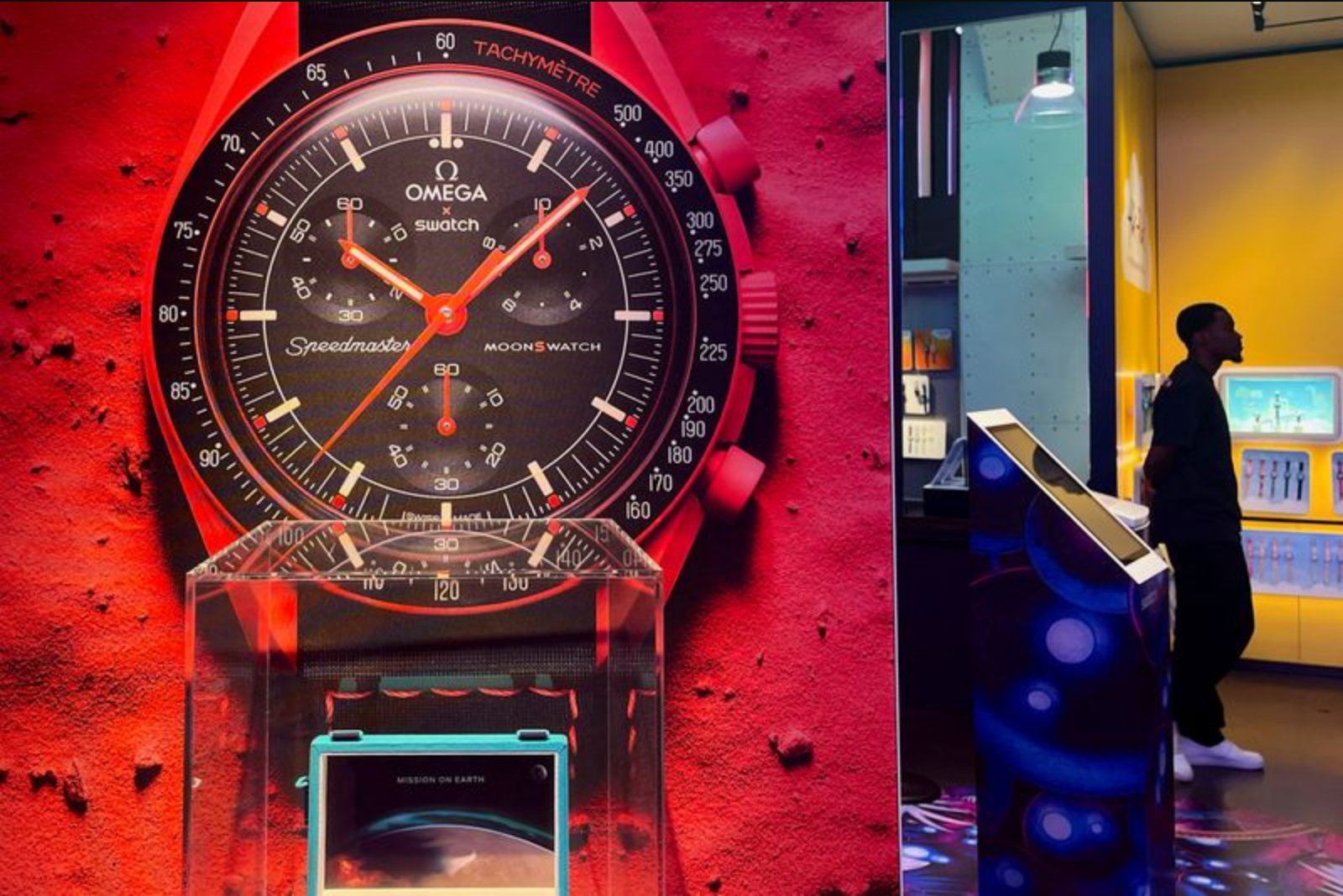
Swatch enters its annual meeting on Tuesday under heightened scrutiny after two major proxy advisory firms recommended that investors support activist Steven Wood for the board seat allocated to bearer shareholders instead of the candidate put forward by the company, Andreas Rickenbacher.
Institutional Shareholder Services (ISS) and Glass Lewis advised shareholders to cast their votes for Wood - whose GreenWood fund holds about 0.5% of Swatch - citing concerns about oversight and the need for greater independence on the board. Swatch had nominated Rickenbacher, a former Swiss politician who currently serves on the boards of BKW and Aebi Schmidt, describing him as someone who would add valuable oversight experience.
Governance dispute and company response
The proxy fight has crystallized dissatisfaction among some investors with the governance and strategy at the watchmaker, whose brands include Omega, Longines and Tissot. Shares of the Zurich-listed company have underperformed peers and the company posted an 89% drop in net profit last year, a decline the company attributes in part to weak demand in important markets such as China.
Swatch pushed back on the proxy-adviser recommendations. A company spokesperson argued that the advisers' votes run counter to their stated desire to support long-term stewardship and to encourage the board to propose an independent representative. Swatch characterized Wood as unsuitable to represent bearer shareholders and described its existing board as "proven and competent," composed of individuals with strong integrity.
What proxies recommended
Glass Lewis not only urged shareholders to back Wood for the bearer-seat position but also recommended opposing the re-election of Chief Executive Nick Hayek, Chair Nayla Hayek, her son Mark Hayek and director Ernst Tanner. ISS described a vote for Wood as a "constructive step toward improving oversight and rebuilding investor trust." The proxy firms highlighted concerns about board renewal and the need for clearer succession planning.
Wood has argued the board needs refreshment and has questioned the clarity of succession planning for Nayla Hayek, who is 74, and Nick Hayek, who is 71. The board's average tenure is roughly 20 years, a longevity Wood says signals the need for new perspectives.
Structural constraints and possible outcomes
Despite the advisers' views, the Hayek family is expected to retain decisive control of Swatch. The family owns approximately a quarter of the equity but, through a dual-class share structure, wields more than 40% of the voting rights. That share of voting power means that even significant levels of investor support for Wood would fall short of wresting control away from the Hayeks.
Nevertheless, a substantial vote in favor of Wood could increase pressure on management and the board to pursue incremental reforms. Swatch has already taken some steps that reflect a limited response to shareholder concerns: the board has expanded, the company permitted a separate bearer shareholder vote and, for the first time in 16 years, put forward an independent nominee.
Financial and market context
Swatch’s stock has recovered about 25% year-to-date but remains near historic lows and continues to lag competitors. Analysts have pointed to years of falling profits and the potential need for deeper strategic changes to restore performance. The company has sought to highlight its initiatives, noting that its brands are introducing new products and exploring AI tools to help customers personalise watches. Swatch also teased a new partnership with the premium brand Audemars Piguet.
Wood has suggested Swatch could benefit from leadership changes similar to those implemented at some of its peers and anticipates some form of succession planning in the near term. In addition to backing his bearer-seat bid, Wood has tabled six proposals aimed at strengthening minority shareholder rights and increasing independent board representation. His proposals seek to prevent the chair from simultaneously holding executive roles, to enhance the independence of remuneration committees and auditors, and to require in-person annual meetings.
Swatch has maintained that no changes to its bylaws are necessary beyond those required by Swiss law.
Investor reaction and next steps
How investors cast their ballots at the annual meeting will determine whether Wood becomes the bearer-share representative. Even if he does not prevail, a high level of shareholder support for his candidacy or his proposals could become a lever for constructive change, increasing calls for clearer succession planning and potentially prompting the board to consider additional governance adjustments.
For now, the company remains under the effective control of the Hayek family, and any governance shift will be constrained by the family’s concentrated voting power. The annual meeting will reveal the degree to which outside investors are prepared to signal dissatisfaction and press for the changes urged by proxy advisers and Wood alike.
Promotional note included in public filings
The public information also contains a query asking whether an investor should place $2,000 into the ticker UHR. That material states that ProPicks AI evaluates UHR along with thousands of other companies each month using more than 100 financial metrics. The description says the AI looks beyond popularity to assess fundamentals, momentum and valuation, and cites past winners it associates with its approach, naming Super Micro Computer (+185%) and AppLovin (+157%) as examples. The promotional text invites readers to check whether UHR appears in any ProPicks AI strategies or whether there are alternative opportunities in the same sector.