
Stock Markets May 11, 2026 11:24 AM

Northrop Grumman Unveils Compact LR-450 Navigation Unit for Spacecraft

New mHRG-based system offers satellite-independent positioning and orientation for a range of space missions

By Sofia Navarro NOC

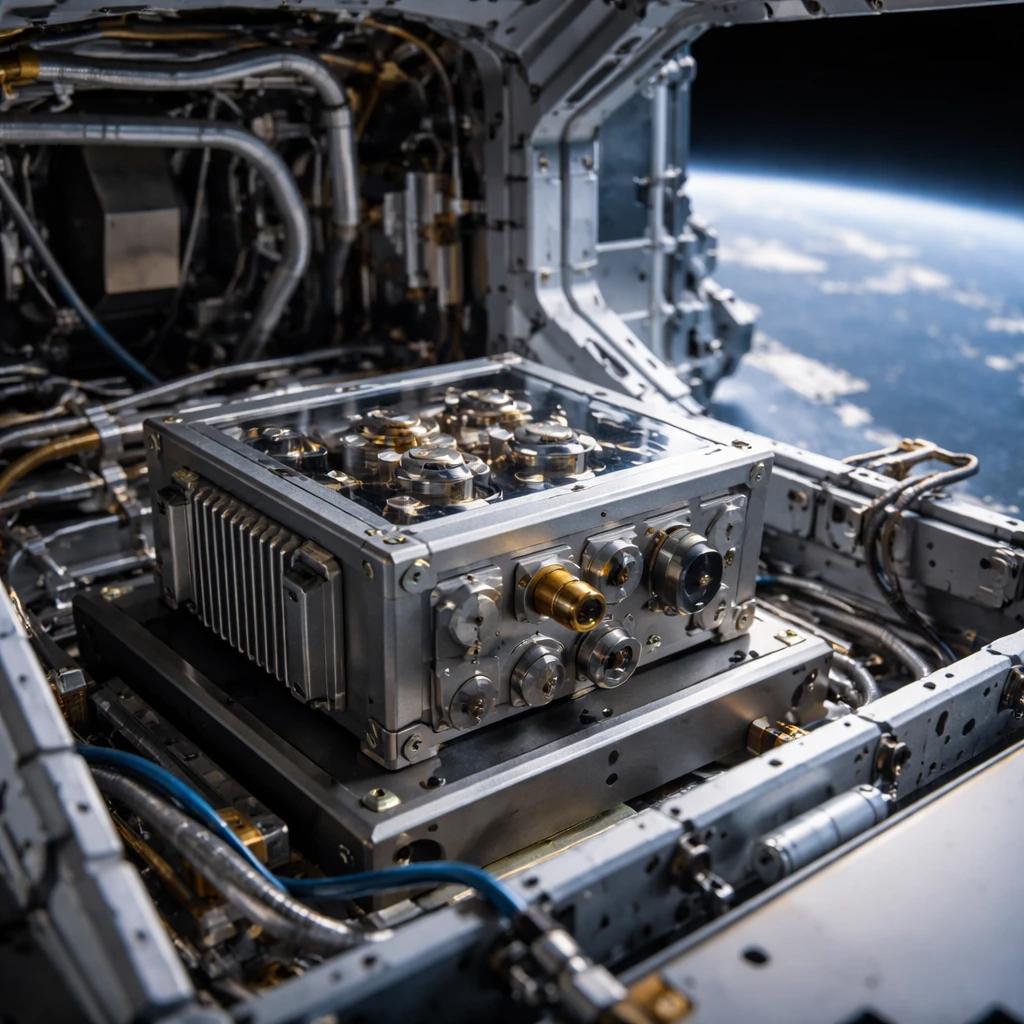
Northrop Grumman has introduced the LR-450, a compact positioning and navigation system intended for integration into spacecraft worldwide. The unit uses milli-Hemispherical Resonating Gyroscopes (mHRGs) to determine rotation and orientation without relying on satellite signals, and is offered for purchase across multiple space-platform configurations. The company highlights the LR-450's long-duration design life, low power needs, and lineage to proven HRG technology with extensive orbital hours.

Northrop Grumman Unveils Compact LR-450 Navigation Unit for Spacecraft
NOC

Key Points

  • Northrop Grumman launched the LR-450, a compact spacecraft positioning and navigation system that does not require satellite signals for tracking and orientation.
  • The LR-450 uses milli-Hemispherical Resonating Gyroscopes (mHRGs), smaller variants of the HRGs used in the company's Spacecraft Stellar Inertial Reference Unit; HRG technology has logged over 70 million hours in orbit.
  • The unit is offered for purchase and integration across space platforms worldwide and is designed for long operational lifetimes with low power needs, supporting missions from low Earth orbit to planetary exploration.

Northrop Grumman Corporation has announced the release of a new compact navigation system for spacecraft, the LR-450. According to the company statement, the LR-450 supplies spacecraft with tracking and attitude determination capabilities that do not depend on external satellite signals.

The LR-450 employs milli-Hemispherical Resonating Gyroscopes - referred to by the company as mHRGs - to measure rotational motion and orientation while in space. Northrop Grumman describes these mHRGs as smaller-scale versions of the high-performance Hemispherical Resonating Gyroscopes (HRGs) used in its Spacecraft Stellar Inertial Reference Unit.

Company materials note that the HRG family has accumulated more than 70 million hours in orbit and has been deployed on missions including the James Webb Space Telescope. The LR-450, by contrast, integrates the smaller mHRG sensors into a compact package designed for a wide set of spacecraft platforms.

Design, endurance and integration

The LR-450 is designed for extended durations in space, with the company stating it can operate for millions of hours. Its compact dimensions and low power consumption are highlighted as enabling factors for integration into different spacecraft configurations, spanning applications from low Earth orbit missions to planetary exploration.

Northrop Grumman said the LR-450 is available now for purchase and for integration across space platforms worldwide. The company emphasized the unit's rugged design and a maintenance-free operational profile in its product description.

Company statement

"By integrating our proven sensor technology with a compact, rugged design featuring the innovative mHRG system, the LR-450 delivers unmatched precision, reliability and zero-maintenance operation," said Ryan Arrington, vice president of navigation and cockpit systems at Northrop Grumman.

The announcement presents the LR-450 as a navigation option that provides positioning and orientation capabilities internally, without requiring external satellite navigation inputs. That capability, together with the stated durability and low power requirements, positions the LR-450 for use across a spectrum of mission profiles.


Note on available information

The company statement sets out the LR-450's design objectives, sensor lineage and availability, but does not publish detailed performance metrics or integration specifications in the announcement. Further technical details and operational test data were not provided in the release.

Risks

  • The announcement does not provide detailed performance metrics or integration specifications - this lack of published technical data creates uncertainty for spacecraft integrators and mission planners - sectors affected: space systems and spacecraft manufacturing.
  • While HRG technology has an extensive orbital track record, the public announcement does not specify the operational history of the smaller mHRG variant used in the LR-450 - sectors affected: satellite operators and mission engineering teams.
  • The company statement does not detail integration requirements or timelines for different spacecraft configurations, leaving uncertainty about adaptation effort and schedule - sectors affected: satellite manufacturing and systems integration.

More from Stock Markets

S&P Moves Mexico’s Outlook to Negative, Citing Fiscal Strain and Tepid Growth May 12, 2026 Moody's Keeps Garrett Motion Rating Steady, Moves Outlook to Positive May 12, 2026 S&P Lowers Embecta Rating After Sharp Revenue Drop and Market Share Loss May 12, 2026 Fitch Elevates Debt and Deposit Ratings for Major Canadian Banks After Criteria Update May 12, 2026 SpaceX Scours Worldwide Sites for 'Spaceports' as Starship Flight Rate Plans Accelerate May 12, 2026