
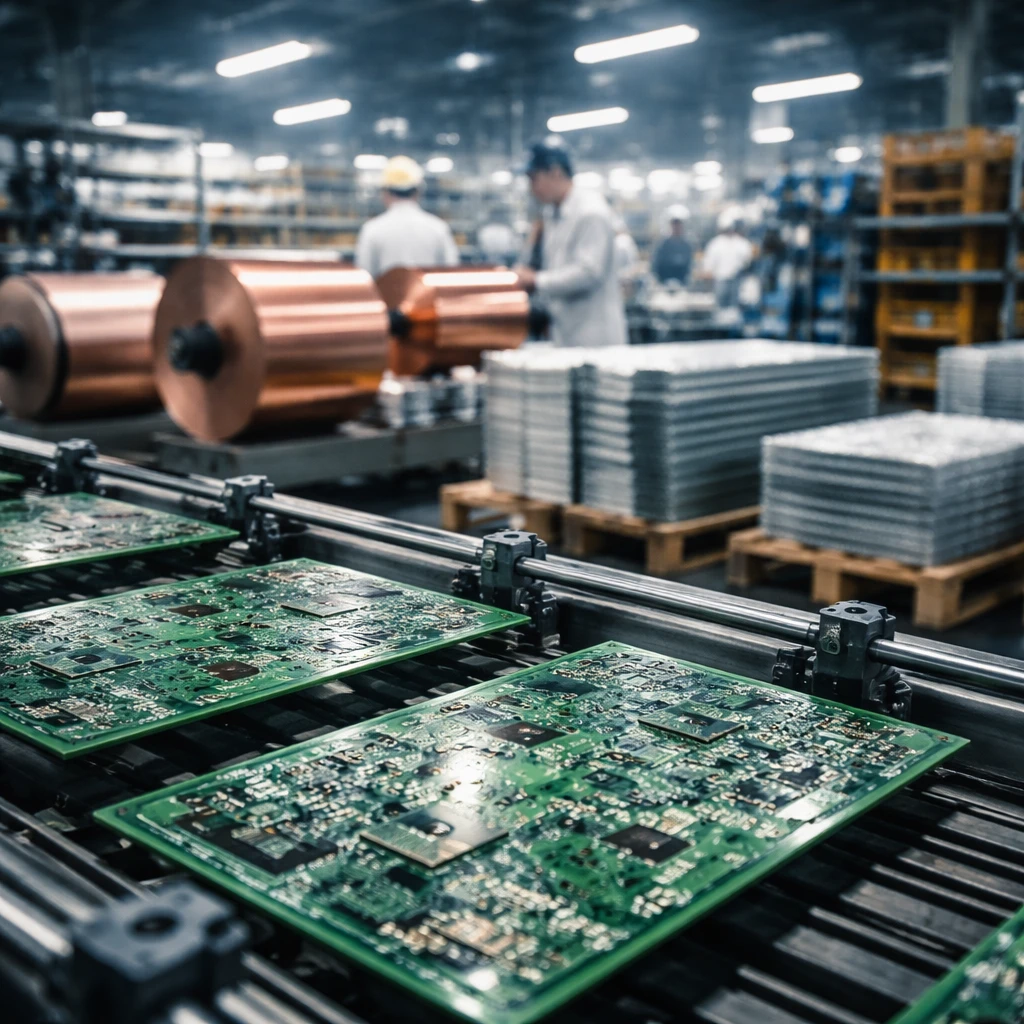
The ongoing conflict in the Middle East has created new pressure on the supply chain for printed circuit boards (PCBs), according to industry participants and corporate executives. Critical raw materials used in PCB manufacture have become harder to secure, and prices for finished boards have climbed substantially as manufacturers race to lock in supplies.
PCBs are a foundational component in nearly every electronic device - from smartphones and laptops to large-scale AI servers - and the recent shortages add to other cost challenges already facing the electronics sector, including rising memory chip prices. Executives and industry contacts describe the situation as a widening impact of the Iran war on global supply chains, plastics and energy-related inputs.
Price trends and demand drivers
PCB prices began an upward trajectory in late last year, a trend that has been amplified by a surge in demand for boards used in AI server systems. Industry sources say demand intensified through March as manufacturers sought to secure raw material supplies and limit exposure to rapidly rising costs.
Measured month-to-month, the increase has been dramatic. In April alone, PCB prices rose by as much as 40% compared with March, according to analysts at Goldman Sachs. Cloud service providers appear prepared to absorb still-higher prices on the expectation that long-term demand will exceed available capacity.
Market research firm Prismark projects the global PCB industry will expand by 12.5% to reach $95.8 billion by 2026, reflecting both ongoing electronics demand and elevated pricing in certain segments.
Manufacturer responses and input shortages
Daeduck Electronics, a South Korean maker of circuit boards that supplies customers including Samsung Electronics, SK Hynix and AMD, has opened talks with its clients about raising prices, a senior company executive said. That executive said the company's immediate focus has shifted from meeting customer demand to dealing with stretched supplier lead times.
One critical example is epoxy resin, a chemical used in PCB production. Where lead times had been roughly three weeks, they have stretched to about 15 weeks, the executive said. Shortages of other inputs have compounded the problem - sources cited constrained supplies of glass fiber and copper foil as additional drivers of the recent price surge.
Copper foil in particular has seen a steep rally, with prices up as much as 30% so far this year and the upward momentum strengthening in March, industry sources reported. Copper-related inputs are especially significant: Victory Giant Technology, a major Chinese PCB supplier for Nvidia, estimates copper represents roughly 60% of total raw material costs in PCB manufacturing.
Victory Giant has warned that the Middle East conflict could increase prices for key materials, including resin and copper. The company provided data illustrating the range in PCB pricing - multi-layer PCBs can cost about 1,394 yuan per square metre, while higher-end boards intended for AI server applications can reach roughly 13,475 yuan per square metre.
Market implications
The combination of surging demand for AI-capable boards and constrained supplies of fundamental materials is pushing manufacturers and cloud operators into a more defensive procurement posture. Some suppliers are negotiating price adjustments with long-standing customers, while buyers weigh the trade-offs between securing capacity and accepting elevated costs.
The current dynamics highlight how geopolitical disruption in one region can ripple through complex manufacturing networks, influencing input prices and lead times across multiple segments of the technology supply chain.