
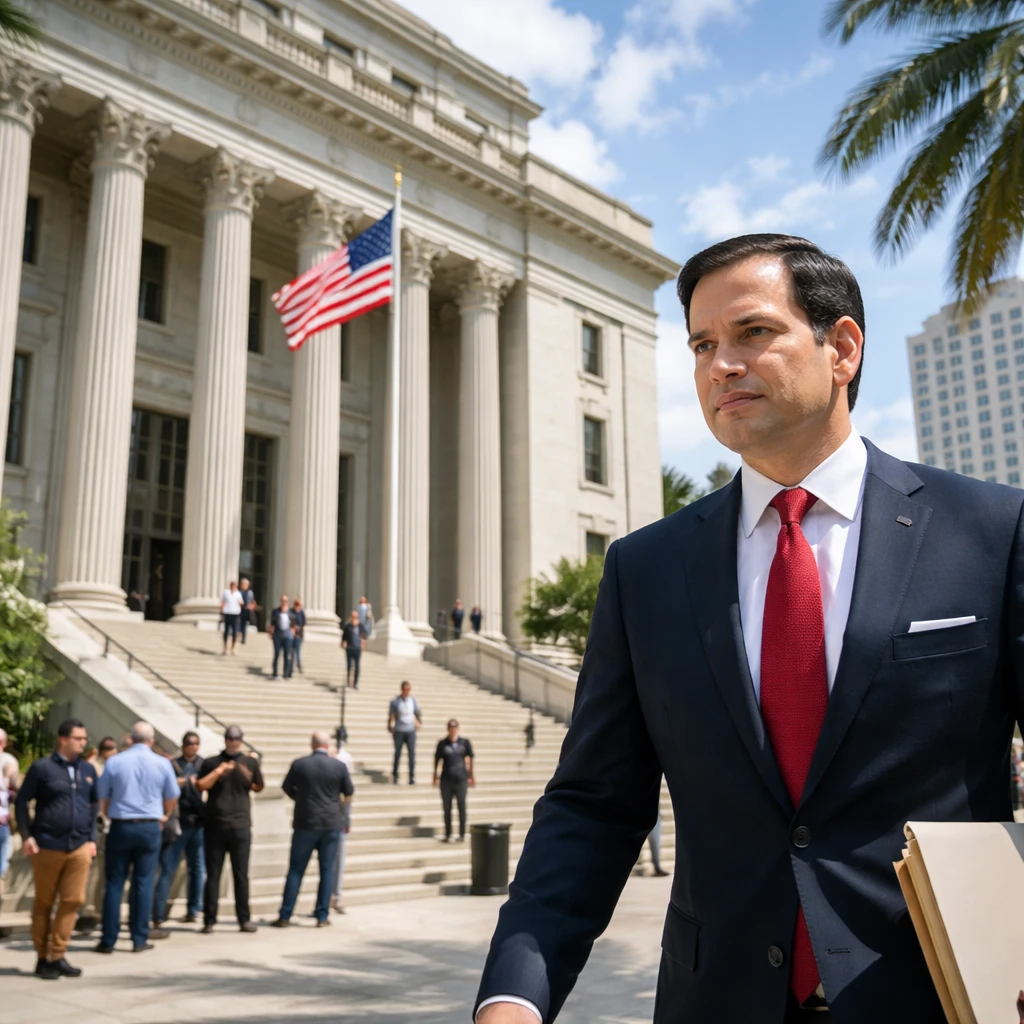
U.S. Secretary of State Marco Rubio is set to testify on Tuesday in the criminal trial of former U.S. Congressman David Rivera, who faces charges that he acted as an unregistered agent of the ousted Venezuelan president. Rubio’s scheduled appearance will take him briefly away from Washington to the federal courthouse in downtown Miami, the city where his political career began and where he maintains ties.
Prosecutors allege that Rivera, who served in the U.S. House of Representatives representing southern Florida from 2011 to 2013, lobbied American lawmakers in 2017 to ease pressure on Nicolás Maduro without disclosing he had been paid $20 million by a subsidiary of a Venezuelan state-owned company. They say that failure to disclose the payments violated the Foreign Agents Registration Act.
Among the officials Rivera is accused of meeting with at the time was Rubio, who was then a U.S. senator for Florida and is described in court filings as a onetime roommate of Rivera. Both men are Cuban-American Republicans who have been vocal opponents of left-leaning governments in Cuba and Venezuela throughout their careers.
Federal prosecutors contend Rivera met with Rubio on two occasions in 2017 and advocated for a negotiated resolution to rising tensions between the U.S. and Maduro’s government, without revealing the financial arrangements. In his opening statement on Monday, prosecutor Roger Cruz told jurors:
"You’re going to hear how he would not have sat down with his old friend if he knew that David Rivera was secretly working for Venezuela,"
Rivera has entered a not guilty plea to charges of acting as an unregistered foreign agent and money laundering.
In his opening statement, defense attorney Edward Shohat argued that Rivera’s efforts were intended to assist the Venezuelan opposition in its efforts to remove Maduro from power. Shohat told the jury that Rivera’s dealings with Rubio were independent of a contract he had with Citgo Petroleum, a U.S. subsidiary of Venezuela’s state-owned oil company.
Shohat said Rivera’s work for Citgo was commercial rather than political, and therefore did not require registration under the Foreign Agents Registration Act. He told jurors,
"David Rivera had no reason to tell Rubio about that contract,"
and, referring to Rivera’s two meetings with Rubio, added, "Both of them were about working with the Venezuelan opposition."
The trial record notes that despite the alleged lobbying activity, the Trump administration increased financial sanctions on Venezuela during President Donald Trump’s first term. Court filings also state that U.S. special forces captured Maduro in a January 3 raid on Caracas and brought him to New York to face drug trafficking charges; the filings note that Maduro has pleaded not guilty.
Rubio’s testimony comes as he has been engaged in high-level diplomacy surrounding the U.S. President’s activities related to the war in Iran, according to court scheduling and public statements. The Secretary of State’s appearance in Miami is expected to be limited in duration but is a significant moment in a trial that centers on the boundaries between commercial work, political advocacy and the legal requirements for disclosing foreign government relationships.
Legal context - The case focuses on alleged failures to register under the Foreign Agents Registration Act and alleged money laundering tied to payments from a Venezuelan state-owned company’s subsidiary.
Defendant’s position - Rivera maintains he was trying to help the Venezuelan opposition and that his Citgo-related activities were business-oriented and therefore not subject to foreign agent registration requirements.