
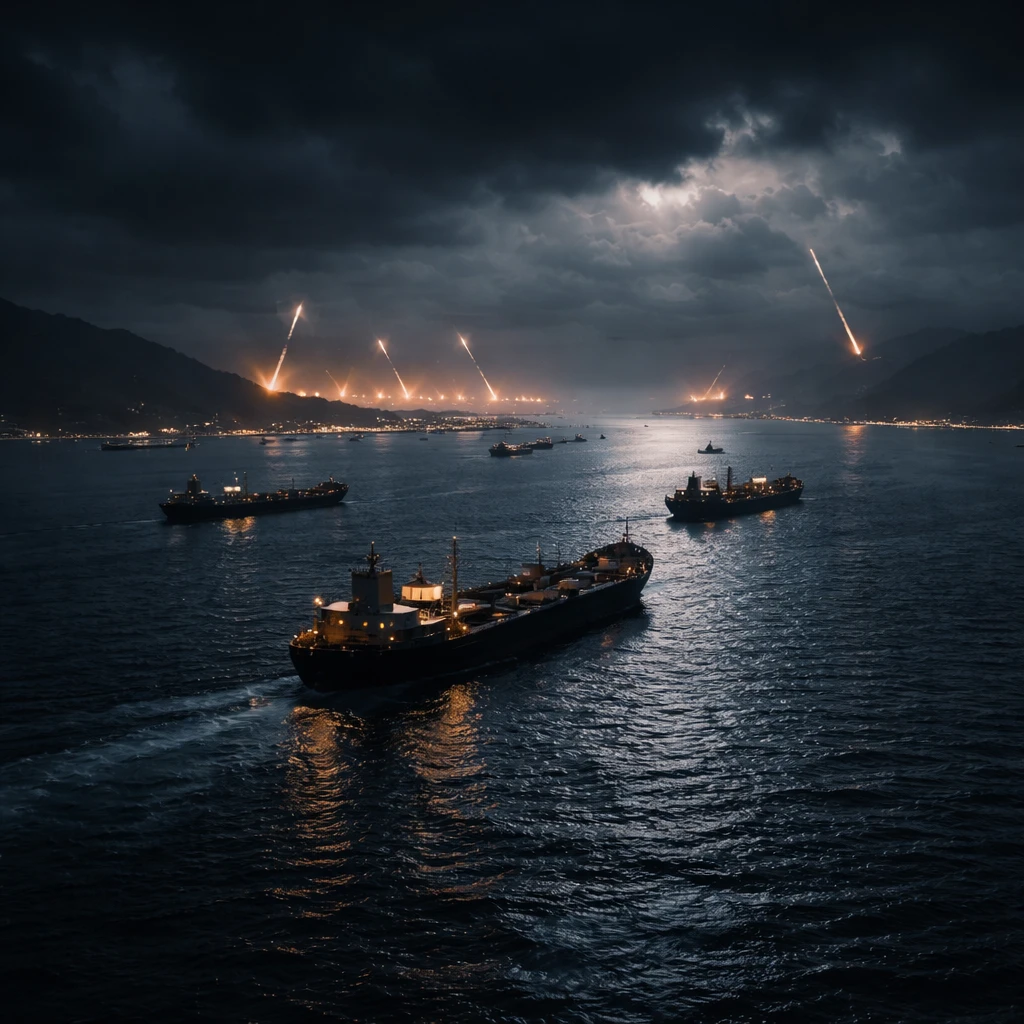
Missile and drone attacks struck multiple locations across the Middle East on Tuesday, and two major Persian Gulf states are reportedly considering joining efforts against Iran, according to multiple accounts. At the same time, officials in the United States and in Tehran issued conflicting statements about whether negotiations to pause the nearly month-long conflict had taken place.
Israeli authorities reported that a barrage of missiles originating from Iran hit Tel Aviv and other areas inside the country. Separately, reports indicated that Kuwait and Saudi Arabia had been targeted by drone and missile strikes. Israel also said it had carried out strikes on targets tied to Iran-backed Hezbollah in Lebanon.
A key element in the unfolding confrontation is the Strait of Hormuz, the strategic waterway south of Iran through which about one-fifth of the world’s oil is transported. The strait has been all but closed to tanker traffic, creating a major flashpoint in what is described as a joint U.S.-Israeli campaign against Iran and sharply limiting flows of critical energy supplies to importing countries, with a particular impact on large energy importers in Asia.
According to reports, both Saudi Arabia and the United Arab Emirates - economies with heavy exposure to shipments that transit the Strait of Hormuz - are moving toward a decision to take a more active role in the actions against Iran. Citing sources familiar with internal deliberations, those reports noted that Saudi Arabia has been considering allowing U.S. forces to operate from an air base on the western side of the Arabian Peninsula. The same reporting indicated that Crown Prince Mohammed bin Salman is close to deciding to join in the operations. The UAE is said to be tightening measures against Iranian-owned assets.
Energy markets reacted quickly. Oil prices climbed back above $100 a barrel after falling sharply in the prior session following a statement by U.S. President Donald Trump that planned strikes on Iran’s power grid would be temporarily postponed for five days. Trump said the decision followed discussions with Iranian officials he described as "productive" and "very strong."
Iran’s parliament speaker, however, denied that such negotiations were underway and accused the U.S. president of fabricating the claim to calm volatile financial markets.
By 05:49 ET (09:49 GMT), the Brent crude contract for May delivery had risen 1.74% to $101.68 a barrel. While that level is below the near-$120 per barrel peaks seen in recent days, it remains substantially above the roughly $70-per-barrel range prevailing before the outbreak of hostilities in late February.
Stock futures in the United States pointed lower following gains in all three major equity indices in the prior trading session. The benchmark 10-year U.S. Treasury yield ticked slightly higher after a modest decline on Monday.
"Just when markets feared the worst, renewed hopes of an end to the conflict pulled them back from the brink," Benjamin Schroeder, Senior Rates Strategist at ING, wrote in a note.
Persistently higher oil prices have heightened worries about an acceleration in global inflation that could prompt central banks to contemplate further interest rate action. International Energy Agency Executive Director Fatih Birol warned that the present energy shock is more severe than comparable disruptions in the 1970s.
The evolving military and diplomatic dynamics, combined with the closure of a key shipping lane, have immediate implications for energy and shipping sectors and are shaping near-term moves in financial markets. At the same time, sharply divergent official accounts of whether meaningful talks have begun underline how uncertain and fluid the situation remains.
Summary of current developments:
- Missile and drone strikes struck multiple countries in the region, including reported strikes on Tel Aviv and other parts of Israel.
- The Strait of Hormuz has been effectively closed to tankers, disrupting a route that carries roughly one-fifth of global oil supplies.
- Reports indicate Saudi Arabia and the UAE are edging toward direct participation in operations against Iran, including a possible Saudi decision to permit U.S. forces to use a western air base.
- Brent crude rose above $100 a barrel, and U.S. futures and Treasury yields showed short-term market reactions to the events and shifting diplomatic signals.