
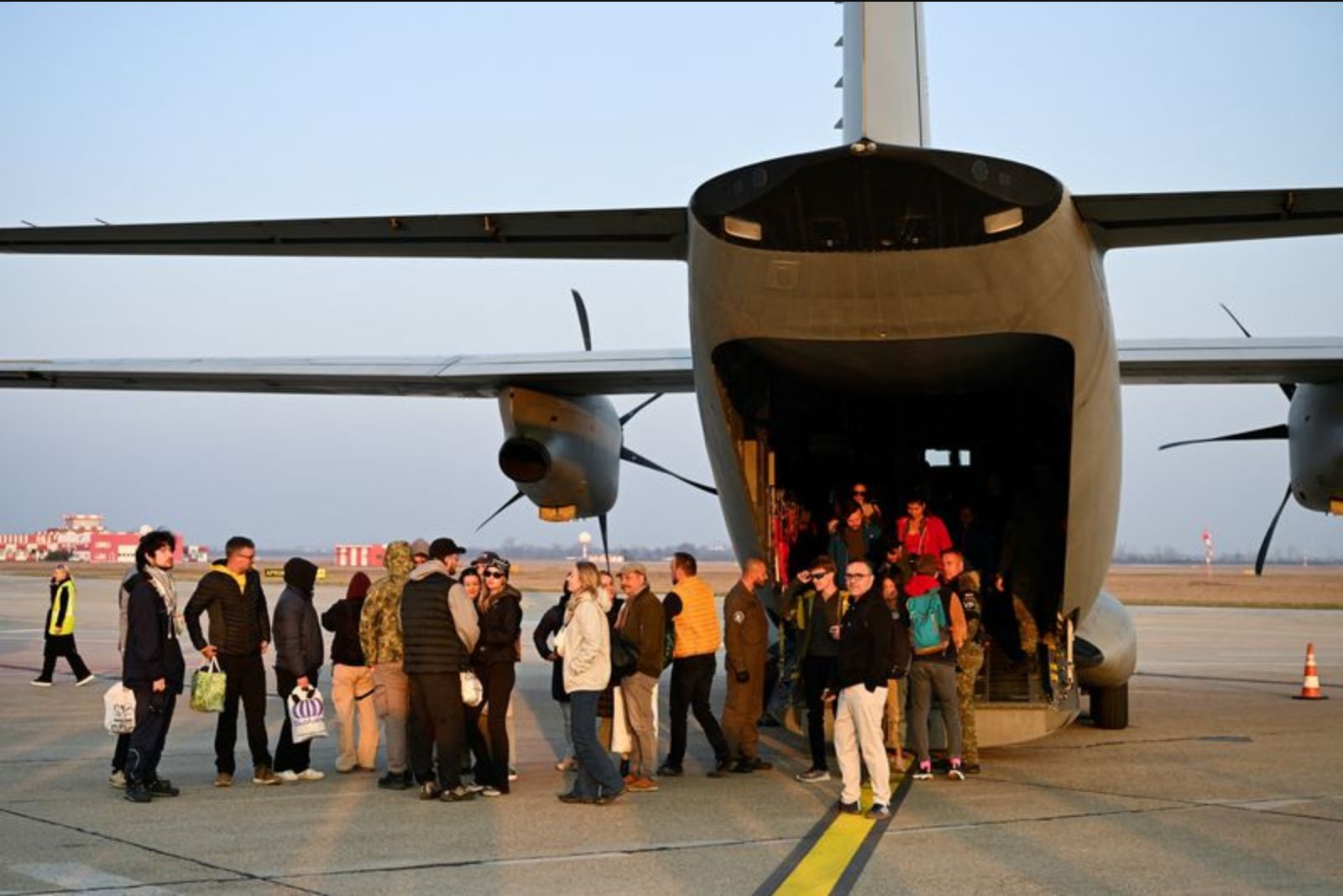
Commercial aviation in parts of the Middle East has been disrupted by recent hostilities and related strikes, leaving many foreign nationals unable to travel normally and prompting a broad set of government-led repatriation efforts. Below is a consolidated account, alphabetised by country, summarising official statements and reported flight movements related to evacuation and return operations.
Austria
Austria's foreign ministry said it had helped 117 vulnerable citizens depart the UAE and Israel via neighbouring countries. The ministry planned a first charter flight from Muscat on March 4 carrying 170 people. Officials warned that departures by land would proceed at travellers' own risk.
Bulgaria
Bulgaria reported three return flights operated by GullivAir, Bulgaria Air and the State Aviation Operator that brought citizens back from Dubai, Abu Dhabi and Oman on March 4 and March 5. The movements included a 326-seat GullivAir rotation from Dubai, a Bulgaria Air Boeing 737 rotation via Oman, and a 90-seat government aircraft arriving from Abu Dhabi.
Czech Republic
According to the CTK news agency and government officials, Prague has organised three evacuation flights so far from Oman, Jordan and Egypt, moving 175 people who had been stranded in the region. Officials said additional flights are planned.
Estonia
Estonia's foreign ministry announced on March 4 that it had arranged a flight with 180 seats from Muscat for March 5. The seat allocation was made available to Estonian citizens located in Oman and the United Arab Emirates.
European Union
The European Commission said it is coordinating repatriation flights through the EU Civil Protection Mechanism as member states ask for assistance. To date, Austria, Belgium, Bulgaria, Cyprus, Czech Republic, France, Italy, Luxembourg, Romania and Slovakia have activated the mechanism. An EU spokesperson said on March 6 that ten flights carrying more than 1,000 EU citizens have already landed in Europe.
Finland
Helsinki will run a single repatriation flight with about 160 seats for the roughly 3,000 Finnish citizens registered in the United Arab Emirates, the foreign ministry said. The flight is scheduled to depart from Muscat, Oman on March 7 and March 8.
France
The French foreign minister said several repatriation flights were planned for March 4 to return French nationals from the region, where about 400,000 French citizens are registered. France has deployed consular teams at Israel’s borders with Egypt and Jordan to help people exit by land and fly onward. Officials said a similar arrangement is in place in the UAE at borders with Oman and Saudi Arabia, where some airspace has remained open.
Germany
German Foreign Minister Johoann Wadephul said a first flight landed in Frankfurt on March 5. He added that two more flights carrying about 250 passengers were scheduled for March 5 and March 6 from the Gulf. The minister said commercial air traffic is beginning to pick up and that the government is reviewing how to provide additional support.
Greece
Greece reported repatriating 315 nationals from Abu Dhabi, Dubai, Jerusalem and the UAE on March 5. Earlier in the week, some 162 Greek citizens had already returned from the Middle East.
Hungary
Hungary's foreign ministry said 87 people were repatriated on March 4 from Amman, Jordan, with another flight carrying 88 people planned for March 5. A further flight was scheduled to depart on March 6 from Sharm el Sheik, Egypt. Budapest signed a contract with Flydubai and rented an aircraft for March 5 and March 6 to repatriate Hungarians in Dubai, and planned two flights each on March 7 and March 8 departing from Riyadh, Saudi Arabia.
Italy
Italy's foreign ministry said about 2,500 Italians have returned from Abu Dhabi, Riyadh and Muscat on commercial flights that the ministry helped facilitate. Rome has increased consular staffing in Oman and the UAE and is coordinating returns across several countries. The ministry said large groups are moving from the UAE and others are transiting by land through Qatar, Kuwait, Bahrain and Saudi Arabia. Additional Italians in Oman, Israel, the Maldives and Thailand are being assisted or prioritised for upcoming transport.
Netherlands
The Dutch Ministry of Foreign Affairs said repatriation flights from the Middle East would resume on March 6. Planned rotations include a KLM flight from Muscat and a TUI flight from Sharm el Sheik, Egypt.
Poland
Poland's Operational Command of the Armed Forces said the first group of Polish citizens evacuated by military airlift from the Middle East arrived in Poland on the morning of March 6.
Portugal
Portugal's foreign ministry said a charter TAP flight carrying 139 Portuguese citizens and eight foreigners was due to land in Lisbon at 11 a.m. local time on March 6.
Romania
Romania's foreign ministry said FlyDubai had scheduled two flights to Bucharest on March 4 and March 5. The ministry reported receiving over 3,000 repatriation requests and said around 16,000 Romanian nationals were registered in the region.
Serbia
An Air Serbia flight from Sharm el Sheik landed in Belgrade early on March 4 carrying 67 passengers who were evacuated from Israel.
Slovakia
Slovakia organised two evacuation flights out of Jordan that landed on March 3, transporting a total of 127 people, mostly Slovak nationals, the Slovak Foreign Ministry said. The ministry said more flights are planned.
Slovenia
Slovenia organised four buses on March 3, escorted by police, to move Slovenian citizens and families with children from Dubai to Muscat airport in Oman. The prime minister's office said the first flight for Slovenia took off on the evening of March 3, with two more flights scheduled for the late afternoon and evening of March 4.
Spain
Spain has begun evacuating its citizens from the Middle East, the foreign minister Jose Manuel Albares said on March 3. More than 175 Spaniards arrived on the evening of March 3 on a flight from Abu Dhabi, and further flights were expected from the UAE via Istanbul. Spain said it was reinforcing its embassies in the UAE, Saudi Arabia, Oman and Bahrain to provide support and facilitate additional repatriations.
Sweden
Sweden said it would charter a plane to repatriate 180 vulnerable Swedes identified in the region. The flight was being planned to depart Dubai on March 7.
Thailand
Thailand plans to evacuate its nationals from Iran by land to Turkey on March 7 and March 10. The Thai government said other nationals stranded in Iraq, Qatar, Bahrain, the UAE and Jordan are returning or will return once airspace reopens.
United Arab Emirates
The UAE civil aviation authority said it would operate "special flights" across the country's airports to help some of the tens of thousands of passengers stranded in the region to depart, the state news agency WAM reported.
United Kingdom
British-chartered flights were scheduled to leave Oman on March 5 after technical delays on March 4, the British Foreign Office said. The flights will prioritise vulnerable UK nationals who want to leave the region. The Foreign Office said about 130,000 British citizens had registered their presence in the region.
This account brings together the official statements and reported flight movements that governments have announced as they seek to repatriate citizens amid disruption to commercial services. Many countries are using a mix of chartered aircraft, commercial rotations, military lifts and land corridors to move people out of affected areas. The European Commission is acting as a coordinating body for member states invoking the EU Civil Protection Mechanism, and several nations have increased consular staffing or arranged police-escorted bus movements where air travel has not been possible.
Officials in some countries have warned that land departures carry risk, while others noted that some airspace in the region remains open and is being used for repatriation flights. Several nations reported specific seat counts, charter arrangements and contracted airlines that are assisting with returns.
As operations continue, governments indicated additional flights would be scheduled and that coordination between foreign ministries, consular teams and operators remains active to process a large number of repatriation requests and to prioritise vulnerable citizens.