
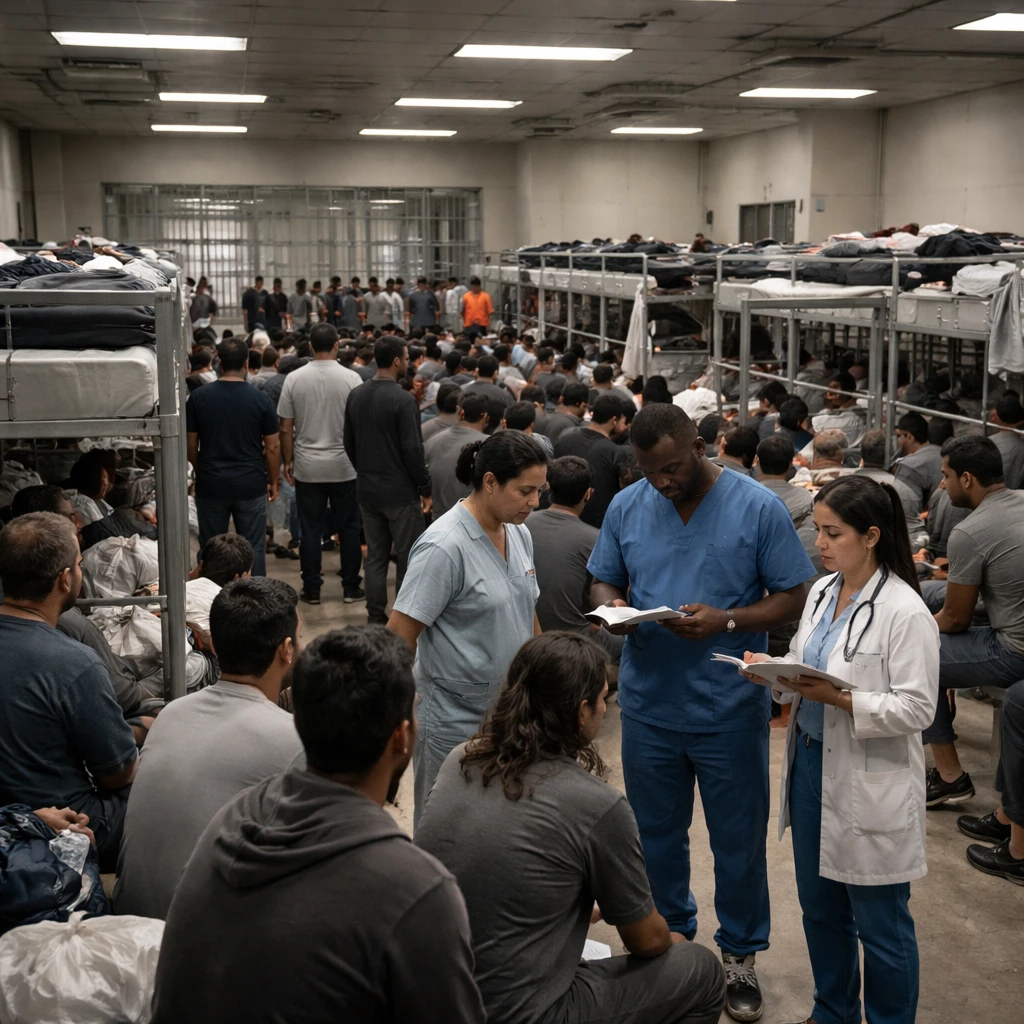
Shares of Geo Group Inc (NYSE:GEO) slipped 1% on Friday after the California Department of Justice released a 169-page report documenting a decline in conditions at immigrant detention centers statewide. The assessment attributed the worsening circumstances to a surge in arrests tied to the Trump administration’s mass deportation campaign, which the report said produced overcrowding and insufficient medical care at the facilities reviewed.
The DOJ inspected all seven facilities active in 2025. Four of those facilities are run by Geo Group: Adelanto ICE Processing Center, Desert View Annex, Golden State Annex, and Mesa Verde ICE Processing Center. The remaining sites are operated by Management & Training Corporation and CoreCivic. Shares of CoreCivic Inc also fell 1% on the same day.
The report documents a substantial increase in the detained population over the period covered by site visits. According to the assessment, the detained population in California facilities rose approximately 162% - from 2,303 detainees during 2023 site visits to 6,028 during 2025 visits. The report states that this surge put strain on resources and operations across the inspected facilities.
One facility cited in the report, Geo Group’s Adelanto ICE Processing Center, experienced a dramatic population increase, from seven detainees in November 2023 to 1,570 in July 2025. The assessment also records four deaths of detainees at Adelanto between September 2025 and March 2026, which the report associates with substandard medical care. Two additional detainee deaths were reported at the Imperial Regional Detention Center, operated by Management & Training Corporation.
Inspectors identified multiple violations of Immigration and Customs Enforcement detention standards across all seven facilities. The report lists issues including inadequate medical staffing, delayed treatment, overcrowding, insufficient food portions, and inadequate intake processes. To prepare the assessment, California Department of Justice personnel worked with correctional and healthcare experts to tour facilities, review internal documents and detainee records, and conduct interviews with detainees.
As part of the evaluation, 194 detainees were interviewed, and internal records and operational documents were analyzed, according to the report. The report attributes the accelerated population growth and resulting operational strain to increased arrests linked to the administration’s deportation campaign, and it connects those factors to the deficiencies found across the inspected sites.
The findings underscore operational and care-related challenges at privately operated detention centers in California and were followed by modest stock price declines for the companies named in the report. The assessment’s specific facility-level population figures and the documented deaths are central elements of the DOJ's critique.
Key points
- Geo Group operates four of the seven California detention facilities covered by the 169-page DOJ report; its shares fell 1% on publication of the report.
- The detained population in inspected facilities rose roughly 162% from 2,303 during 2023 site visits to 6,028 during 2025 visits, contributing to operational strain.
- Inspectors reported multiple violations of ICE detention standards - including medical staffing and treatment shortfalls, overcrowding, and inadequate intake processes - and recorded multiple detainee deaths at inspected facilities.
Sectors impacted - Private corrections/detention operators and entities providing healthcare and services to detention facilities.
Risks and uncertainties
- Regulatory and oversight risk: The report documents standards violations and deaths tied to medical care, which could prompt additional scrutiny of private operators in the corrections sector.
- Operational strain: Rapid population increases and overcrowding cited in the report pose ongoing operational challenges for facility operators and service providers.
- Reputational and legal risk: Documented detainee deaths and reported care shortfalls at facilities may raise legal and reputational exposures for operators and contractors associated with detention services.
Note: The article presents the findings and figures as reported in the California Department of Justice assessment; it does not add information beyond what the report contains.