
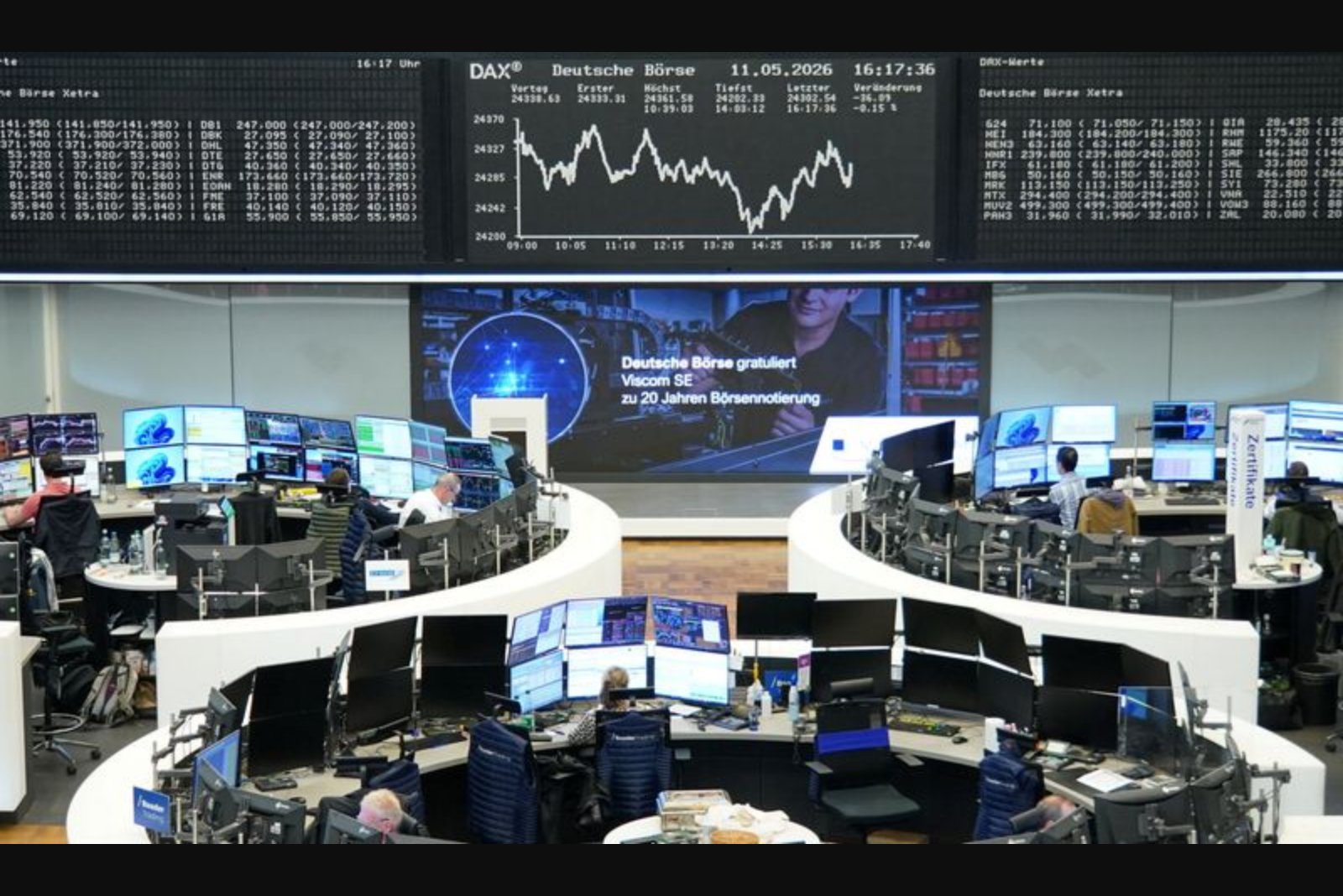
European share indices moved lower on Tuesday as diplomatic progress between the United States and Iran stalled, lifting oil prices and denting investor confidence. U.S. President Donald Trump described the ceasefire with Iran as "on life support" after Tehran rejected a U.S. proposal to end the conflict and presented a list of demands that Trump called "garbage."
The pan-European STOXX 600 declined 1.1% to 605.79 points as of 0703 GMT. Major regional benchmarks also slipped, with London’s FTSE 100 and Germany’s DAX each down by more than 1% during early trading. Market participants cited renewed geopolitical risk and the potential for supply disruptions as key drivers of the risk-off mood.
Concerns about the strategic Strait of Hormuz were again front of mind for energy-sensitive European markets. A possible closure of the waterway has exerted upward pressure on oil prices and contributed to keeping European indices below levels seen before the onset of the regional conflict. That dynamic is weighing on markets given Europe’s exposure to higher energy costs.
Economic data added another dimension to the market picture. Official numbers showed that Germany’s inflation rate accelerated slightly to 2.9% in April. Investors also prepared to assess U.S. inflation data released later in the day, which market participants said would be closely watched for indications of how the Iran conflict might flow through to broader price trends.
On the corporate front, individual stocks moved on company-specific news. Germany’s Thyssenkrupp fell 2.4% after the conglomerate reduced its sales outlook for 2026, prompting investor reassessment of its near-term performance. Meanwhile, shares of Bayer rose 1.5% after the German firm reported a quarterly operating profit that beat expectations.
Overall, a combination of geopolitical uncertainty, energy-market sensitivity and fresh economic data left European markets subdued, with investors focused on how those elements might affect growth and corporate earnings in coming months.