
Corning Inc. shares jumped +10.37% in mid-day trading, touching a 52-week peak at $207.60 as investors reacted to a concentrated set of developments highlighting the company’s repositioning around high-growth markets. The move coincided with Corning’s addition to Bank of America’s US 1 List - the firm’s roster of top investment ideas - a designation that the bank applied to Corning alongside FedEx and C.H. Robinson Worldwide.
The Bank of America listing singles out Corning’s strategic emphasis on its Springboard growth plan and a sharper focus on photonics as central elements of the investment case. That endorsement arrived in the wake of several high-profile corporate actions that market participants see as material to Corning’s long-term trajectory.
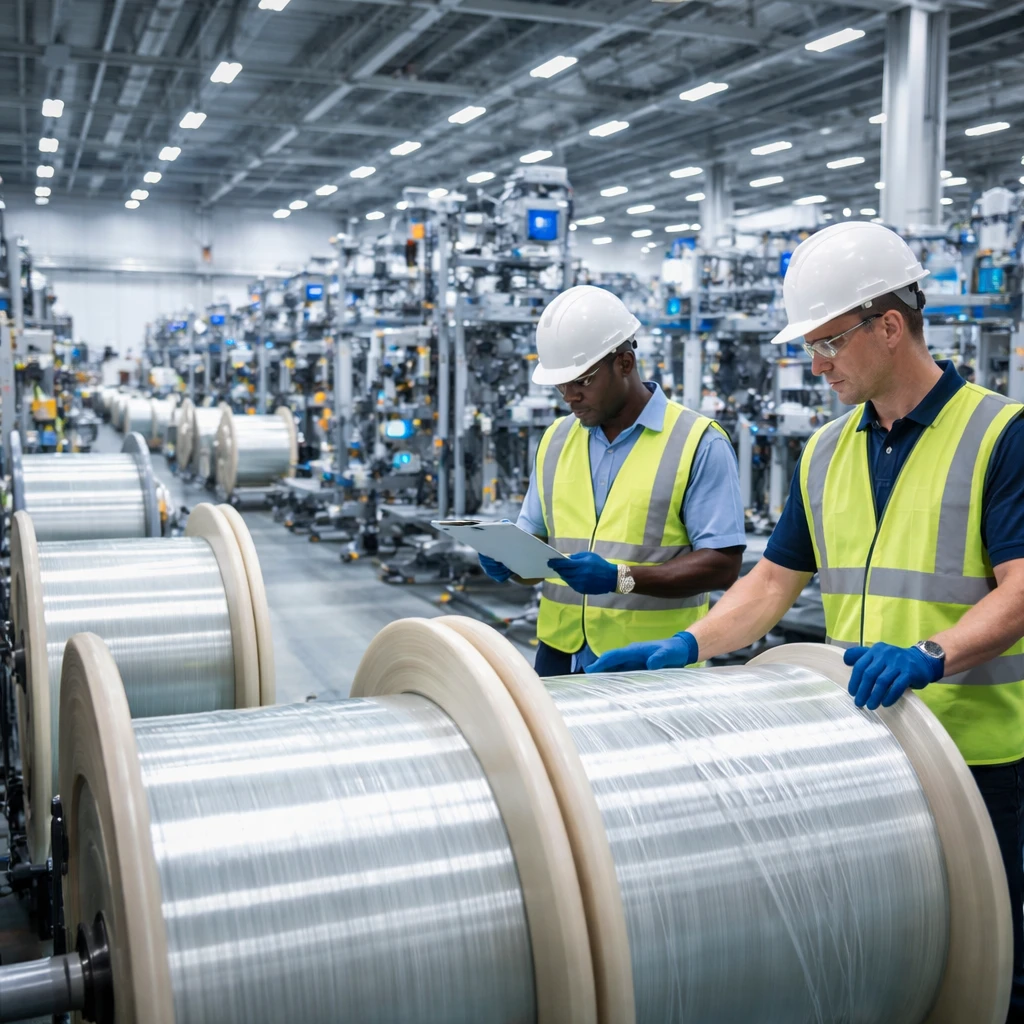
On May 6, Corning and Nvidia unveiled a multiyear commercial and technology partnership intended to substantially scale U.S.-based production of advanced optical connectivity components that are crucial for next-generation AI infrastructure. As part of that agreement, Corning said it will increase its U.S.-based optical connectivity manufacturing capacity by a factor of 10 and grow domestic fiber output by more than 50%. The company plans to accomplish these capacity increases by building three advanced manufacturing facilities in North Carolina and Texas, which Corning expects will support the creation of over 3,000 new high-paying jobs in the United States.
The momentum continued on May 7 when Oppenheimer analyst Martin Yang kept an "Outperform" rating on the stock and lifted his price target from $120.00 to $210.00, a change that reflects a 75% increase in his valuation benchmark. That analyst action is one of several market signals reflecting renewed investor conviction.
Underlying the market response is an upgraded long-term revenue roadmap tied to Corning’s Springboard plan. The company refreshed its target to reach a $30 billion annualized sales run rate by the end of 2028 and extended the objective to target a $40 billion annualized run rate by the end of 2030, while citing a high-confidence plan at $35 billion. Those revised targets were presented alongside Corning’s first-quarter 2026 results, which showed core sales up 18% to $4.35 billion and core EPS rising 30% to $0.70.
Operational detail from the quarter underscores where growth is coming from: Optical Communications revenue increased 36% year over year, while Solar sales surged 80% year over year. The company attributed these gains to robust demand for generative AI-related products and newer solar offerings.
Market context was modestly supportive on the trading day, with the S&P 500 up +0.33% and the NASDAQ up +0.37%, but those broad-market moves were small relative to Corning’s outsized performance. Analysts at Bank of America elevated Corning into the firm’s US 1 List, presenting the stock as a top idea tied to the firm’s conviction around Corning’s strategic initiatives.
Notably, insider transactions over the past three months show $39.2 million in shares were sold, a sizeable level of insider selling that, according to market behavior on the day, did not deter investors from bidding the shares higher amid the convergence of corporate and analyst catalysts.
From a demand-angle perspective, the company characterized Optical Communications as a key driver of its Q1 outperformance, supported by AI-related demand and activity from carriers. Corning projected a mid-teens-plus growth trajectory for the business, citing a 13% compound annual growth rate through 2027 in company communications. Collectively, the Nvidia partnership, the upgraded Springboard targets, stronger-than-expected quarterly performance and public-facing hyperscaler deals produced a multi-layered catalyst stack that helped justify the stock’s run relative to broader market moves.
Investors and market watchers will be watching execution closely as Corning scales new U.S. facilities and pursues an accelerated capacity expansion timeline. The company’s stated job creation and manufacturing commitments in North Carolina and Texas are central to the narrative that Corning is positioning itself as a critical supplier for AI infrastructure buildouts.