
Economy May 5, 2026 10:41 AM

Satellite imagery points to Iranian tanker possibly bypassing U.S. Gulf blockade

Monitoring firm identifies a very large crude carrier off Bali after period of silence on tracking systems

By Hana Yamamoto
Satellite imagery points to Iranian tanker possibly bypassing U.S. Gulf blockade

Satellite analysis from a maritime monitoring firm indicates that a very large crude carrier sailing under Iran's flag appears to have surfaced off Bali after months without entries on commercial tracking systems. The vessel had been observed near an Iranian port just hours before the U.S. enforcement operation in the Gulf of Oman began on April 13.

Key Points

  • Satellite monitoring firm TankerTrackers.com identified the VLCC Huge off Bali after months of absence from commercial tracking systems - impacts shipping surveillance and maritime logistics.
  • U.S. forces have redirected 50 vessels since the blockade of the Gulf of Oman began on April 13 - relevant to naval operations and commercial shipping security.
  • Several Iranian tankers have gathered near Chabahar, a port close to the Pakistan border and just inside the blockade perimeter - this concentration has implications for energy transport routes and oil market access.

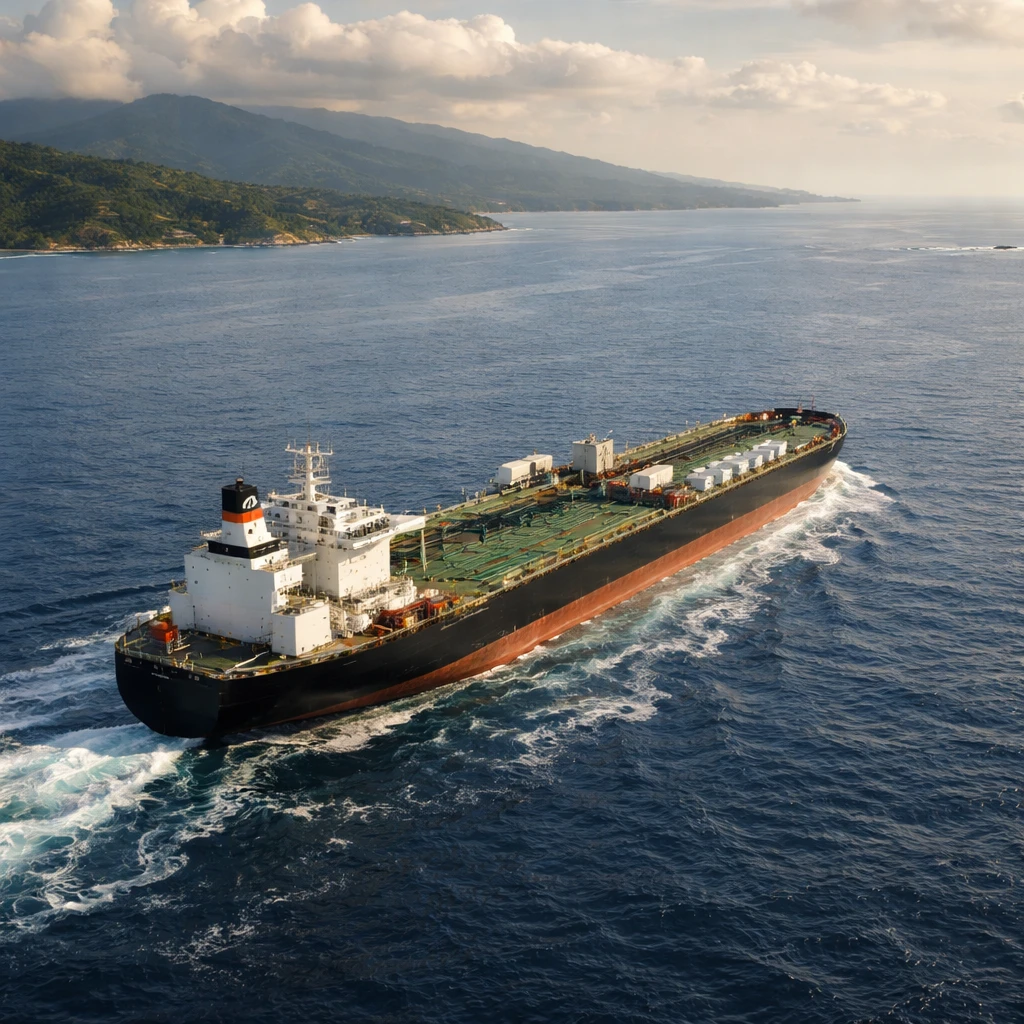
Maritime satellite imagery has identified an Iranian-flagged very large crude carrier (VLCC) that appears to have cleared a U.S.-led blockade aimed at preventing oil-laden vessels from departing the Gulf of Oman, according to TankerTrackers.com.

The ship, known as the Huge, was detected off the coast of Bali on Sunday after an extended absence from public digital ship-tracking feeds. Samir Madani, co-founder of TankerTrackers.com, said satellite images corroborated the vessel's position near Bali and that the ship had been at an Iranian port hours before the U.S. blockade took effect on April 13.

The United States has put in place measures to stop ships carrying Iranian oil from leaving the Gulf of Oman. U.S. Central Command reported on Monday that American forces have redirected 50 vessels since the enforcement began on April 13.

Recent movements show a concentration of Iranian vessels near the port city of Chabahar, which lies close to the Pakistan border and just short of the established U.S. blockade line. The U.S. Navy has previously said that some interdicted tankers were redirected to remain idle in waters near Chabahar.

Madani's assessment, based on satellite imagery and tracking analysis, indicates that the Huge is likely the only vessel he has observed to have evaded the blockade so far. He reported seeing imagery of the ship at Chabahar on the morning of April 13; the blockade began later that afternoon.

This week the U.S. launched an operation to escort commercial shipping through the Strait of Hormuz following a flareup in hostilities on Monday tied to the wider U.S.-Iran standoff. The escort mission is intended to protect commercial vessels transiting one of the world's key chokepoints for oil and shipping lanes.


Note - Reporting is based on satellite imagery analysis and statements from maritime monitors and U.S. military communications. No additional independent confirmations have been provided beyond these sources.

Risks

  • Potential enforcement gaps in the U.S. blockade if vessels like the Huge can transit undetected - affects maritime security and insurers covering shipping routes.
  • Ongoing regional tensions and recent hostilities that prompted U.S. convoy operations through the Strait of Hormuz - increases risk to commercial shipping and energy supply chains.
  • Concentration of vessels near Chabahar could leave ships idle and vulnerable to further interdiction or disruption - poses risks to oil shipments and port operations.

More from Economy

Incoming Hungarian PM Signals Budget Shortfall of 6.8% of GDP May 5, 2026 JPMorgan: April saw a pullback in deal activity as Iran war uncertainty prompted client pauses May 5, 2026 Fed’s Bowman Flags Rising Threat from Consumer Fraud to Financial System May 5, 2026 Wolfe: One Big Beautiful Bill Provides Modest Lift but Not the Boom Expected May 5, 2026 Recent college graduate unemployment unchanged at 5.6% in March, New York Fed says May 5, 2026