
Economy June 16, 2026 09:50 PM

Oil Slides as Iran Supply Prospects Rise Amid Fed Waiting Game

Crude prices plummet below $80 on expectations of restored Iranian exports while markets brace for new Federal Reserve leadership

By Ajmal Hussain
Share
Twitter Reddit Facebook LinkedIn

Global oil markets experienced a sharp downturn as U.S. officials signaled plans to waive sanctions on Iranian petroleum exports. This development follows a proposed agreement to end the U.S.-Iran conflict, raising hopes for normalized supply flows through the Strait of Hormuz. The influx of potential barrels has sparked inflation relief sentiments, pushing bond yields lower. Meanwhile, investors remain cautious ahead of Kevin Warsh's inaugural meeting as Federal Reserve chair, creating a complex macroeconomic backdrop for equities and currencies.

Oil Slides as Iran Supply Prospects Rise Amid Fed Waiting Game
Summarize with
ChatGPT Perplexity Claude Grok Gemini

Key Points

  • Crude prices plunged below $80 per barrel as U.S. officials indicated plans to lift sanctions on Iranian oil exports under a proposed peace agreement. This move is expected to restore significant supply volumes and ease inflationary pressures across energy-dependent sectors.
  • Bond markets reacted swiftly to the supply outlook, with U.S. yields declining and Asian counterparts following suit. Japanese 10-year yields fell to 2.63% and Australian rates dropped to 4.787%, reflecting reduced inflation fears.
  • Equity markets showed divergent performance, with the Nasdaq falling 1.15% as investors reduced tech and semiconductor positions. Meanwhile, the Dow Jones reached a record high supported by gains in financial and industrial stocks, while Asian markets remained largely steady.

SINGAPORE, June 17 - Tumbling crude prices on news that Iranian fuel may soon hit global markets promised inflation relief and pushed bond yields lower on Wednesday, while stocks and currencies were quieter ahead of Kevin Warsh’s debut meeting as Federal Reserve chair. Brent crude futures dived below $80 to the lowest since the opening salvos of the U.S.-Iran conflict in March. A senior U.S. official said the U.S. will waive sanctions on Iranian oil, under the deal to end the war, raising the prospect of millions of additional barrels of supply. U.S. bond yields dipped and rates in Asia followed suit, with 10-year Japanese yields down 1.5 basis points to 2.63% and 10-year Australian rates down almost 5 bps to 4.787%. "Markets appear to be pricing in a relatively high probability of a full Hormuz flow normalisation," said Kim Fustier, senior oil and gas analyst at HSBC, though the bank thinks it will take until the end of September. Few details of the U.S.-Iran agreement, due to be signed on Friday, have been publicly confirmed and a three-month stranglehold on the Strait of Hormuz has drained oil inventories, with U.S. reserves at the lowest since 1983. Overnight on Wall Street, investors trimmed crowded bets on tech and semiconductor stocks, pulling the Nasdaq down 1.15%, while rising financial and industrial stocks helped the Dow notch a record high. Futures were slightly positive in Asia, while chipmaker-heavy markets in Taiwan and South Korea inched lower and MSCI’s broadest index of Asia-Pacific shares outside Japan fell about 0.3%.

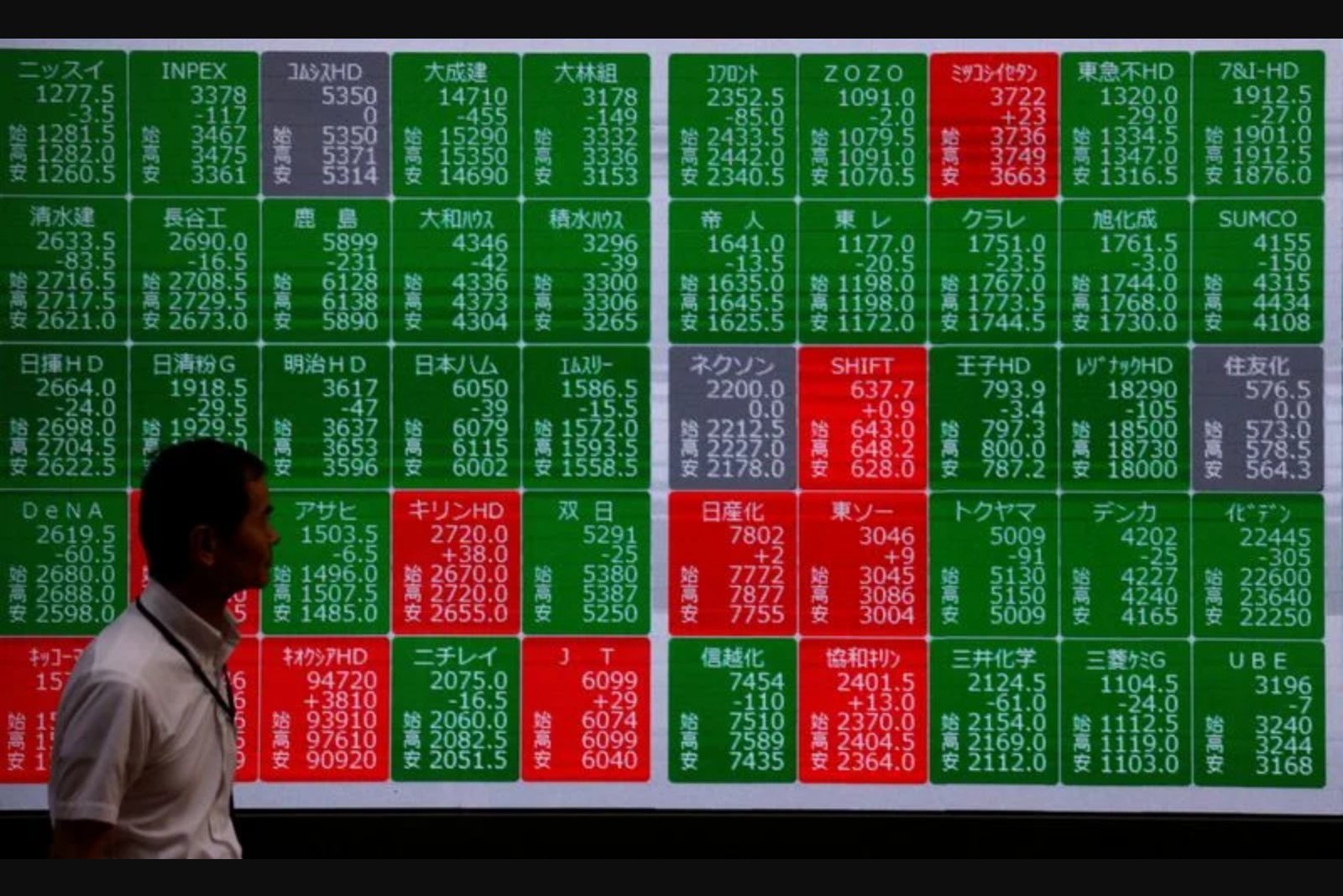
Japan’s Nikkei rose 0.4%. Stock markets in Hong Kong and Shanghai were broadly steady. Traders are waiting to see how Warsh walks the line between his dovish president and markets, which expect a hike this year, and the anticipation has broadly held the dollar in stasis. The euro firmed only a little this week, to hover around $1.16. Tuesday’s expected rate hike in Japan failed to lift the yen, though the downside was protected by the risk of official intervention, holding it at 160.3 to the dollar. A change in the Fed funds rate is unlikely so the focus is on the press conference and committee members’ projections, which in March showed most expected to cut rates this year. "We expect Warsh to downplay forward guidance, instead advocating patience on policy rates and inflation - leaning dovish relative to market pricing," said Xiao Cui, senior economist at Pictet Wealth Management. "If Warsh embraces the possibility of rate hikes and does not push back on market pricing, this could be interpreted as hawkish."

Risks

  • The U.S.-Iran agreement is scheduled for signing on Friday, but few details have been publicly confirmed, creating uncertainty around the timeline for supply normalization. HSBC analysts project full restoration of Hormuz flows may not occur until late September, delaying inflation relief.
  • Federal Reserve leadership transition adds policy uncertainty. Kevin Warsh's inaugural meeting will focus on forward guidance rather than immediate rate changes. Market expectations for rate hikes conflict with the Fed's dovish presidential direction, potentially causing volatility in rate-sensitive sectors like real estate and utilities.
  • Japanese yen weakness persists despite a rate hike, held near 160.3 to the dollar by intervention risks. This dynamic impacts import-dependent sectors and could exacerbate inflation if energy costs rebound despite the current supply optimism.

More from Economy

Japan's Export Surge Outpaces Expectations Amid Geopolitical Headwinds Jun 16, 2026 Exclusive-US holds off blacklisting China's DeepSeek, more than 100 firms deemed security risks, sources say Jun 16, 2026 Japan Manufacturing Sentiment Gains Momentum Amid Chip Demand Surge Jun 16, 2026 G7 Pledges Debt Action Amid Shrinking Aid Jun 16, 2026 Wall Street Closes Mixed as Dow Hits New High, Oil Slides on Iran Ceasefire Jun 16, 2026