
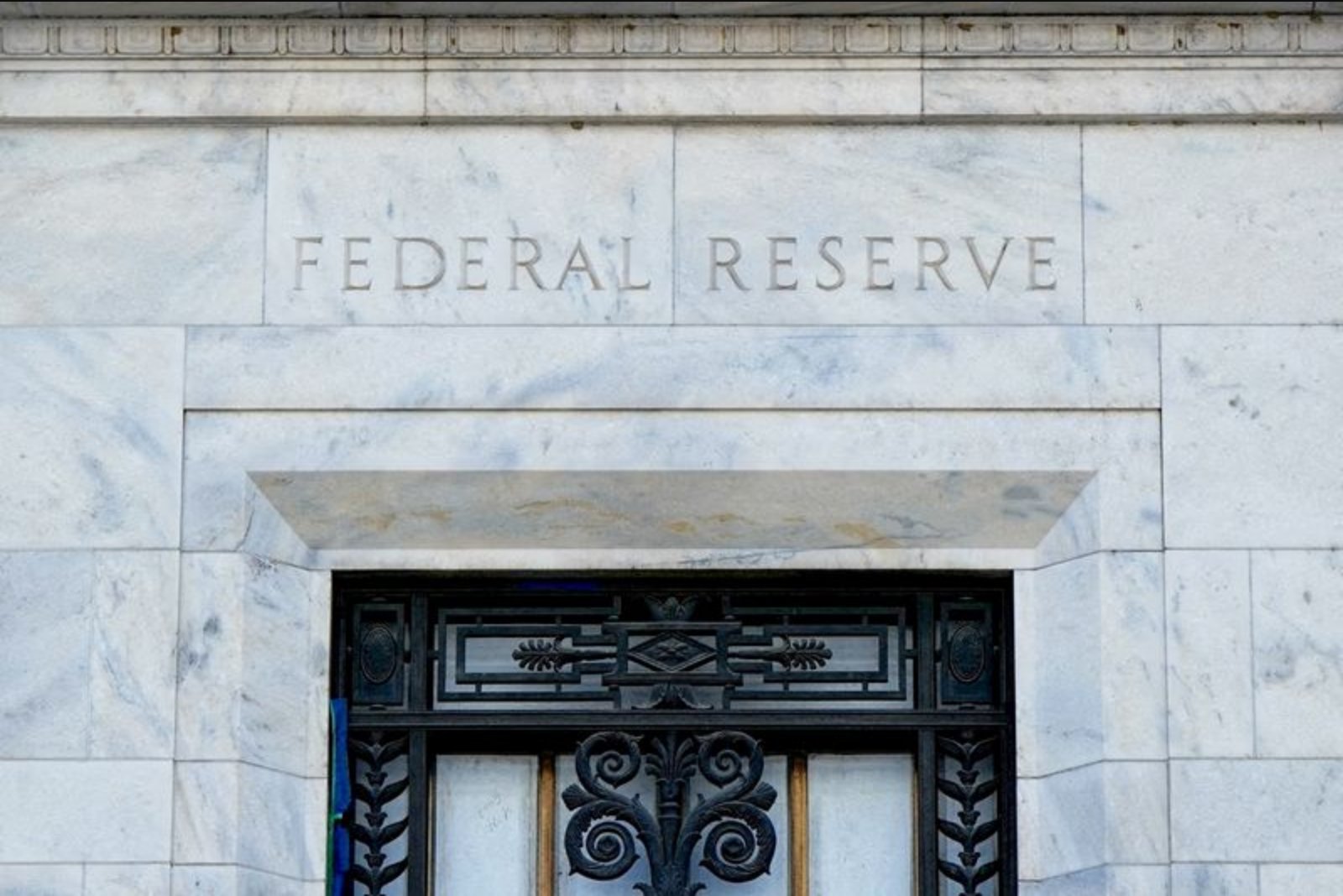
The U.S. jobs report expected later this week will be a key test of whether the economy is still resilient enough to justify the Federal Reserve holding policy steady or whether signs of a softer labor market could reopen the case for interest rate cuts that recent geopolitical tensions have largely sidelined.
Strong growth readings and worries that the conflict with Iran could fuel inflation have combined to push market expectations away from rate reductions this year - a notable shift since early January, when futures markets were pricing in two 25-basis-point cuts for 2026. Jonathan Cohn, head of U.S. rates desk strategy at Nomura, said that the economic backdrop and recent data have been "quite resilient through the conflict." He added that even without the uncertainty from Iran, "one could make the case that the economy doesn’t require meaningful easing at this point."
Analysts say that a clearly weakening jobs market could prompt Fed officials to re-examine the path of policy toward lower rates. Still, they caution that even a very weak employment report might not by itself change the central bank’s consensus. That is because last month’s employment figures were strong, other economic data have been solid, and inflation remains stubbornly elevated.
Investors had been relying on rate cuts to help support further gains in stocks and other assets. But robust economic data has strengthened the argument against reductions in borrowing costs, even if the conflict in the Middle East were to resolve in the near term. In March, the U.S. economy added 178,000 jobs, roughly triple the 60,000 advance that economists surveyed by Reuters had been forecasting, while the unemployment rate edged down to 4.3%.
Market repricing has been pronounced across the Treasury curve. Benchmark 10-year Treasury yields have risen to 4.43% from 3.94% before the war began on February 28. Rate-sensitive 2-year yields climbed to 3.94% from 3.38%. That broad move reflects investors adjusting to a higher-for-longer interest rate environment.
Dissent within the Fed on easing prospects
So far there are few signs that easing is front of mind for policymakers. The Fed left policy rates unchanged at its most recent meeting, but three officials dissented over language that suggested the committee had a bias toward cuts. Vail Hartman, U.S. rates strategist at BMO Capital Markets, said that "over the inter-meeting period, there was growing support for a more neutral stance on the future path of interest rates."
Fed Chair Jerome Powell noted at his post-meeting press conference that the central bank could drop its easing bias as soon as its June 16-17 meeting. Analysts say the threshold for conditions that would support a cut from the current fed funds range of 3.50%-3.75% has narrowed considerably.
Data showing renewed momentum in U.S. growth during the first quarter have added to the challenge of making a case for easing. Businesses increased investment related to artificial intelligence, government spending rebounded after a prior shutdown, and consumer spending has held up even as gasoline prices have risen.
Hartman summarized the situation bluntly: "If the Fed cuts, it’s not going to be because we got good news on inflation data. It’s going to be because we got bad news on the labor side." He emphasized that any meaningful shift toward cuts would require evidence of labor market weakness across more than a single report, most likely in the form of a sustained rise in the unemployment rate.
Economists polled by Reuters expect the Labor Department to report on Friday a gain of 62,000 jobs last month, with the unemployment rate remaining unchanged at 4.3%.
Inflation bar remains elevated even if oil stabilizes
Even should oil prices revert to more normal levels following any ceasefire, analysts warn that inflation was already on an upward trajectory before the conflict began. Vail Hartman noted that inflation had been rising ahead of the oil shock, and that one should not assume the inflation risk goes away simply because the immediate oil-related factor has diminished.
Cohn pointed to several dynamics that have limited the market’s willingness to price in durable Fed easing. Those include the pending Senate confirmation of former Fed Governor Kevin Warsh to replace Powell as head of the central bank, long-term inflation expectations that remain anchored, and what he described as the Fed policy committee’s "implicit dovish bias." But Cohn warned that such a bias by itself would be insufficient to revive aggressive rate-cut expectations without a visible deterioration in economic data.
Another element that may have masked underlying softness has been an unusually large wave of tax refunds, which Michael Lorizio, head of U.S. rates and mortgage trading at Manulife Investment Management, said helped consumers absorb higher energy costs. How quickly that cushion dissipates, and whether the impact of higher oil prices materializes in consumption or other economic measures, will be important for markets as they assess the likely path of Fed policy.
For now the bar remains high on both sides. In the absence of a discernible crack in labor markets, the case for rate cuts is difficult to construct. At the same time, with inflation elevated, the rationale for keeping policy restrictive is straightforward. As Cohn put it, "If you see the labor market data begin to crack, then cut expectations can reemerge in a more meaningful way. Absent that, I think the market will struggle to get back all the way to what we were pricing pre-war."
What market participants will watch
- Monthly payrolls and the unemployment rate, with particular focus on whether weakness appears in more than one report.
- Inflation trends, and whether any normalization in oil prices is sufficient to alter underlying inflation momentum.
- Treasury yields across the curve, which have already repriced to reflect a higher-for-longer rate outlook.