
Japan is betting that a compact alliance - the Bank of Japan, the Ministry of Finance and a high-profile U.S. Treasury official - can give fresh traction to yen-buying intervention and blunt continued pressure on the currency. The objective is not an abrupt reversal of the yen's weakness but rather making it more costly to short the currency.
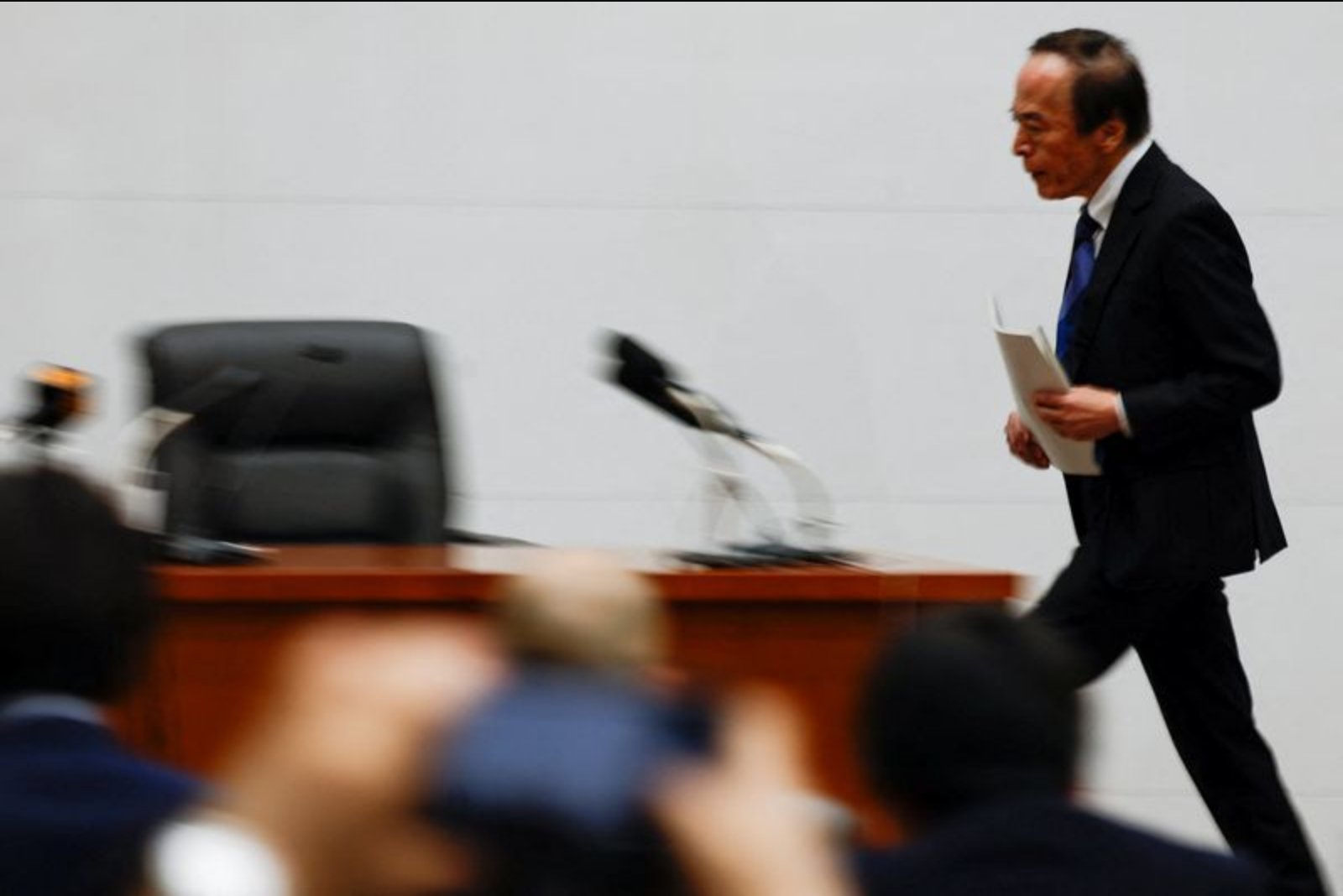
The turning point was Governor Kazuo Ueda's more hawkish tone late last month, a shift that briefly aligned the BOJ with the MOF and presented markets with a more cohesive stance as Tokyo moved to stem the yen's decline. Two days after Ueda's April 28 comments, the MOF mounted its first yen-buying intervention in almost two years - an operation followed by several further interventions in May, according to sources.
Analysts estimate that authorities have spent close to 10 trillion yen ($63.7 billion) in this recent round of market activity. With U.S. Treasury emissary Scott Bessent scheduled to visit Japan next week, Tokyo appears to be counting on his presence to add momentum to its actions - either through an explicit endorsement or carefully chosen language that signals U.S. tolerance for Japan's moves.
State Street's Tokyo branch manager Bart Wakabayashi described the situation as an important alignment of policy actors. "At this time, it is a significant alignment," he said, referring to Japanese officials working closely with the U.S. to undercut yen bears. He added that the mere impression of dialogue on FX levels between Tokyo and Washington carries weight. "It is significant, particularly in the fact that Japan is not doing this alone. We’re looking to see if something comes out of these Bessent meetings, but I think even just the appearance that they’re talking about FX levels is important," he said.
Bessent previously played a prominent role in shoring up the yen in January when he urged faster BOJ rate increases to halt yen falls and helped prompt an unusual U.S. rate check - an action widely viewed as paving the way for potential coordinated pressure on currency markets. During his upcoming three-day stay in Tokyo, Bessent is expected to meet with his Japanese counterpart Satsuki Katayama, Prime Minister Sanae Takaichi and possibly BOJ Governor Ueda.
Former central bank official Atsushi Takeuchi, who participated in Tokyo's earlier market interventions, noted the importance of U.S. backing. "No one wants to fight the U.S.," he said. "I’m sure Japanese policymakers are approaching Washington on various fronts, as it would make a huge difference if Bessent openly endorses Tokyo’s intervention."
Senior currency diplomat Atsushi Mimura said that Tokyo maintains daily contact with U.S. authorities and that his U.S. counterparts "fully understand our thinking and our actions."
Once Bessent concludes his visit, the focus shifts back to the BOJ to underwrite the MOF's efforts to stabilise the yen. Market participants will closely examine a series of speeches by senior BOJ officials ahead of the central bank's June policy meeting for evidence that last month's hawkish pivot is hardening into policy.
Where past episodes saw dovish wording from Governor Ueda permit traders to sell the yen, this instance has seen his emphasis on inflation risks from a weak currency keep a June rate increase in play. Multiple MOF sources, speaking on condition of anonymity, said Ueda's communications have been unusually effective at shaping market expectations.
One source familiar with BOJ thinking said: "If the BOJ indeed raises rates in June, that makes it easier to squeeze in another hike by year-end." Markets are parsing whether policy makers will lift the short-term policy rate to 1.0% from 0.75% at the June 15-16 meeting. Governor Ueda is set to deliver a closely watched speech on June 3, days before that gathering.
Deputy Governor Ryozo Himino and board members Kazuyuki Masu and Junko Koeda are also scheduled to speak later this month. Any signals from them that they would support a rate increase are likely to strengthen yen-buying sentiment. All three voted to keep rates steady in April, when three other board members of the nine-person board dissented and argued for a hike to 1.0%.
Politics and global forces complicate the picture. Prime Minister Sanae Takaichi has long endorsed looser monetary settings and in the past has pushed back against BOJ tightening. Although she has been publicly quiet on the matter, Takaichi has appointed doves to the BOJ board and recently reprimanded Trade Minister Ryosei Akazawa for suggesting that a rate hike could help the yen.
A government source summarised the dilemma succinctly: "The premier doesn’t want the BOJ to raise rates. But she also wants to do something about rising living costs," which has left yen-buying intervention as Tokyo's only feasible policy lever in the near term, the source said.
Structural pressures are adding to the strain. Japan's heavy dependence on energy imports means the oil shock stemming from the Iran war is widening the trade deficit, a dynamic that keeps downward pressure on the currency despite domestic policy adjustments, according to analysts. These global forces make it harder to engineer a sustained appreciation of the yen.
Still, Tokyo's renewed interventions, backed by firmer policy signals, could give authorities room to defend the currency until external conditions become less adverse. Rong Ren Goh, a fixed income portfolio manager at Eastspring Investments in Singapore, noted that critics often argue intervention merely delays an underlying market trend. "But even if intervention has not fundamentally reversed the market’s directional bias, it has at least broken the momentum," he said.
Goh warned that if sustained selling were allowed to continue unchecked, the yen's decline could cascade into a more disorderly depreciation, a scenario that would make containment much more difficult for authorities.
$1 = 156.9000 yen