
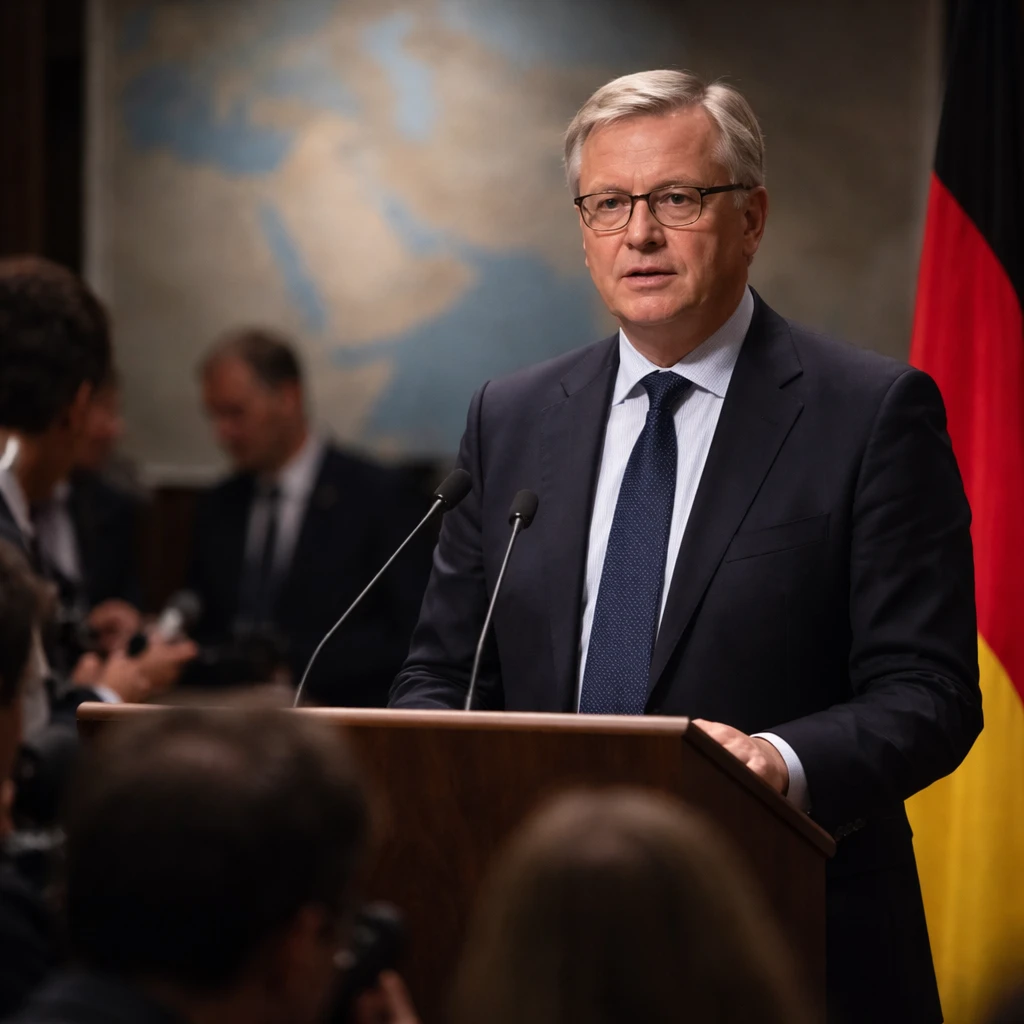
Summary: Germany’s foreign minister, Johann Wadephul, told broadcaster MDR he believes U.S. President Donald Trump’s public statement about talks with Iran may represent a turning point in the nearly month-long conflict. Trump said on Truth Social that the U.S. and Iran had held "very good and productive" conversations about a "complete and total resolution of hostilities in the Middle East," a claim Tehran denies. Wadephul described the situation as tentative but important and urged parties to preserve any progress.
Wadephul told MDR that he took Trump’s post at face value, saying he believed the U.S. president had engaged in serious discussions with Iran. The foreign minister said he thought Trump would not have framed the exchange in that manner if the talks were not genuine. Wadephul added that he also believed Trump would not have delayed a previously threatened attack on Iranian power plants unless substantive engagement had taken place.
Highlighting the delicate nature of the moment, Wadephul described the development as "a fragile beginning, but it’s a start nonetheless." He said the region currently faces "more risks of escalation than possibilities of bringing this conflict under control," and that any movement toward calming hostilities should be nurtured.
The German foreign minister called on all parties involved to work to ensure that this tentative progress grows and that mechanisms are found to manage and control the conflict. He emphasized the need for collective effort to help the reported talks lead to a durable reduction in hostilities.
Notably, Wadephul’s remarks came after Iran denied that any negotiations had taken place, a contradiction to Trump’s account on his social media platform. The discrepancy between the two sides’ statements underscores the uncertainty surrounding the situation even as some European officials view the president’s message as a hopeful sign.
Key points
- U.S. president said the U.S. and Iran held "very good and productive" conversations about resolving hostilities, while Iran denies talks took place.
- Germany's foreign minister Johann Wadephul believes the president’s announcement signals serious engagement and described it as "a fragile beginning."
- Wadephul urged all parties to support any progress to help control the conflict, noting an elevated risk of escalation.
Sectors potentially impacted: The original article does not specify particular economic sectors or market segments affected by these diplomatic developments.
Risks and uncertainties
- Conflicting accounts - Iran’s denial of talks contrasts with the U.S. president’s statement, creating uncertainty about the nature and extent of any engagement.
- Fragility of progress - Wadephul called the situation a "fragile beginning," indicating that any improvement could be easily reversed.
- Ongoing escalation risk - Wadephul warned there have been "more risks of escalation than possibilities of bringing this conflict under control," signaling persistent instability.
Note: The article reports the statements and perspectives of the German foreign minister and the U.S. president’s public post. It does not provide additional detail on subsequent diplomatic steps, outcomes of any talks, or economic consequences.