
Commodities May 9, 2026 10:30 AM

UK Sends HMS Dragon to Middle East Ahead of Possible Hormuz Security Mission

Pre-positioning reflects UK-French planning for a multinational effort to protect shipping once conditions permit

By Maya Rios

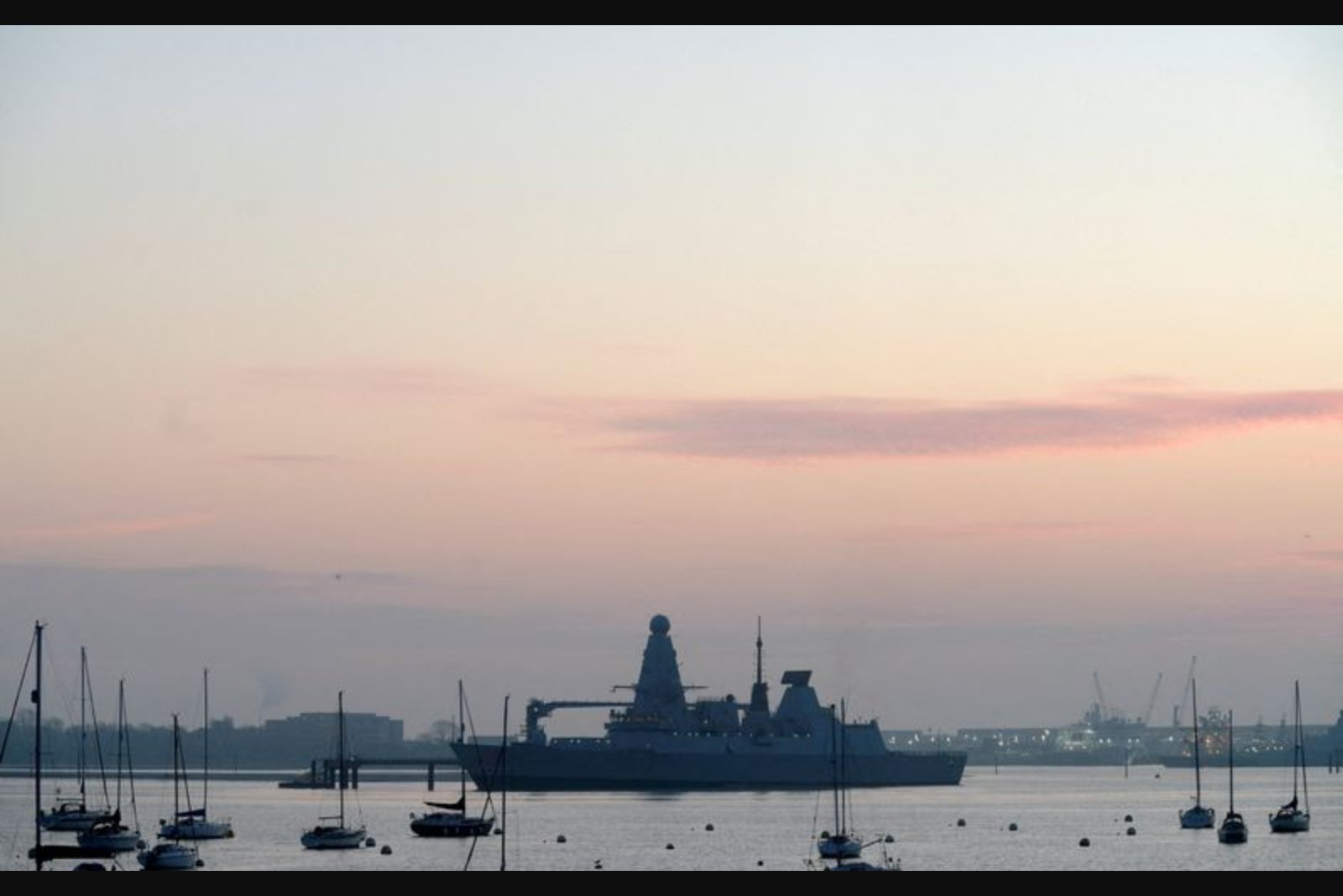
Britain has redeployed the air defence destroyer HMS Dragon to the Middle East as part of preparatory steps for a potential multinational mission to secure the Strait of Hormuz. The move follows France's deployment of a carrier strike group to the southern Red Sea and forms part of a joint UK-French plan to restore confidence in the strategic trade route, contingent on stabilisation and coordination with Iran.

UK Sends HMS Dragon to Middle East Ahead of Possible Hormuz Security Mission

Key Points

  • The UK has moved the air defence destroyer HMS Dragon to the Middle East to prepare for a potential multinational mission to protect shipping in the Strait of Hormuz; this follows its earlier deployment to the Eastern Mediterranean in March to help defend Cyprus.
  • France has deployed its carrier strike group to the southern Red Sea, and the UK and France are jointly shaping a plan to restore confidence in the trade route once the situation stabilises; roughly a dozen countries have signalled willingness to participate.
  • The United Kingdom’s ability to contribute to any protective operation is constrained by a smaller Royal Navy and the retirement of ships ahead of replacements, affecting defence and maritime sectors as well as international shipping and trade.

Britain has announced the repositioning of the air defence destroyer HMS Dragon to the Middle East as a precautionary measure ahead of a possible multinational operation to protect shipping in the Strait of Hormuz when circumstances permit.

HMS Dragon, a Type 45 air defence destroyer, was originally dispatched to the Eastern Mediterranean in March to assist with the defence of Cyprus shortly after the start of the Iran war. Its subsequent move into the Middle East region follows France’s decision to send its carrier strike group to the southern Red Sea, signalling coordinated planning between the two European powers.

The pre-positioning of HMS Dragon is part of prudent planning that will ensure that the UK is ready, as part of a multinational coalition jointly led by the UK and France, to secure the Strait, when conditions allow,
a spokesperson for Britain’s Ministry of Defence said.

The British statement frames the deployment as preparatory - a readiness measure to enable UK participation in a coalition effort, jointly led by Britain and France, to protect a critical international shipping lane. The plan that the two countries have been developing is intended to lay the groundwork for safe transit through the Strait once the situation stabilises.

Officials say the wider proposal would require coordination with Iran, and that around a dozen countries have indicated they are willing to take part in the effort. The diplomatic and operational framework for such a mission remains dependent on a change in conditions on the ground and agreement among the parties involved.

At the same time, Britain’s capacity to join a protective mission has constraints. The Ministry of Defence and analysts note that the Royal Navy is considerably smaller than in past decades and that the service has had to retire vessels before replacements entered service. Those limits on available platforms mean the UK’s contribution to any future protective operation could be restricted by fleet size and current naval commitments.

The redeployment of HMS Dragon, set against France’s carrier movement and the stated need for multinational coordination, underscores the two countries’ efforts to prepare a defensive posture aimed at restoring confidence in the trade route. Any formal mission to secure passage through the Strait of Hormuz, however, will only proceed when conditions are judged suitable and the necessary international and regional agreements are in place.

Risks

  • The mission proposal requires coordination with Iran before safe transit operations can proceed, introducing diplomatic uncertainty that affects the feasibility of multinational security efforts and shipping operations.
  • Britain’s capacity to contribute is limited by a stretched Royal Navy that is smaller than in past years and has retired ships before replacements became available, presenting a constraint on force availability and operational reach for defence planners.
  • Any protective mission is conditional on a stabilisation in the conflict; until an off-ramp materialises and the situation normalises, plans to secure the Strait cannot move forward, leaving maritime traffic and trade confidence dependent on changing conditions.

More from Commodities

Ivory Coast council to dispatch officials after farmers protest over unpaid cocoa sales May 12, 2026 Governments Expand Measures to Protect Households from Rising Energy Costs May 12, 2026 Iranian Officials Say Kharg Island Oil Slick Likely Linked to Tanker Ballast Discharge May 12, 2026 Euronext Wheat Climbs 4% After USDA Flags Smallest U.S. Crop Since 1972 May 12, 2026 U.S. Weighs Billions in Financing to Speed Delivery of Large Nuclear Plant Components May 12, 2026