
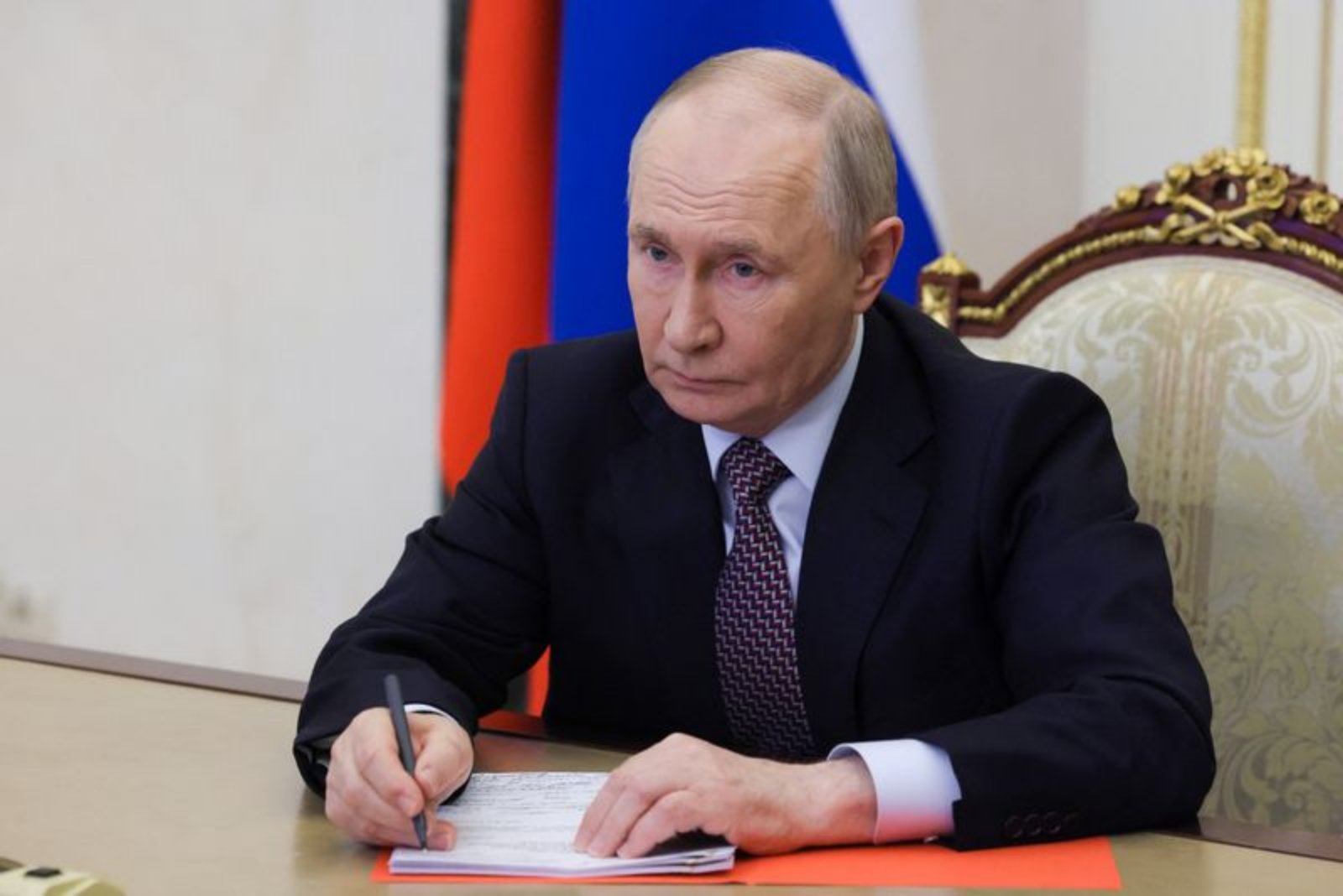
Russian President Vladimir Putin told reporters on Saturday that he thought the war in Ukraine "is coming to an end," comments that followed his earlier declaration of expected victory at Moscow's most limited Victory Day parade in years.
Speaking in the Kremlin after outlining what he described as the causes of the conflict, Putin repeated a line of criticism directed at Western leaders, blaming so-called "globalist" figures for promising NATO would not expand eastward after 1989 and then attempting to draw Ukraine into the orbit of the European Union. He said he would be willing to negotiate new arrangements for European security and named Germany's former Chancellor Gerhard Schroeder as his preferred negotiating partner.
"I think that the matter is coming to an end," Putin said when asked about the Russia-Ukraine war, which is described in the region as the deadliest conflict in Europe since World War Two.
Victory Day and a scaled-back display
The president's remarks came on the national May 9 holiday commemorating the Soviet Union's victory over Nazi Germany. In a departure from the usual parade format, intercontinental ballistic missiles, tanks and missile systems did not roll through Red Square. Instead, Russia showed footage of military hardware on giant screens opposite the Kremlin walls. The annual event honors the roughly 27 million Soviet citizens who died in World War Two.
Russia's campaign in Ukraine has now stretched for well over four years. The conflict has lasted longer than Soviet forces fought in what Russia calls the Great Patriotic War of 1941-45.
Military and territorial situation described
Putin, who has held the offices of president or prime minister since the last day of 1999, is contending with mounting anxiety inside Moscow about the human and economic toll of the conflict. The war has killed hundreds of thousands, devastated wide areas of Ukraine, and placed strain on Russia's roughly $3 trillion economy, according to figures cited in public statements.
Russian forces have not been able to capture the entirety of the Donbas region in eastern Ukraine, where Ukrainian defenders have been pushed back to a line of fortified cities. While Moscow's advances have slowed this year, Russia is reported to control just under one fifth of Ukrainian territory.
Ceasefire and prisoner exchange
After both sides accused one another of breaching unilateral ceasefires announced earlier, U.S. President Donald Trump announced a three-day ceasefire from Saturday to Monday that was supported by both Moscow and Kyiv. The two sides also agreed to exchange 1,000 prisoners as part of the arrangement.
Commenting from Washington, President Trump said: "I'd like to see it stop. Russia-Ukraine - it's the worst thing since World War Two in terms of life. Twenty-five thousand young soldiers every month. It's crazy." He added that he would "like to see a big extension" of the ceasefire. At the time of reporting there were no reports of violations of the ceasefire from either Moscow or Kyiv.
On diplomacy and interlocutors
When asked whether he would engage in talks with European leaders about the future security architecture of Europe, Putin said his preferable figure for negotiation would be Gerhard Schroeder. The president's comment followed remarks by European Council President Antonio Costa, who said last week there was "potential" for the EU to negotiate with Russia.
European leaders have framed the conflict as a test of Russia's intentions and have called for Moscow's defeat in Ukraine, labeling Putin a war criminal and an autocrat who could threaten NATO members if allowed to prevail. Russia rejects those characterizations.
Asked about the possibility of meeting with Ukrainian President Volodymyr Zelenskiy, Putin said such a meeting could occur only after a lasting peace deal was agreed.
Peace talks and pauses
The Kremlin has said that peace talks once brokered by the U.S. administration of President Donald Trump were on pause. Putin has repeatedly vowed to continue the military campaign until all of Russia's stated objectives in what Moscow calls a "special military operation" have been achieved. At the same time, his on-the-record comment that he believes the matter is drawing to a close introduces further uncertainty about the near-term trajectory of the conflict.
This account consolidates the public statements made by senior officials and leaders. Where details remain limited or evolving - for example on the durability of ceasefire arrangements and the precise timetable for any negotiations - those limitations are reflected rather than filled in with new information.