
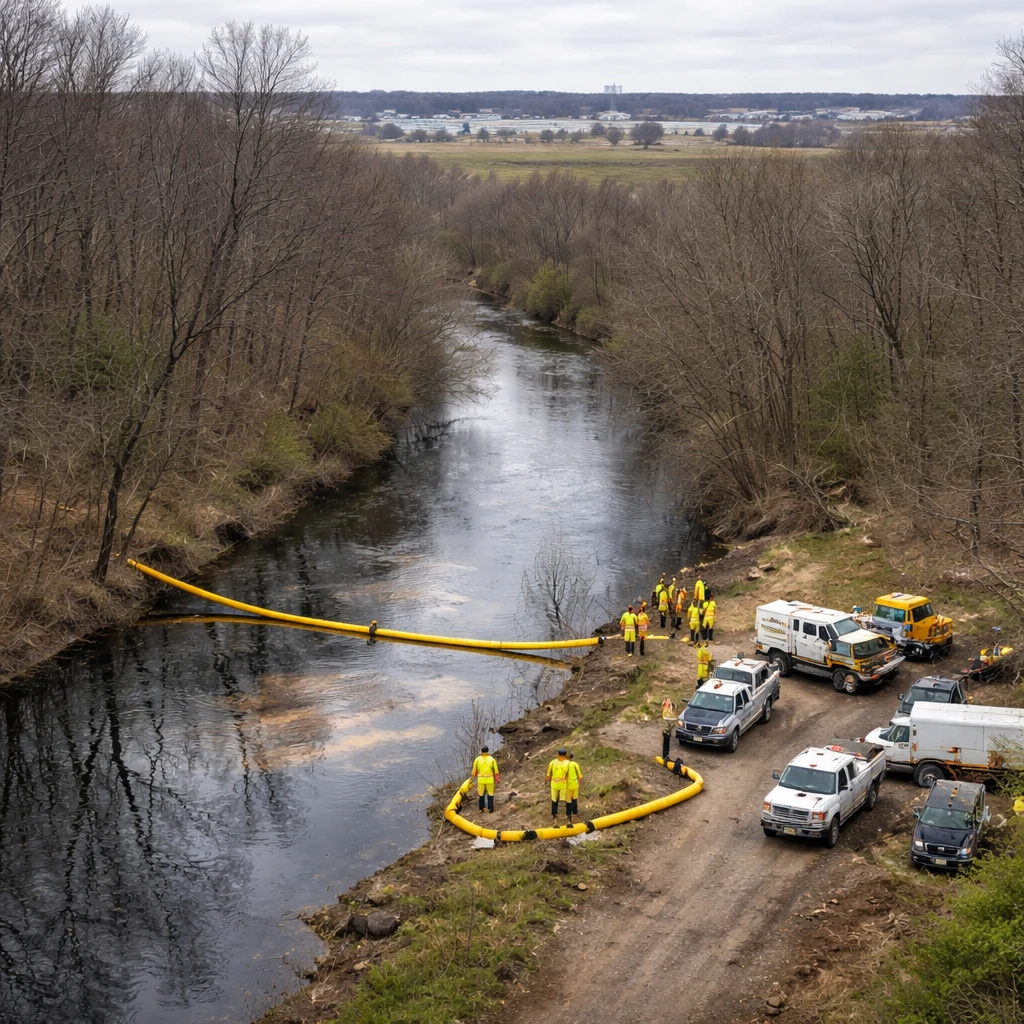
Maryland's congressional delegation is pressing the U.S. Air Force for an explanation after a delayed notification about a jet fuel release from Joint Base Andrews into a tributary of the Potomac River.
Lawmakers said they have yet to receive a response from the Defense Department after sending a letter earlier in the week seeking details about the discharge into Piscataway Creek in Prince George's County. They were informed of the incident on March 23 - roughly two months after 32,000 gallons of jet fuel were discharged, according to the delegation's account.
Officials have reported that approximately 22,000 gallons of fuel were released into the environment, contaminating soils and the nearby Piscataway Creek. The delegation, with the exception of Republican Congressman Andy Harris, said the Air Force initially did not disclose the full extent of the spill and that fuller information only emerged weeks after the event.
Democratic Senator Chris Van Hollen criticized the response, saying the Air Force's delay in containment and lack of transparency compounded the problem. "Their failure to immediately contain the spill is unacceptable on its own, but their lack of transparency made matters worse - denying the Maryland Department of the Environment the opportunity to implement containment measures that could have limited the damage," Van Hollen said in a statement.
In response to the lawmakers' inquiry, the Air Force indicated that its Secretary would reply directly to the delegation. The base itself said it was responding to the fuel leak after personnel detected fuel odors and observed a visible sheen on Piscataway Creek on March 23, 2026.
The base described mitigation measures as being in place to contain the release and prevent further migration, and said the spill is being investigated and addressed. It also said the installation is coordinating closely with environmental authorities to ensure appropriate steps are taken to protect surrounding waterways and ecosystems.
In their letter to Air Force Secretary Troy Meink, the lawmakers said Joint Base Andrews did not disclose the full extent of the spill until April 8, which they noted occurred more than two weeks after the state was notified of the incident.
On the Hill, lawmakers said Defense Secretary Pete Hegseth is scheduled to testify next week before House and Senate appropriations subcommittees and is expected to face questions about the fuel release.
The jet fuel release is the latest environmental event affecting the Potomac watershed. In January, a large DC Water sewer pipe burst near the C&O Canal in Montgomery County, Maryland, releasing raw sewage into the river, lawmakers and advocates noted.
The Potomac Conservancy highlighted additional vulnerabilities, saying the river is also at risk from pollution tied to the rapid development of data centers in the Washington, D.C. metropolitan area. "It’s part of a broader pattern of infrastructure failures and pollution events that continue to threaten the Potomac River’s health," the environmental group said.
Context and next steps
Lawmakers are seeking direct answers from Air Force leadership about the timeline and scope of the release, the delay in notification to state authorities and Congress, and the specific containment and remediation steps being taken. The scheduled testimony by the Defense Secretary may provide an opportunity for congressional subcommittees to press senior Defense Department officials for further details.
Meanwhile, the base and environmental authorities say mitigation and investigation efforts are continuing at the site to limit environmental impact.