
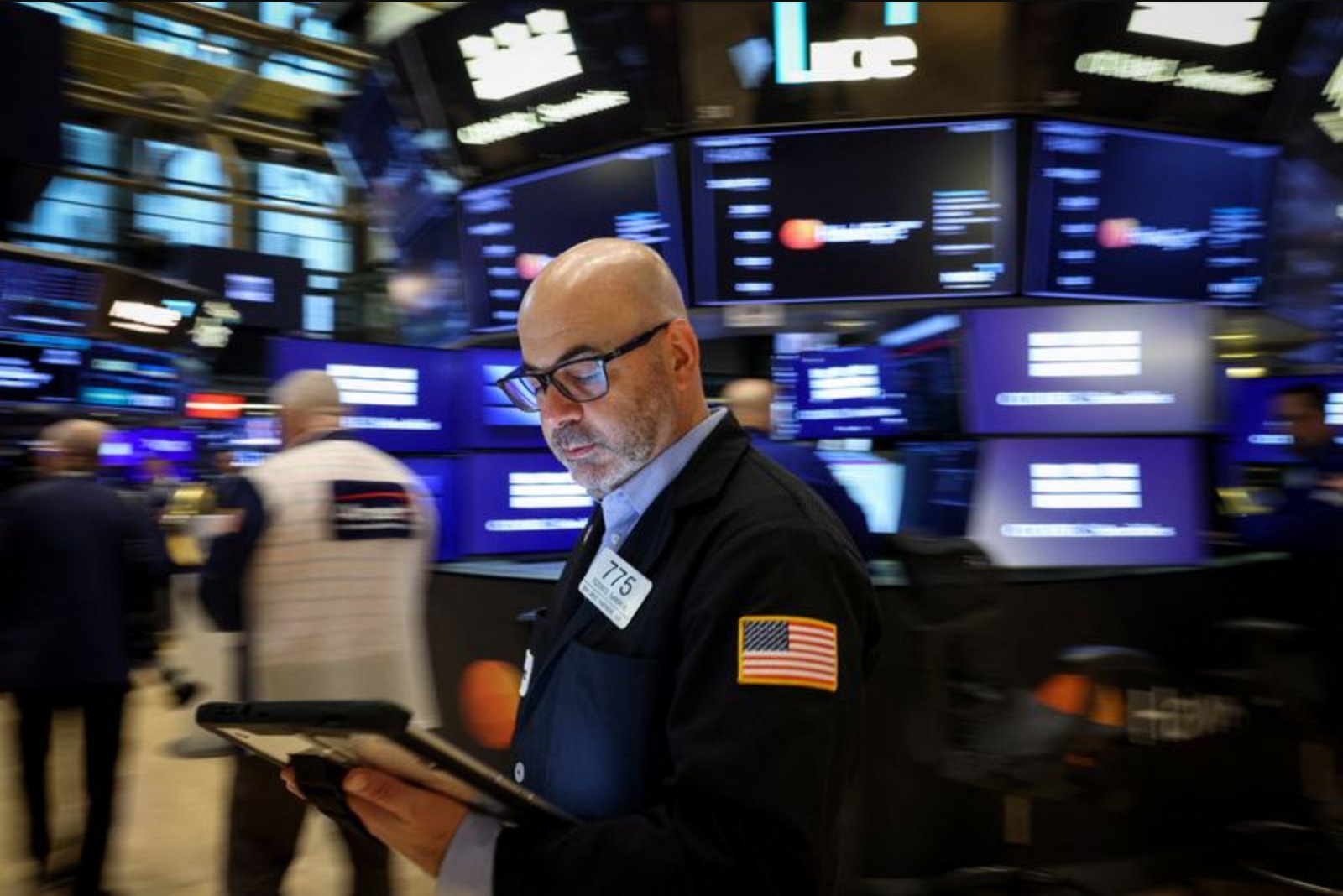
Global financial markets navigated a week of sharp contrasts as an accelerating AI-driven technology boom propelled equities upward even as intermittent U.S.-Iran military exchanges and related oil-market disruption produced bouts of volatility.
Market backdrop
Equity benchmarks rallied through much of the week, with several indices setting fresh records before retreating modestly on Thursday. The dominant market theme remained the surging AI-chip investment cycle, which continued to attract investor attention and upgrades to spending forecasts from major banks. That rally was interrupted at times by geopolitical flare-ups related to U.S.-Iran tensions that drove rapid moves in oil and prompted renewed focus on energy security.
Geopolitics and oil
The week began with heightened tensions after the temporary implementation of a U.S. initiative labeled "Project Freedom," which aimed to escort ships through the Strait of Hormuz. Iran responded with strikes on ships in the Gulf and an attack that set a UAE oil port ablaze, actions that pushed crude prices up by roughly 6% through Tuesday.
Market sentiment shifted on Wednesday when reports emerged of a new U.S. proposal intended to bring an end to the conflict, and U.S. presidential comments expressing optimism about a swift resolution. Those developments sent both Brent and WTI crude below $100 per barrel for the first time since the second half of April. Brent only lingered below that threshold briefly, rebounding above $100 as fighting between U.S. and Iranian forces in the Gulf resumed on Thursday.
Even if a U.S. proposal ultimately results in a permanent cessation of hostilities and the reopening of the strait - a significant "if," particularly since the plan reportedly leaves most contentious issues unresolved - the energy-market shock is unlikely to disappear quickly given the extent of disruption, especially in Asia.
U.S. energy flows and domestic supplies
U.S. energy exports continued to climb during the disruption, providing supply relief to global markets. At the same time, the surge in exports is contributing to falling domestic fuel inventories, a development that could pose problems for U.S. consumers already contending with higher pump prices.
AI chip boom drives equities
Investor focus centered squarely on the AI hardware spending cycle for much of the week. Morgan Stanley raised its projections for capital expenditure by the top five hyperscalers, now expecting that group to invest more than $800 billion this year and to top $1.1 trillion next year. Goldman Sachs provided an even longer-term outlook, estimating cumulative hyperscaler spending by 2031 could reach as much as $7.6 trillion.
Those forecasts helped send global chipmakers to lofty valuations. U.S. chipmaker AMD saw its shares surge about 15% on Wednesday to an all-time high after the company projected revenue above analysts' expectations, attributing the upside to strong AI-chip demand. In Asia, South Korea's SK Hynix jumped roughly 13% on Monday, another illustration of how demand for AI infrastructure permeated regional markets.
The tech-fueled advance lifted regional benchmarks. South Korea's KOSPI surpassed the 7,000 mark for the first time on Wednesday as Samsung's market capitalization climbed to $1 trillion. Despite a late-week pullback tied to renewed military exchanges between U.S. and Iranian forces, Asian markets were set to record solid weekly gains.
The scale of the rally has renewed debate among market participants over whether the move represents sustainable gains driven by structural demand for AI-related hardware or an elevation of valuations that could presage a correction.
Bonds and political implications
Government bonds came under pressure during the week as the U.S. long bond yield briefly touched 5% before easing and attracting buyers once more. U.K. gilt yields also remained elevated through the week. The trajectory of yields may be shaped by political developments at home in the U.K., where local election results showed widely expected Labour losses in many councils. Prime Minister Keir Starmer insisted he would not resign following the early returns; sterling strengthened and gilt yields fell back.
Observers noted that whoever leads the Labour Party - Starmer or another figure - might consider lessons from past political playbooks about avoiding moves that could unsettle bond markets.
Currencies and intervention
The yen experienced another erratic week, spiking several times against the dollar and briefly touching a level of 155 per dollar on Wednesday. Central bank data suggested Japan may have spent as much as $32 billion this week to support the currency, on top of approximately $35 billion thought to have been expended the prior week. These interventions likely played a role in the yen's intraday swings.
The U.S. dollar retraced most of its gains tied to the early-Iran-war shock and remained broadly subdued. Market commentary noted the dollar could soften further should a peace agreement between the U.S. and Iran take hold, although the broader AI investment story may set a floor beneath such losses. Meanwhile, China's yuan strengthened to three-year highs ahead of an upcoming summit between the U.S. and China scheduled for next week.
U.S. labor market and near-term data
On the macro front, attention turned to the U.S. employment report due on Friday. Consensus expectations were for payrolls to rise by 62,000 in April, down from March's 178,000. The unemployment rate was projected to remain unchanged at 4.3%. Other labor-market releases across the week - including JOLTS, ADP's private-sector payrolls and weekly jobless claims - painted a picture of a broadly stable employment backdrop.
Further reading and analysis
For more data-driven coverage on markets and commodities, the piece highlighted a dedicated Open Interest resource containing several topical explorations, including:
- When rapidly expanding solar power capacity could become excessive relative to demand patterns.
- Arguments for why a recent U.S. policy change on oil markets might be second-guessed.
- How the Iran conflict might encourage some Asian countries to shift from gas to coal.
- Questions about whether 4% inflation could become a new equilibrium versus historic 2% targets.
- Developments in the copper market amid uncertainty related to the Iran crisis.
Weekend recommendations
The week also included a selection of commentary, research and multimedia suggestions from market and energy commentators, covering topics such as the challenges facing an OPEC minister, China and reserve currency dynamics, the climate risk exposure of AI infrastructure sites, and the longer-term decline in oil exploration activity. Podcasts and a televised interview with a commentator on the dollar's enduring global appeal were also recommended for readers seeking broader context.
Takeaway
The juxtaposition of a strong, valuation-driving AI spending narrative and episodic geopolitical shocks to energy supplies produced a week of outsized market moves. Chipmakers and technology-centered indices led the advance, while oil markets and safe-haven assets such as sovereign bonds and the yen reflected the continuing uncertainty emanating from the Gulf. Domestic U.S. fuel-stock depletion, persistent currency intervention and political developments in the U.K. created additional variables that market participants and policymakers will be watching closely in the days ahead.
Corrections and clarifications: None provided.