
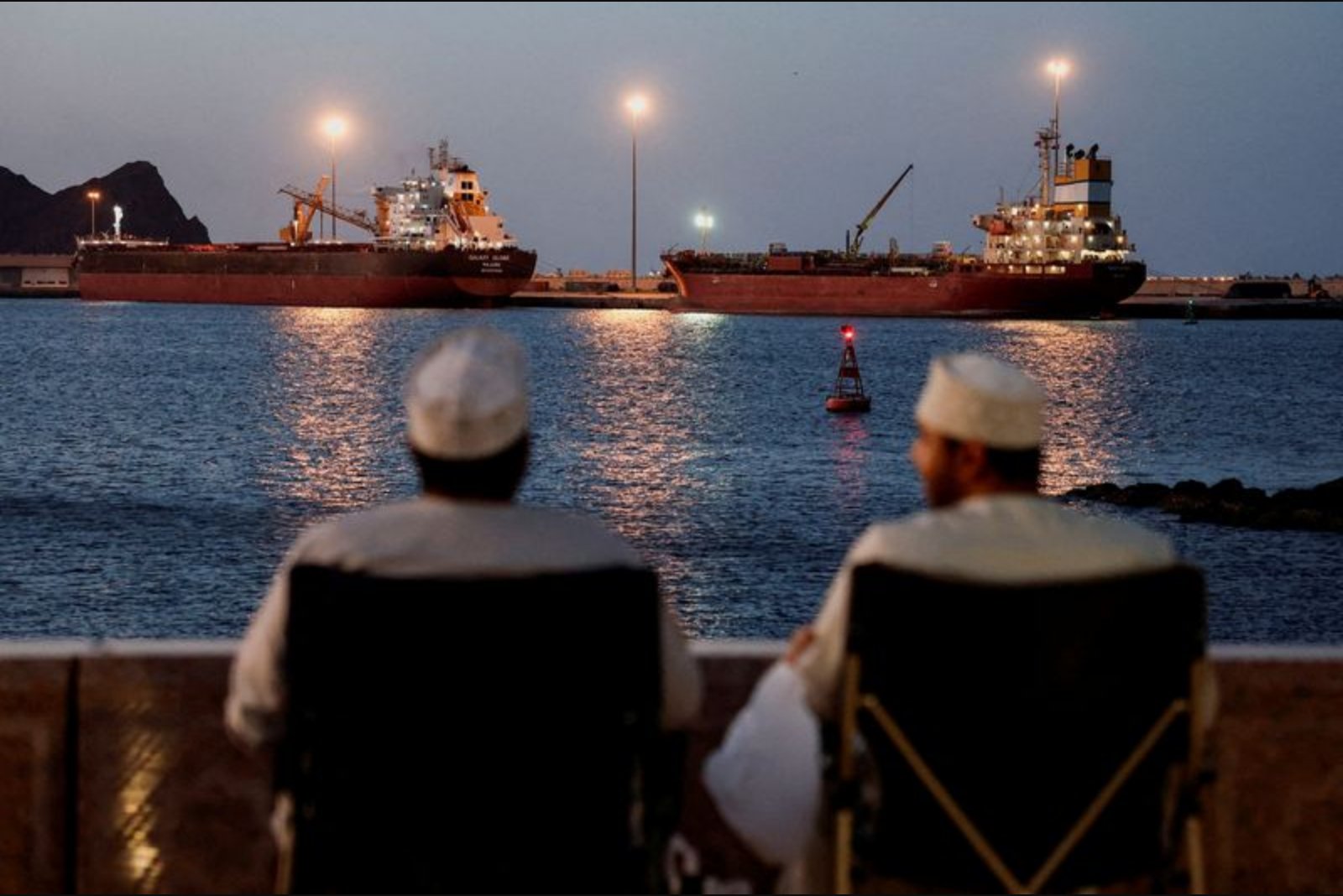
Two governments in South Asia and the Middle East have struck separate arrangements with Iran to move energy cargoes through the Strait of Hormuz, multiple sources with direct knowledge of the deals told TradeVae. The arrangements come as Iran asserts practical control over the waterway while wider hostilities in the region have sharply curtailed the flow of crude oil and liquefied natural gas (LNG) from a region that normally supplies roughly 20% of global crude and LNG volumes.
In the first arrangement, Iraqi authorities secured safe passage for two very large crude carriers (VLCCs), each carrying about 2 million barrels of crude, which transited the strait on Sunday. An Iraqi oil ministry official familiar with the initial agreement and ongoing negotiations said Baghdad is pursuing Iran's approval for additional transits as it seeks to protect oil revenue that accounts for approximately 95% of the country's budget.
"Iraq is a close ally of Iran, and any deterioration in Iraq's economy would also damage Iran's economic interests in the country," the Iraqi official said, characterising Baghdad's motivation for the talks. Two additional sources - a second Iraqi oil ministry official and a shipping industry contact - corroborated that discussions with Tehran are underway. Those sources asked not to be named because they were not authorised to speak publicly. An Iraqi government spokesperson did not immediately respond to a request for comment.
Separately, two industry sources confirmed that two tankers loaded with Qatari LNG are on course to deliver cargoes to Pakistan under a bilateral understanding between Islamabad and Tehran. Prior to the disruption, Pakistan typically received about 10 LNG cargoes per month. With high summer electricity demand for cooling approaching, Islamabad faces an urgent need to replenish supplies.
Both sets of sources, speaking on condition of anonymity, said neither Iraq nor Pakistan had made direct payments to Iran or to the Islamic Revolutionary Guard Corps in connection with the transits. The industry contacts also said Qatar was not a party to the bilateral arrangements but had notified the United States in advance of the LNG shipments to Pakistan. Pakistan's petroleum and information ministries and Qatar's foreign ministry did not immediately respond to requests for comment.
How Iran's posture has shifted
Analysts and industry figures describe a pivot in Tehran's approach to maritime traffic in the Strait of Hormuz. Where Iran initially sought to halt movement through the channel at the outset of the conflict, observers now say Tehran has moved to manage and control access to designated transit corridors.
"Iran has shifted from blocking Hormuz to controlling access to it ... Hormuz is no longer a neutral transit route, it is a controlled corridor," said Claudio Steuer of the Oxford Institute for Energy Studies, according to a source that relayed the remark. Under the changed stance, Iranian authorities have been asking nations to submit documentation for each vessel seeking passage and to follow specified maritime routes monitored by Iran's naval forces.
One of the Iraqi oil ministry officials said specialised teams within the ministry are compiling detailed dossiers on individual vessels - including destination, shipping data, ownership and cargo specifications - which are being provided to Iranian authorities to reduce the risk of incidents during transit.
A Pakistani source with knowledge of negotiations over vessel passage described practical difficulties in the process, saying that the Islamic Revolutionary Guard Corps occasionally alters requirements midstream, creating "hiccups" that Islamabad is trying to manage.
Market and shipping impacts
Shipping activity through Hormuz has collapsed compared with pre-conflict levels. Before the outbreak of hostilities, roughly 3,000 vessels passed through the strait each month. Current traffic is estimated at roughly 5% of that prior volume, according to shipping data cited by industry sources. The disruption to flows has been reflected in commodity markets: Brent crude has risen by more than 50% since fighting began at the end of February, while LNG prices in Europe and Asia have increased by approximately 35% to 50%.
Industry analysts warn that as governments become more willing to strike case-by-case transit deals with Iran, a degree of de facto normalisation could emerge in which Tehran retains a long-term supervisory role over the strait. "As more governments become willing to cut deals with Iran for passage, it risks normalising the idea that Iran will control the Strait of Hormuz on a more permanent basis," said Saul Kavonic, head of research at consultancy MST Marquee, according to a source that provided the comment.
Political demands and settlement positions
Iran has publicly signalled an intention to retain a measure of control over the strait in any settlement that follows the conflict. Among the conditions Tehran has sought are reparations, relief from sanctions and access to frozen assets. Those demands were characterised as "garbage" by U.S. President Donald Trump, a description that, according to sources, undermined hopes for a rapid negotiated resolution.
While political negotiations continue and the wider conflict persists, Iran appears to be formalising practical controls over transit procedures and asserting oversight of designated maritime corridors. Other countries, particularly those in Asia that depend on Gulf energy supplies, are reported to be exploring similar bilateral arrangements as they weigh the immediate economic pain of higher energy costs against the operational complexities of routing through Iran-controlled corridors.
Implications for fiscal stability and energy security
For Iraq, the drive to resume oil transits is squarely fiscal. Oil receipts dominate the national budget, and even temporary disruptions to exports present acute risks to public finances and economic stability. For Pakistan, securing LNG deliveries is a near-term operational imperative tied to electricity demand and seasonal cooling needs.
Both governments are managing diplomatic, logistical and security trade-offs in seeking access to energy flows while insisting that no direct payments to Iran or its paramilitary forces have been made in association with the current transits. The evolving arrangements highlight how energy supply shocks and maritime governance can rapidly translate into budgeting and balance-of-payments pressures for governments heavily dependent on hydrocarbon receipts or energy imports.
All sources who confirmed the arrangements declined to be named because they were not authorised to speak publicly. Several government ministries contacted for comment did not respond.