
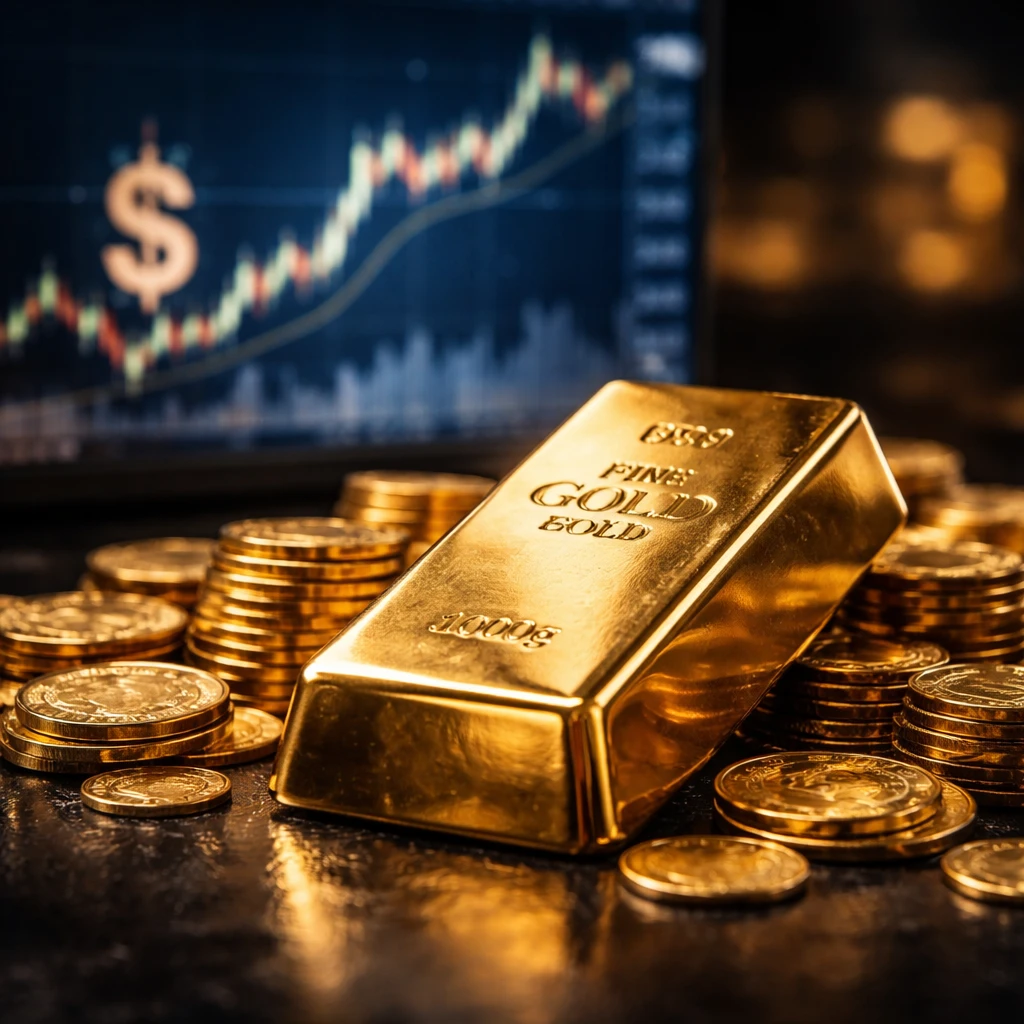
Gold prices rallied sharply on Monday after a severe selloff, lifted by reports that the U.S. signaled an openness to negotiations with Iran. The metal trimmed earlier losses following an announcement that the U.S. President postponed planned strikes on Iranian energy infrastructure for five days, citing productive talks aimed at ending hostilities, while Iran denied that any discussions had taken place.
Spot gold is currently trading at $4,423 per ounce. Earlier in the session the metal slipped below $4,200 per ounce, erasing its year-to-date gains and registering one of the sharpest short-term declines in decades.
The earlier decline reflected a shift in market expectations toward higher interest rates amid rising energy prices. That dynamic was accompanied by a stronger U.S. dollar and weaker physical demand from the Middle East due to supply disruptions. Additional selling pressure appeared to come from profit-taking by institutional investors and sovereign holders.
The rebound after the news on potential negotiations highlights gold's sensitivity to changes in the geopolitical narrative. Even so, strategists at UBS, led by Wayne Gordon, said markets had already "shifted decisively toward a tightening of monetary policy," relegating longer-term themes such as de-dollarization and fiscal risks.
UBS noted that for many investors, gold's muted reaction to geopolitical tensions alongside elevated price volatility may seem counter-intuitive. The strategists emphasized that history shows gold "does not always rally during periods of conflict, particularly in the initial phase," and argued that macro forces - especially interest rates and currency moves - often dominate price action.
More broadly, the UBS team described the current backdrop as one characterized by rising nominal yields, a stronger dollar and shifting rate expectations, with markets moving from pricing cuts to even a small probability of hikes. That constellation of forces has presented a headwind for bullion, they said, a situation compounded by outflows including roughly 62 metric tons sold via ETFs in March.
Despite the scale of the recent correction, the strategists stopped short of calling it a structural turning point. They argued the current drawdown is modest compared with episodes such as the Volcker tightening or the 2013 taper tantrum. As they put it: "The historical trend indicates that when policy transitions decisively toward tighter monetary policy and when real yields are elevated, gold drawdowns typically persist beyond initial corrections. Whether the current sell-off lasts will largely hinge on whether the Fed decisively shifts its policy stance."
The UBS team urged investors to view the downturn as an adjustment period rather than a loss of the metal's value, maintaining that gold remains "an effective long-term portfolio hedge" and expressing an expectation that prices could move higher as growth slows and policy eventually eases.
Key contextual points in this episode include the immediate market reaction to geopolitical headlines, the prevailing influence of monetary policy expectations and currency moves on commodity prices, and the observed role of portfolio flows and profit-taking in exacerbating short-term price moves.