
European natural gas prices climbed on Monday after comments by U.S. President Donald Trump suggested he would not accept Iran’s response to a U.S. proposal aimed at ending active hostilities.
By 09:23 ET (13:23 GMT), the Dutch front-month contract at the TTF hub had risen 3.6% to 45.710 euros per megawatt hour, according to Intercontinental Exchange data.
Officials in Tehran framed their response in cautiously assertive terms. A Foreign Ministry spokesperson, Esmail Baghaei, was quoted as saying Iran was not "concerned with the satisfaction of others," and that Tehran would take what was necessary to secure its "national interests and legitimate rights," including through fighting or diplomacy "with goodwill and in a reasonable manner."
State broadcasters in Iran said the government had issued a reply to a U.S. plan for ending more than two months of conflict. That response reportedly emphasized a desire to conclude fighting on all fronts while also demanding compensation for war-related damage.
Iran has repeatedly stressed its strategic position over the Strait of Hormuz in public statements, noting that roughly a fifth of the world’s oil and natural gas passes through the waterway. During the conflict the strait has been largely closed and is currently subject to blockades imposed by both the U.S. and Iran, a factor cited in market fears about energy supply continuity.
Speaking to state broadcaster IRIB, Baghaei additionally indicated Tehran might defer decisions on parts of its nuclear programme until "the time is right" if doing so would secure an "urgent" end to the fighting.
Within hours of Tehran appearing to submit its counterproposal, President Trump posted on social media: "I don’t like it - TOTALLY UNACCEPTABLE." The post provided no further details on next steps.
The U.S. position, as presented around the exchange of offers, is to seek a rapid cessation of hostilities first, followed by more detailed negotiations over core issues, with Iran’s nuclear programme singled out as a priority for subsequent talks.
Beyond the diplomatic developments, physical gas and LNG flows have been affected by regional incidents. Recent attacks on a major Qatari production facility have also been cited by market participants as a contributing factor to higher European natural gas prices, since a number of European markets obtain gas supplies exported from that facility.
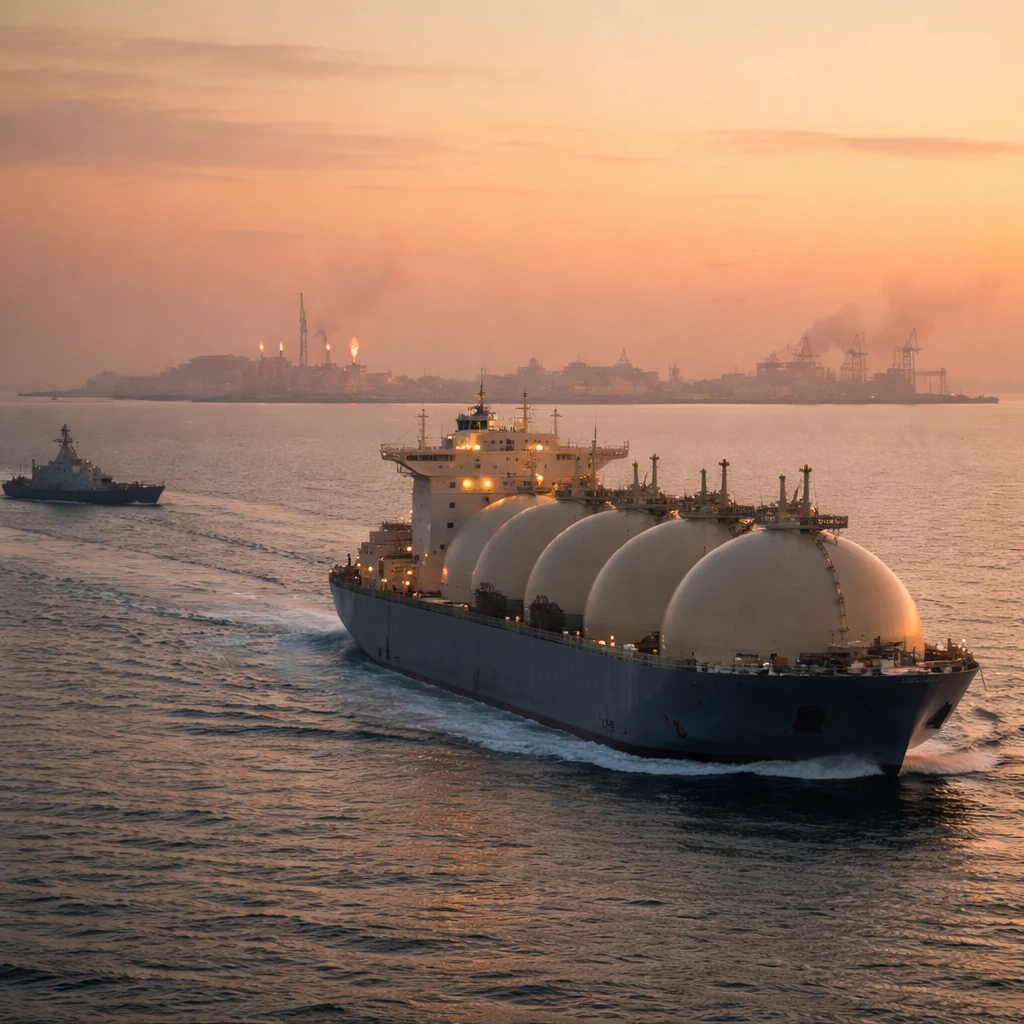
Qatar has shipped its first liquefied natural gas cargo through the Strait of Hormuz since the conflict began, with that vessel bound for Pakistan, and discussions are under way on whether additional LNG cargoes will be allowed to transit the route. A second Qatari LNG vessel has also passed through the strait, Reuters reported.
Adding to the diplomatic calculus is an upcoming visit by President Trump to China for a planned meeting with President Xi Jinping. China is a significant importer of Iranian energy, and analysts have suggested Beijing could play a role in influencing Tehran’s position.
Analysts at ING said that while optimism for an immediate deal appears to be diminishing, there remains a "glimmer of hope" that talks between the U.S. and Chinese leaders later this week could produce constructive movement on Iran. The analysts added that the idea China might use its leverage with Iran to nudge it toward a peace settlement is attractive, but "clearly, this is easier said than done."
Context for markets
Short-term price moves in European gas markets reflected both the diplomatic noise around a U.S.-Iran exchange of proposals and tangible supply disruptions affecting LNG flows through the Strait of Hormuz and from Qatari facilities. Traders appear to be balancing hopes that diplomatic engagement could reduce geopolitical risk against the immediate impact of constrained shipping and production.