
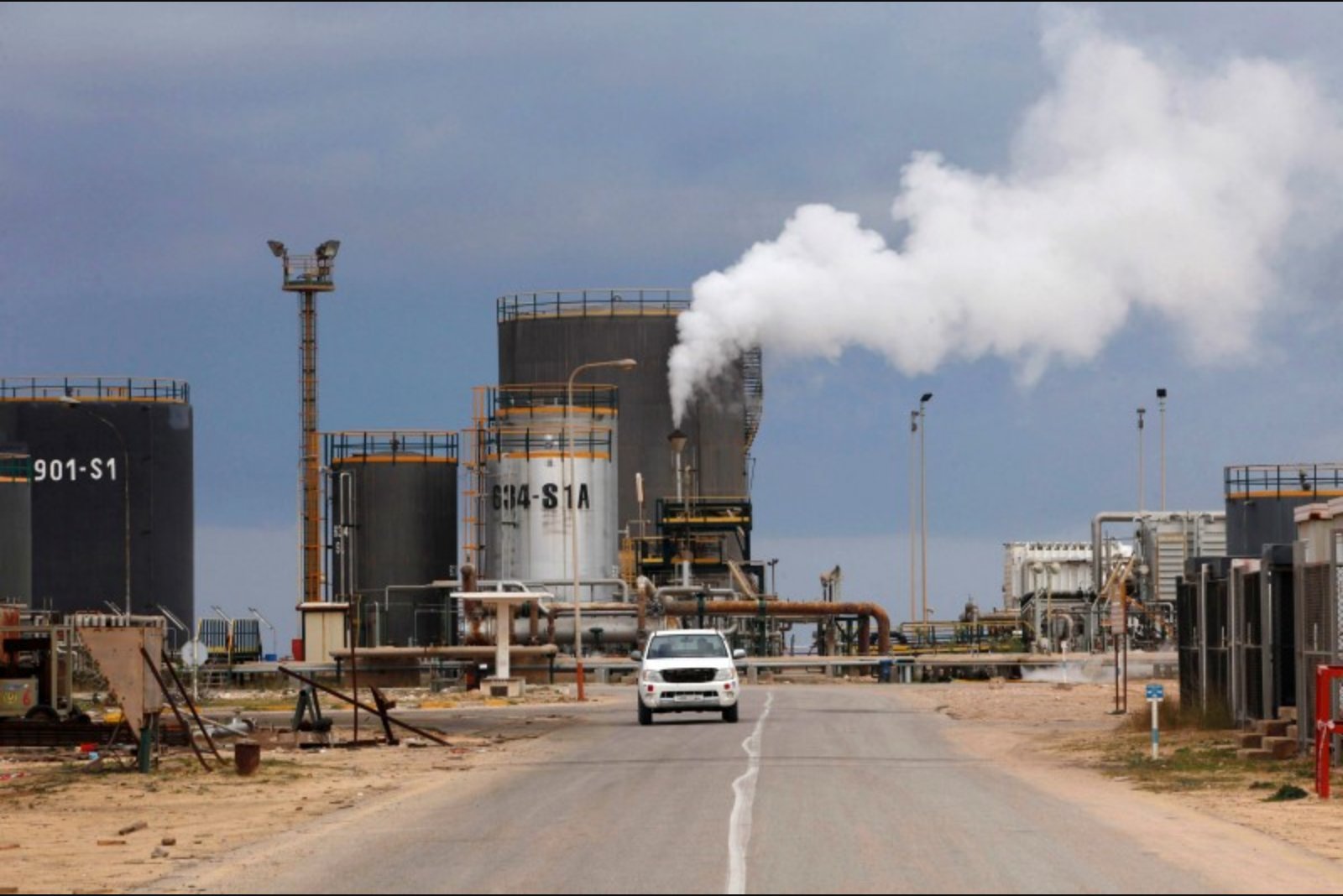
A Ukrainian drone struck a facility at the largest refinery in the Moscow region on Tuesday, triggering a fire and prompting the country’s second-largest oil producer to cap fuel purchases nationwide, officials said.
Ukrainian President Volodymyr Zelenskiy said the Gazprom Neft refinery was hit from a distance of 500 km (311 miles), highlighting the reach of Kyiv’s long-range operations. "This is a just response to Russian strikes - and to the dragging out of a war that must be ended," he posted on X.
Local emergency services reported that the fire had been extinguished and that operations at the refinery were not affected. Earlier, Moscow Mayor Sergei Sobyanin stated that a facility on the refinery site had been damaged, though he did not provide further detail.
Officials and available data indicate that Ukraine has increased attacks on Russian refineries since the start of 2026, with strikes doubling in that period. Those attacks have produced full or partial shutdowns of oil processing and a decline in gasoline, diesel and jet fuel output, according to official statements, social media reports and calculations referenced by Reuters.
Refinery output and significance
The refinery at the centre of Tuesday’s incident processed 11.6 million tonnes of oil in 2024 and produced 2.9 million tonnes of petrol and 3.2 million tonnes of diesel, according to the latest available data. The site has been targeted multiple times in prior strikes.
Gazprom Neft did not immediately respond to a request for comment.
Domestic fuel supply effects and retailer response
Across Russia, about a dozen regions have experienced some level of fuel supply disruption in recent weeks. Central authorities have described the problems as localised bottlenecks so far.
Recent long queues for gasoline in Russian-controlled Crimea and in the southern Krasnodar region have underscored the domestic sensitivity to Ukraine’s refinery strikes. On Tuesday, oil producer Tatneft said it would introduce restrictions on fuel purchases at its hundreds of stations across Russia, becoming the first retailer to announce nationwide caps.
A Reuters witness at a Tatneft station in the Serpukhov district, south of Moscow, reported that sales were limited to 20 litres of gasoline per car or 40 litres of diesel, and that that location was accepting only cash.
Context and official reactions
Ukrainian authorities describe strikes on refineries as aimed at hitting a key source of Russia’s war funding. Statements included in this report note the doubling of attacks since the start of 2026 and the resulting declines in refined product output, based on official, social media and Reuters calculations.
Local emergency services said the fire at the Moscow-region refinery had been extinguished and had not affected operations at the site. Mayor Sergei Sobyanin had earlier confirmed some damage to a facility at the refinery.
At the same time, roughly a dozen Russian regions have reported disruption to fuel supplies in recent weeks, although central authorities continue to characterise those issues as largely localised.
Implications for markets and consumers
The combination of repeated strikes on refining infrastructure and the decision by a major retailer to limit purchases illustrate the immediate operational and consumer-facing consequences of the campaign targeting energy facilities. Observers cited in official statements and data note declines in processing and refined product output following the uptick in attacks since early 2026.
This article presents the facts that were publicly available at the time of reporting. Where detailed operational or financial metrics beyond those cited here exist, they were not provided in statements reviewed for this report.