
Introduction
Across the United States, millions of electricity customers are being tapped to finance major generation and transmission projects before those assets deliver any power. Regulators in an increasing number of states permit utilities to recover construction-period financing costs directly from ratepayers under Construction Work In Progress - commonly abbreviated CWIP - provisions. The policy accelerates utilities' access to cash, lowers their reliance on external borrowing, and shifts financing costs onto households and businesses during the build phase.
How CWIP works and why it has spread
Under the traditional regulatory model, utilities borrow from banks and investors to fund capital projects and only pass those costs through to customers after the facilities enter service. CWIP changes that dynamic by allowing utilities to collect a portion of financing charges while construction is still ongoing. That mechanism improves utility cash flow and reduces interest expenses compared with financing entirely through capital markets, providing an explicit near-term financial lifeline to projects that otherwise would need to absorb market borrowing costs.
Regulatory filings reviewed by the reporting team indicate that at least 40 U.S. states now maintain some form of CWIP incentive - roughly double the number of states with such policies a decade ago. Many of these adoptions have occurred in the past few years amid tightening reserve margins on regional grids and rising demand from large electricity consumers, notably data centers that support artificial intelligence workloads.
State governments and utility advocates argue CWIP can jumpstart investments needed to modernize an aging grid and meet growing demand. CWIP proponents also maintain that collecting financing costs during construction reduces the amount utilities must raise from Wall Street, which in turn can lower the ultimate cost to ratepayers over the long run.
Examples of CWIP use
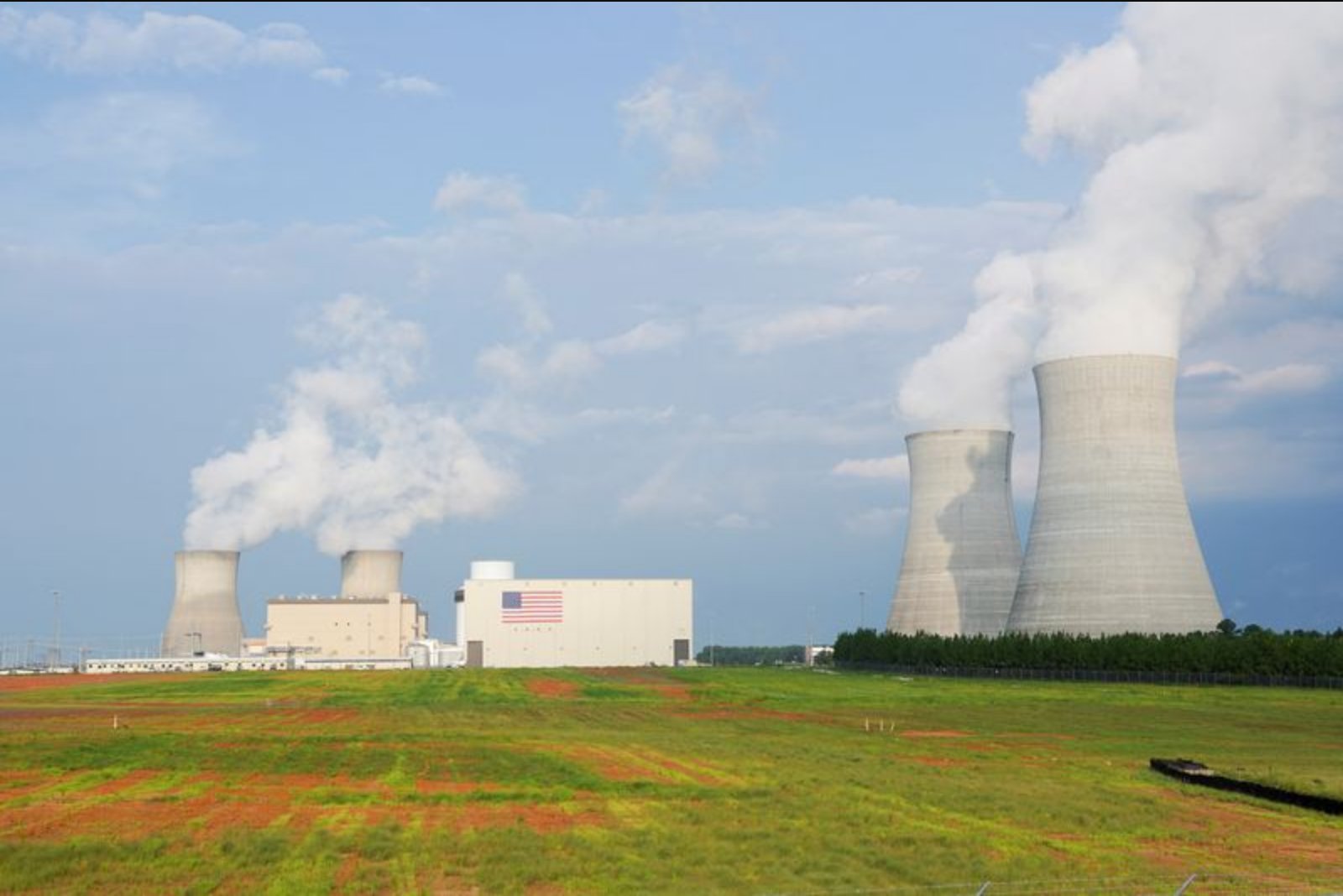
Regulatory disclosures show CWIP has been applied to a wide range of major projects. In Georgia, the two Vogtle nuclear units used CWIP financing and later experienced substantial cost overruns and delays. The Vogtle project ran seven years behind schedule and ultimately cost roughly $35 billion, more than double the original estimate of $14 billion, according to state regulatory filings. Georgia households have been charged approximately $1,000 each in CWIP expenses since 2009 as rates rose sharply during the construction period.
In Nevada, NV Energy is collecting roughly $4 per month from an average residential customer to cover financing charges on long-range, high-voltage transmission lines that the utility expects will enter service in 2028. The utility has argued that using CWIP to finance the lines is less expensive than raising equivalent capital on public markets, and that this financing approach will ultimately save customers money. A state consumer protection consultant, however, estimates the net benefit could be as small as 0.1% and may not be realized for decades - calculating that a ratepayer would need to stay on the system for 52 years to break even under the CWIP model.
Dominion Energy in Virginia has also employed CWIP for the construction of an $11.5 billion offshore wind project. Regulators' disclosures show customers have already contributed roughly $2 billion in charges for the project prior to its entering commercial operation, creating a current peak charge of about $11.23 on an average monthly bill. Dominion executives contend the CWIP structure will produce $2 billion in savings for ratepayers over the project's 30-year life.
Scale of investment and implications for utility returns
Utilities across the country are undertaking an unprecedented wave of capital spending. Analysts describe U.S. electric utility capital spending as an investment super-cycle expected to exceed $1 trillion over the next five years. Because regulated utilities earn a set return on capital investments - reported in financial results as roughly a 9% to 12% regulated rate of return - heightened capital deployment can bolster regulated earnings and shareholder returns while expanding rate bases.
For consumers, however, this wave of spending has coincided with rising electricity prices. U.S. power prices rose about 40% over the past five years amid heavy investment in the grid, according to energy information disclosures. Certain regions that host large clusters of data centers saw double-digit rate increases over the past year, notably states on the East Coast with concentrated data center build-outs.
Policy shifts and state-level changes
Several states have enacted new CWIP provisions within the most recent policy cycle. For example, a state that had previously banned CWIP for five decades reversed that stance to facilitate additional generation capacity for data center growth. Other states, including Arkansas, Kansas, Oklahoma, and North Carolina, also implemented CWIP measures since 2024.
A state governor's office defended CWIP as a tool to incentivize new generation while tempering large short-term bill increases that can occur when a newly built facility begins serving customers. The spokesperson explained that CWIP spreads costs over a longer period and thereby reduces immediate price shocks when a project comes online.
Consumer and industry reactions
Consumer advocates and business groups express concern that CWIP essentially transfers construction risk from utilities and their investors to captive ratepayers. Industry voices representing large manufacturers warned that average consumers are often unaware their bills are funding projects that might never benefit them. An industry group leader said the policy shifts financial risk onto ratepayers, emphasizing that typical households do not know this is happening.
Consumer watchdogs point to affordability issues as rates rise. One program director for a consumer coalition described recent rate increases as creating a "monumental affordability crisis" for electricity customers, and noted that CWIP incentives exacerbate that burden. Critics highlight the potential for customers to pay for projects over many years while the actual payoff - either in improved system reliability or lower lifetime costs - may be remote in time.
Academics and some policy analysts are also wary. A university economist noted that CWIP often comes with protections that insulate utilities from the financial consequences of construction delays, cancellations, or cost overruns - risks that then fall to ratepayers. He argued that the inability of a project to attract private capital absent a public backstop could signal the financial infeasibility of that investment and questioned the public purpose of obligating ratepayers to finance such ventures.
Political and electoral consequences
Public backlash to CWIP has influenced electoral outcomes in at least one state. In one election cycle, two sitting public service commissioners lost their positions following a campaign energized by voter opposition to CWIP-linked cost overruns on a nuclear project. That project, which experienced repeated delays and major budget increases, has been cited by local consumer advocates as a cautionary example of the risks associated with customer-funded construction finance.
Timing of benefits and distributional effects
The timing mismatch between when customers pay and when financial benefits accrue is a core complaint. A consultant for a state consumer protection office calculated that, for a particular transmission project, the payback to customers could take more than half a century. Using his example, an average 40-year-old ratepayer would not realize a net benefit under CWIP until they were 92 years old.
Such intertemporal distributional effects raise questions about who ultimately bears the cost of modernizing the grid and who captures the financial upside. Utilities normalize a stream of future regulated returns tied to capital investments; ratepayers, meanwhile, absorb near-term financing charges and long-run rate adjustments. The resulting mix of funding and regulatory risk is at the center of ongoing debates among consumer advocates, industry officials, and state policymakers.
Conclusion
State-level adoption of CWIP policies has accelerated in recent years as grid tightness and demand growth have pushed utilities and regulators to pursue faster project timelines. While CWIP can reduce utilities' borrowing costs and accelerate construction by improving cash flow, the approach shifts exposure for delays and overruns onto customers who begin paying before projects provide any benefits. As utilities undertake a more than trillion-dollar wave of capital spending, the tension between protecting customers from immediate bill shocks and avoiding long-term financial risk for ratepayers will remain a central policy challenge.