
Summary: Hundreds of millions of dollars in monthly charges are being added to electric bills across the United States to pay for power plants and transmission projects that are not yet operating. Under Construction Work In Progress (CWIP) policies, utilities can collect financing costs from ratepayers during construction, a change that has spread rapidly in recent years as states respond to tighter grid reliability and surging demand. Proponents argue the model speeds needed upgrades and trims long-term financing costs; critics say it shifts construction risk to consumers and can raise bills for decades.
The shift in how major electricity projects are financed is quietly raising bills for consumers while utilities advance expensive grid upgrades. A review of state regulatory disclosures shows that at least 40 U.S. states now allow some form of CWIP - an incentive that permits utilities to recover construction financing costs from customers before projects enter service. That figure is roughly twice the number of states that had such provisions about a decade ago, when a survey by economic consultant The Brattle Group found fewer than 20 states with CWIP rules.
Under traditional regulatory practice, utilities borrowed money from banks and investors to build generation and transmission, and only passed those costs along to customers after projects were completed. CWIP inverts that timeline, allowing companies to collect fees during construction. The result is an immediate improvement to utility cash flow and a reduction in borrowing costs, which utilities and state officials say can shrink long-term financing expenses for ratepayers.
But the fees levied under CWIP typically add several dollars to the average household monthly bill. When those per-customer amounts are multiplied across millions of customers they translate into substantial near-term revenue for utilities, collected long before any electricity or transmission capacity is delivered.
Regulators, industry representatives, consumer advocates and independent analysts interviewed for this reporting described a rapid expansion of CWIP rules in recent years, coinciding with a spike in demand from data centers and other major electricity consumers. That demand has contributed to concerns about thinning reserve margins on parts of the grid and renewed urgency among policy-makers to accelerate infrastructure projects.
Where CWIP has been applied
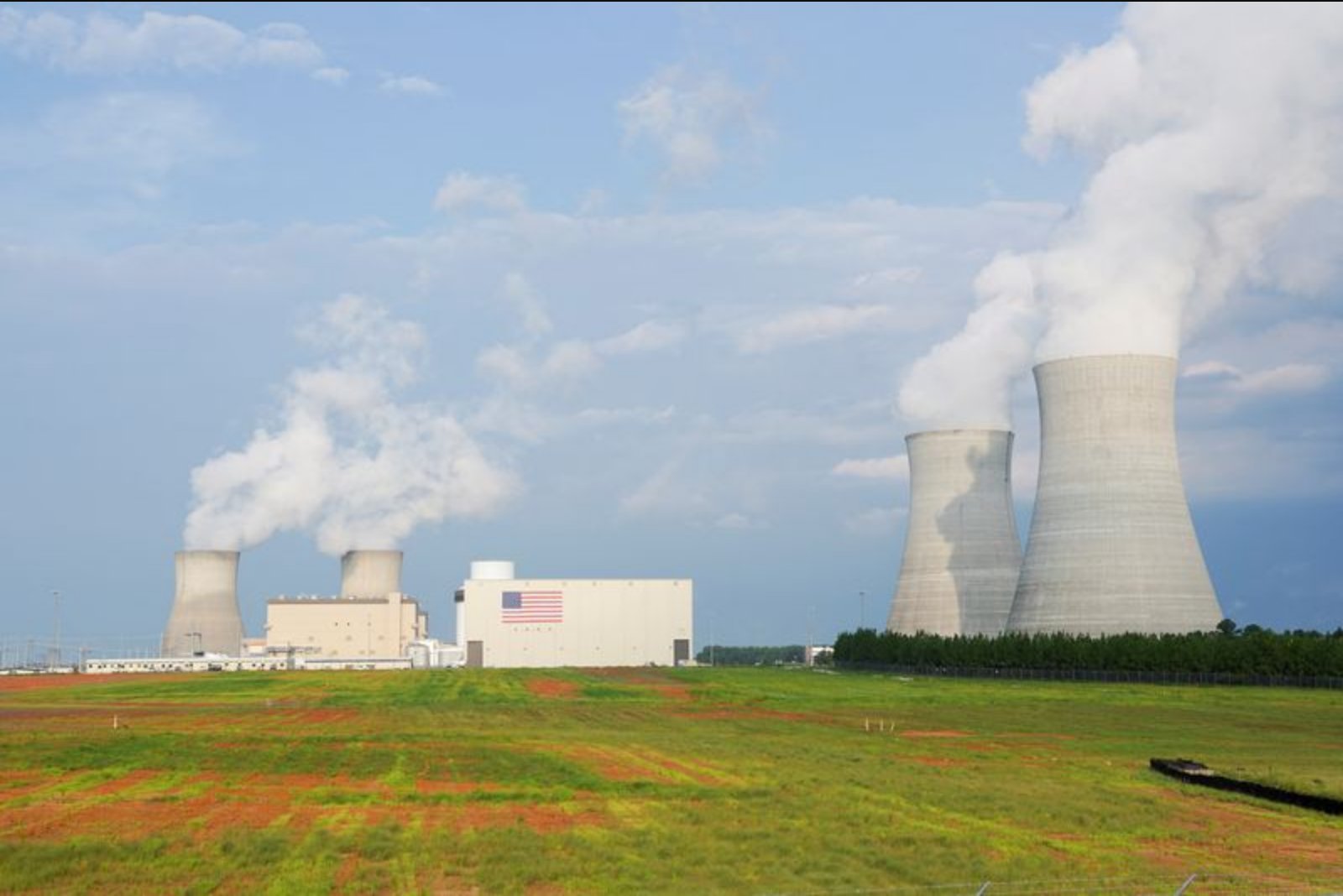
CWIP policies have been used to finance a variety of projects across the country. Examples include large-scale efforts such as the Vogtle nuclear reactors in Georgia, which experienced major cost overruns and lengthy delays; a high-voltage transmission project in Nevada that is already increasing customer bills though the lines are scheduled to enter service in 2028; and an offshore wind development in Virginia where customers have been billed roughly $2 billion prior to operations.
In Nevada, utility disclosures show that NV Energy is charging the average customer about $4 per month to cover financing costs on long-range transmission lines that the company says will enter service in 2028. NV Energy asserts that using CWIP to support financing is cheaper than tapping capital markets and that, over time, customers will see net savings. According to a consumer protection analyst at the Nevada Bureau of Consumer Protection, however, the modeled benefit could be as small as 0.1% and may take 52 years to materialize for a single ratepayer. The analyst calculated that an average 40-year-old customer would need to remain on the system until age 92 before seeing a net benefit from the CWIP approach. NV Energy did not respond to messages seeking comment on this analysis.
In Virginia, where data center development is highly concentrated, customers have already contributed roughly $2 billion through rates toward an $11.5 billion offshore wind farm that remains under construction. Regulatory filings show the measure currently amounts to a peak charge of $11.23 on the average monthly bill. Dominion Energy executives maintain that the CWIP structure will result in $2 billion in savings for ratepayers over the 30-year life of the project.
Why states are adopting CWIP now
After decades of limited load growth, several regions of the U.S. grid are now experiencing tighter reserve margins, increasing the risk of rolling outages in periods of high demand. Federal energy regulators and regional grid operators project electricity demand to grow more than 2% per year through at least 2045, following an earlier span from 2009 to 2024 when average annual demand rose about 0.5%.
Policy-makers in several states have moved quickly to add or expand CWIP authority as this strain on capacity has intensified. Missouri, which had maintained a 50-year ban on such incentives, lifted that restriction last year to address rising power demand from data center projects. State officials framed the change as a way to promote new generation while moderating the size of rate bumps when facilities come online. "Governor Kehoe believes CWIP incentivizes new power generation while reducing long-term financing costs passed on to ratepayers," the governor's office said in a statement. "Without CWIP, customers see dramatic increases in their monthly utility bills when a new facility comes online. CWIP allows these costs to be recouped over a longer period, reducing price shocks to customers."
Since 2024, other states including Arkansas, Kansas, Oklahoma and North Carolina have also adopted CWIP provisions or expanded existing authority, reflecting a broader trend of states seeking ways to accelerate capital projects aimed at bolstering supply and grid resilience.
Arguments for and against
Supporters of CWIP say it is an essential tool to mobilize the capital necessary to modernize an aging grid more quickly and at lower cost. They argue that when utilities can use CWIP, the lower borrowing costs associated with reduced market financing ultimately benefit ratepayers over the long term and help avoid abrupt bill increases when new facilities begin operating.
But business groups and consumer advocates counter that CWIP shifts financial risk from utilities and investors to captive ratepayers, many of whom may never see the promised payback. "All this does is shift the financial risk to the ratepayer," said Paul Cicio, president of the Industrial Energy Consumers of America, a trade group representing large manufacturers. "The average ratepayer has no idea this is happening."
Consumer groups point to recent sharp price increases in many markets as a related affordability concern. According to federal energy data, U.S. power prices have climbed about 40% over the past five years, with particularly large, double-digit increases in data center hotspots such as Virginia, Maryland and Pennsylvania. "Huge rate increases have caused a monumental affordability crisis for electricity," said Ben Inskeep, program director for Citizens Action Coalition of Indiana. "CWIP incentives are adding insult to injury for these customers."
Economists also highlight a structural problem: CWIP arrangements are sometimes coupled with protections that limit utilities' exposure to cancellations, delays and cost overruns, meaning customers may remain on the hook even when projects fail to deliver expected benefits. "If a project, particularly a nuclear one, cannot attract private capital without a public backstop, it is a clear signal that it may not be a financially responsible investment," said Jason Walter, an economics professor. "Forcing captive ratepayers to act as the bank for speculative projects serves no clear public purpose."
Cautionary examples
Advocates warning about CWIP point to high-profile, troubled projects as cautionary examples. In Georgia, voter backlash over massive cost overruns at the Vogtle nuclear expansion helped unseat two public service commissioners. Regulatory records show the Vogtle project finished about seven years behind schedule with a final price tag near $35 billion - more than double the original estimate of $14 billion. Georgia households have collectively paid about $1,000 each in CWIP-related charges since 2009 as rates climbed.
That experience has been cited by critics as evidence that shifting upfront financing burdens onto customers can lead to years of higher bills with little guarantee of eventual value. "Georgia ratepayers were severely harmed, and any electeds that support these high-risk, expensive projects may suffer the same fate from consumer outrage as the two commissioners who lost their seats did," said Patty Durand, director of Georgians for Affordable Energy.
Scale of utility investment and financial impact
Analysts on Wall Street describe the current wave of utility capital spending as an investment super-cycle. Capital expenditures by U.S. electric utilities are expected to exceed $1 trillion over the next five years, a scale of spending that increases the regulatory assets on which utilities earn a return. Financial disclosures indicate that utilities receive a regulated rate of return on capital investments that commonly ranges from about 9% to 12%.
That dynamic matters because when a portion of project costs is collected during construction, utilities improve near-term cash flow and reduce reliance on market debt, which can in turn lower their financing costs. But it also locks in present-day ratepayer contributions toward projects that might not provide near-term service or - in some cases - might encounter delays and cost escalations that shift greater burdens to households and businesses.
Public reaction and policy questions
The expansion of CWIP has prompted broad debate among governors, regulators, industry leaders and consumer advocates about the right balance between accelerating investment and protecting ratepayers. The National Governors Association said it does not take a position on whether CWIP is suitable for specific states or projects, reflecting the complexity of trade-offs involved.
Consumer watchdogs and trade groups emphasize transparency and risk allocation as central concerns. Critics say that without clear guardrails and accountability, CWIP can expose customers to decades of financing charges for projects that may have uncertain or distant payoffs. Supporters counter that in many cases the model will help deliver needed infrastructure more quickly and at lower long-term cost by reducing overall financing expenses.
As more states adopt CWIP rules, the debate is likely to continue over how to reconcile short-term affordability pressures with the long-term goal of upgrading the nation’s electricity system to meet rising demand and bolster reliability.
Key points
- At least 40 U.S. states now allow some form of Construction Work In Progress (CWIP), up from fewer than 20 about a decade ago, enabling utilities to collect construction financing costs from customers before projects enter service.
- CWIP has been used to finance large projects including the Vogtle nuclear reactors in Georgia, a Nevada transmission line project with charges levied now for benefits expected decades later, and an $11.5 billion offshore wind farm in Virginia for which customers have already paid about $2 billion.
- Utilities earn regulated returns on capital spending typically ranging from 9% to 12%; Wall Street analysts describe the current utility investment cycle as exceeding $1 trillion of spending over the next five years, increasing the scale of ratepayer-funded financing.
Risks and uncertainties
- Consumers may pay increased electricity bills for projects that are delayed, canceled, or exceed budgets - a concern highlighted by the Vogtle nuclear project in Georgia, which finished seven years late and cost roughly $35 billion versus an initial $14 billion estimate. This risk affects residential and commercial electricity consumers.
- Long payback horizons could mean that many ratepayers will not realize net benefits within their lifetimes; one Nevada analysis found a modeled break-even of 52 years for an average customer, raising questions for the household and industrial sectors about intergenerational cost allocation.
- Rapid adoption of CWIP policies may intensify affordability pressures in regions already experiencing steep price increases, particularly data center hubs, potentially affecting local economic competitiveness and industrial energy users.