
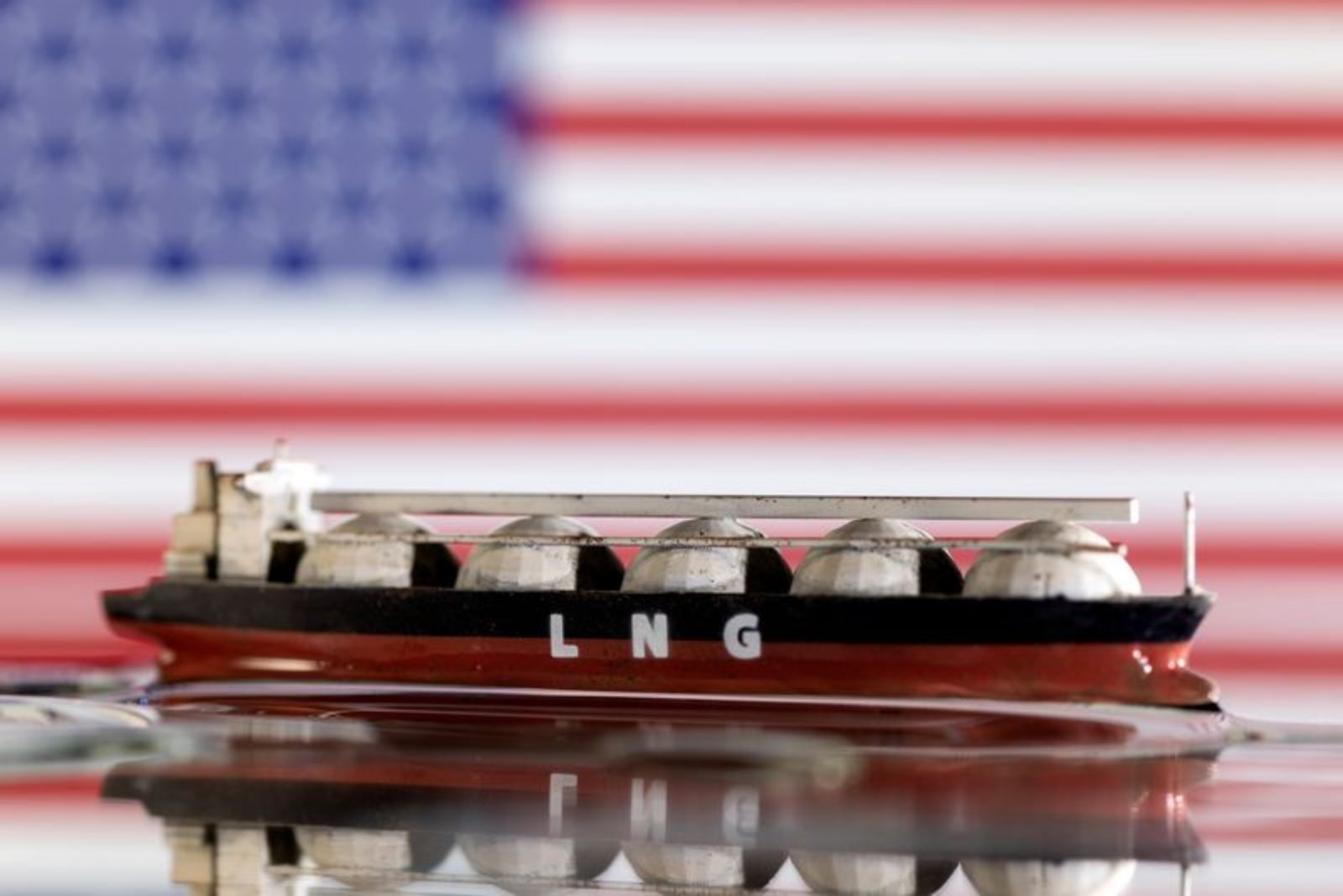
U.S. President Donald Trump is due in Beijing this week for a summit with President Xi Jinping on May 14 and 15. U.S. officials say a potential part of the talks could be an agreement for Beijing to increase purchases of U.S. energy supplies. Tariffs from the U.S.-China trade war have effectively stopped most imports of U.S. crude and U.S. LNG into China - commodities that, together, were valued at $8.4 billion in 2024, the year before President Trump began his second term.
LNG: volatile flows linked to geopolitics and tariffs
China's purchases of U.S. liquefied natural gas have historically swung with political relations, creating scope for a rebound if ties improve. During the 2019 trade war in President Trump's first term, Chinese imports of U.S. LNG plunged to 260,000 metric tons even as China's overall LNG imports rose 15% to 59.4 million tons that year. After the Phase 1 trade deal two years later, U.S. exports climbed to 8.98 million tons, making the United States China's third-largest LNG supplier that year and narrowly trailing second-place Qatar.
By 2024 deliveries had fallen to 4.15 million tons, and in 2025 dropped sharply to 26,000 tons following Beijing's imposition of a 25% tariff on U.S. LNG. Those headline declines do not fully reflect contractual commitments: Chinese buyers such as PetroChina and CNOOC have continued to take cargoes to honour long-term contracts signed between 2021 and 2023. To avoid the tariff, many of those cargoes are being resold into Europe. Industry consultancy Rystad Energy estimates roughly 12 million tons are under contract for delivery to China this year.
Some analysts say that if Beijing removed the 25% tariff, U.S. LNG would offer a cost advantage over Asian spot cargoes, particularly given market disruptions caused by the Iran war. The same analysts caution, however, that any import uptick might be constrained because China is expected to experience another year of sluggish LNG demand.
Oil: a limited role for U.S. crude in China's imports
China is the world's largest oil importer, but the United States has historically been a minor supplier of crude. After the Phase 1 trade deal, Chinese imports of U.S. oil peaked at about 395,000 barrels per day in 2020, representing just under 4% of China's total crude imports. In 2024, before President Trump returned to office, China imported 193,000 barrels per day of U.S. crude, valued at $6 billion.
Since May 2025 China has not imported any U.S. oil, following the imposition of a 20% import tariff during the earlier trade tensions. Beijing has offset that absence by sourcing more crude from other exporters, including Canada and Brazil.
Ethane and propane: continued flows where dependence is high
The United States remains China's sole supplier of ethane, a feedstock used in plastics production, and shipments have persisted despite the broader trade conflict. China imported 5.95 million tons of ethane worth $2.96 billion in 2025, and ethane imports rose 50% year-on-year in the first quarter of 2026, according to China customs data. China's reliance on U.S. ethane became visible last year when Beijing waived a 125% retaliatory tariff on ethane imports while U.S. export restrictions were in place for several months.
In the case of propane, the United States also remained China's largest supplier in 2025 even with tariffs in effect, exporting more than $6.6 billion worth of propane. Propane is used domestically to make propylene, a precursor for many plastics.
Commercial context and constraints
Contractual obligations, tariff structures and changing demand patterns are all shaping how quickly and how much U.S. energy could return to Chinese markets if leaders reach an agreement. Long-term contracts executed between 2021 and 2023 are still influencing cargo destinations, with resales to Europe used to avoid domestic tariffs. Meanwhile, market observers note that a removal of tariffs could make U.S. LNG competitive with Asian spot cargoes, but weak domestic demand in China may limit an immediate surge in volumes.
Investor note: A promotional segment in the reporting mentions ProPicks AI and a hypothetical question about investing $2,000 in a security identified by the code 601857. That segment describes ProPicks AI as evaluating companies using more than 100 financial metrics and claims the AI has identified notable past winners. It offers readers a prompt to see whether 601857 is featured in any ProPicks AI strategies or whether there are other opportunities in the same space.
Any agreement between Presidents Trump and Xi on energy purchases would remove a key barrier - tariffs - to U.S. exports to China, but the scale and timing of any revival would depend on contract logistics, substitution patterns from other suppliers and the strength of Chinese demand for natural gas and crude.