
Stock Markets May 12, 2026 04:45 AM

Waymo Issues Recall of 3,791 Robotaxis After Flood-Driving Software Flaw Identified

NHTSA reports interim mitigation steps as federal probes continue over separate safety incidents

By Marcus Reed
Share
Twitter Reddit Facebook LinkedIn

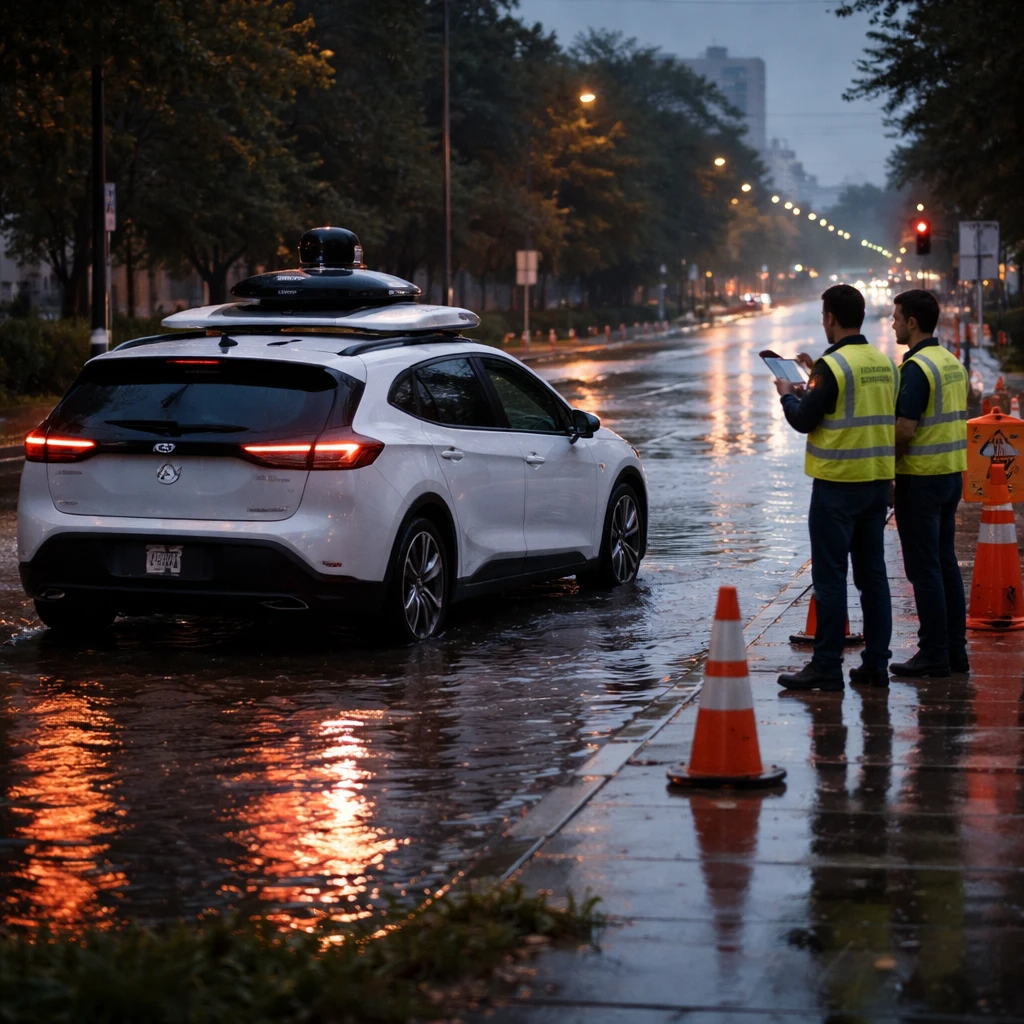
Waymo has recalled 3,791 robotaxis in the U.S. after a self-driving software defect was found that could allow vehicles to drive onto flooded roadways. The recall targets specific fifth- and sixth-generation Automated Driving Systems. The company has narrowed operational parameters and updated maps as temporary countermeasures while a permanent fix is developed. Regulators are also probing separate safety incidents involving Waymo vehicles in California and Texas earlier this year.

Waymo Issues Recall of 3,791 Robotaxis After Flood-Driving Software Flaw Identified
Summarize with
ChatGPT Perplexity Claude Grok Gemini

Key Points

  • Waymo is recalling 3,791 robotaxis in the U.S. due to a self-driving software issue that could cause the vehicles to drive onto flooded roads.
  • The recall applies to certain fifth- and sixth-generation Automated Driving Systems; interim measures include tightened weather-related operational limits and updated maps while a full remedy is developed.
  • Regulatory scrutiny is ongoing: NHTSA is probing a January incident where a Waymo vehicle struck a child in Santa Monica, and the NTSB is investigating a January incident involving Waymo vehicles passing a stopped school bus in Texas.

Federal safety regulators say Waymo is recalling 3,791 driverless vehicles operating in the United States because of a software issue that could permit the cars to travel onto flooded roads.

The recall specifically concerns certain fifth- and sixth-generation Automated Driving Systems installed in the company’s robotaxis, according to the National Highway Traffic Safety Administration (NHTSA). The agency said the defect relates to how the software responds in flood-prone conditions and could result in the vehicles entering areas with standing or moving water.

As an interim response to the problem, Waymo has narrowed the permitted scope of its operations by imposing tighter weather-related constraints and has pushed updated map data to its fleet, the NHTSA statement said. Those measures are intended to reduce the likelihood of vehicles encountering flooded roadways while the company continues to develop a complete technical remedy.

The agency noted that a full fix remains under development. No timeline for the final remedy was provided in the NHTSA comments cited by regulators.


Separately, the company is facing additional federal scrutiny. NHTSA is conducting an inquiry after one of Waymo’s self-driving vehicles struck a child near an elementary school in Santa Monica, California, in January, the agency said.

In addition, the National Transportation Safety Board (NTSB) said last month that it is investigating a separate January incident in which Waymo vehicles reportedly passed a stopped school bus with its lights activated, a maneuver the agency said violated Texas state law.

The recall and the ongoing probes underscore continuing regulatory attention on autonomous vehicle operations and safety performance. Waymo’s interim actions - operational limits and map updates - address immediate risk vectors while the underlying software correction is being created, according to the NHTSA description.

Regulators have not announced further enforcement steps in connection with the recall or the two January incidents, and the company is continuing work on a permanent fix for the software issue that led to the recall.

Risks

  • Software vulnerability could lead to robotaxis entering hazardous flood conditions, presenting direct safety and liability concerns for the autonomous vehicle sector and municipal transportation systems.
  • Ongoing federal probes into separate incidents - a child struck near a school and a reported school bus violation - may increase regulatory oversight of autonomous vehicle operations, affecting legal and operational frameworks in the transportation sector.
  • Interim mitigations such as reduced operating scope and map updates may constrain service availability and routing for robotaxi deployments until a permanent software remedy is completed, with potential impacts on commercial operations and local mobility services.

More from Stock Markets

Last-minute StubHub cancellations leave World Cup ticket buyers stranded and frustrated Jun 26, 2026 UBS Lifts Long-Term View of Global Security Market, Cites Cybersecurity and AI as Main Growth Engines Jun 26, 2026 Australia, Brazil Near China Beef Quota Limits, Raising Uncertainty for Second Half of 2026 Jun 26, 2026 Geely’s Lotus EVs Set to Arrive in Canada Next Month Under Carney-Xi Trade Agreement, Ambassador Says Jun 26, 2026 Zuckerberg Directs Team to Evaluate Ties With Polymarket and Kalshi as Meta Tests Prediction-App Jun 26, 2026