
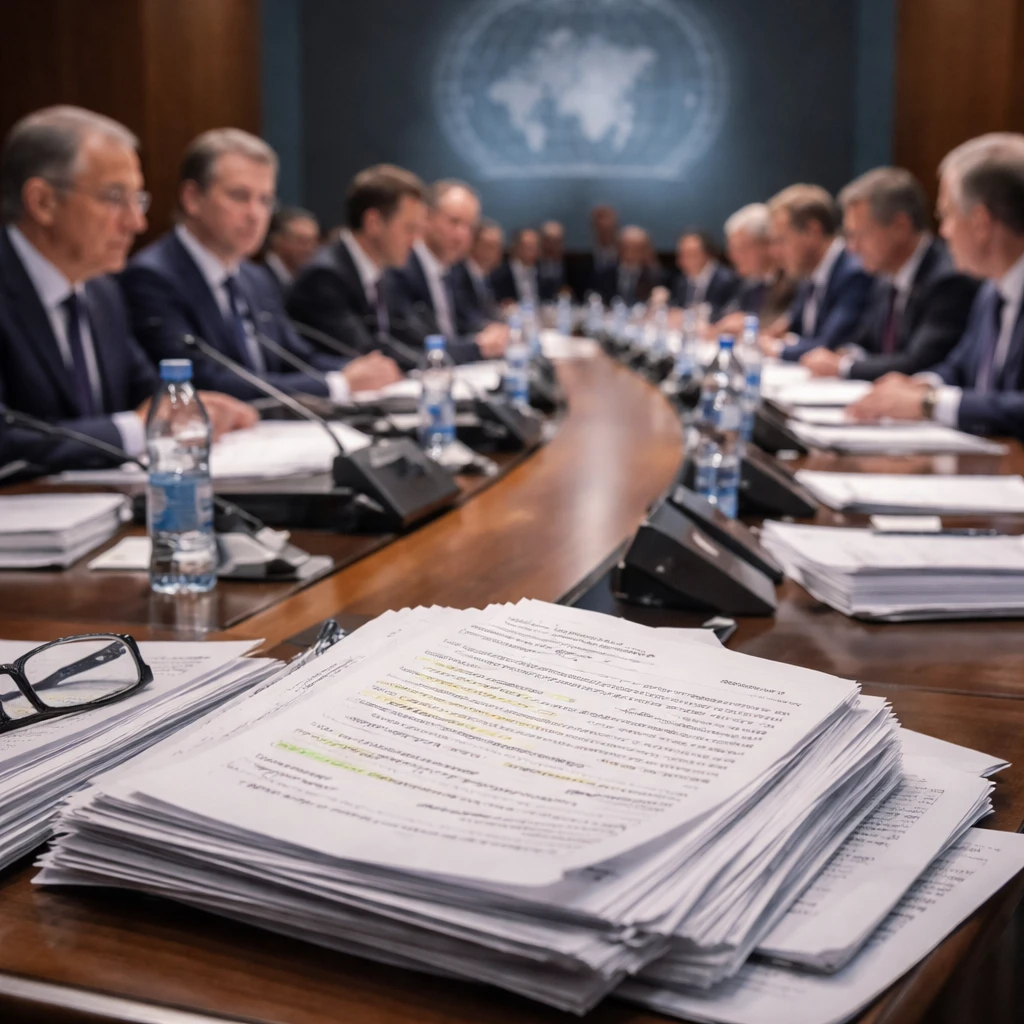
Geneva - Representatives of the 128 states party to the Convention on Certain Conventional Weapons (CCW) have convened in the Swiss city this week to discuss a draft text that could lead to international rules on autonomous weapons. Diplomats familiar with the talks say fresh objections from the United States and Russia have reduced the chances that the meeting will produce a consensus text on Friday that would open the way to negotiations on prohibitions and regulations for Lethal Autonomous Weapons Systems - commonly referred to as LAWS.
The CCW is an international framework hosted in Geneva that addresses weapons considered to be excessively injurious or indiscriminate. At this meeting delegates are debating whether a non-binding document can be agreed, a step supporters argue is needed to move toward concrete restrictions or bans for systems that can select and engage targets with varying degrees of autonomy.
Concerns about semi-autonomous weapons have intensified with reports of their use in conflict zones such as Ukraine, Sudan and parts of the Middle East, diplomats said. Campaign groups including Human Rights Watch and the Stop Killer Robots coalition have cautioned that certain weapons, including those assisted by artificial intelligence, may act unpredictably and raise the risk of fatal errors.
States at the meeting broadly accept that international humanitarian law applies to LAWS. However, binding, specific international standards tailored to these systems remain largely absent. A majority of delegations at the session have signaled support for the draft text, diplomats said, but Washington and Moscow have put forward late changes and deletions, a development reported by two diplomatic sources.
The Russian mission in Geneva did not provide a comment. The U.S. mission did not immediately respond to a request for comment.
"The window is getting smaller to getting an agreement," one of the diplomatic sources said, reflecting concerns that time is running short and that negotiators might be forced to remove provisions on which they have been working for several years. A second diplomatic source warned that if key provisions are dropped, there is a real risk that the meeting will conclude without any deal.
According to a senior diplomat involved in the discussions, the U.S. stance has hardened over the past six months. Washington is said to prefer a set of guidelines rather than a legally binding international treaty, arguing that international humanitarian law already offers a framework for governing conduct in armed conflict. That approach is reportedly shared by other states, including Russia, India and Turkey.
Diplomats said at least six countries received formal approaches from Washington asking them to support its suggested changes to the draft text, a move that one diplomat described as evidence of U.S. engagement aimed at reaching consensus. Nevertheless, differences persist over specific phrasing - including the use of terms such as "lethality" - and over language concerning the role of human judgment and control in the operation of these systems.
Supporters of a binding treaty - among them Brazil, Ireland and several African states - argue that legal safeguards are needed to guarantee meaningful human control over weapons that can select and attack targets. Opponents favor retaining flexibility in how states regulate and deploy such systems.
In August, U.N. Secretary-General Antonio Guterres and International Committee of the Red Cross president Mirjana Spoljaric warned publicly that the world was approaching a moral red line if autonomous weapons were permitted to kill without human involvement. That warning has added urgency to the debate in Geneva, but entrenched positions and late textual changes have complicated efforts to translate concern into unified international language.
Context and next steps
Delegates face a limited timeframe to reconcile competing views. If consensus on a non-binding text cannot be reached, the pathway to negotiating binding prohibitions or regulations may be delayed or closed, according to the diplomats involved. The stakes include whether future multilateral work will focus on a legally binding instrument or on softer forms of guidance and cooperation.