
President Donald Trump has publicly accused U.S. oil refiners of taking advantage of consumers, urged a Justice Department investigation and asked that companies use their recent strong earnings to help lower gasoline prices that climbed as global tensions with Iran intensified.
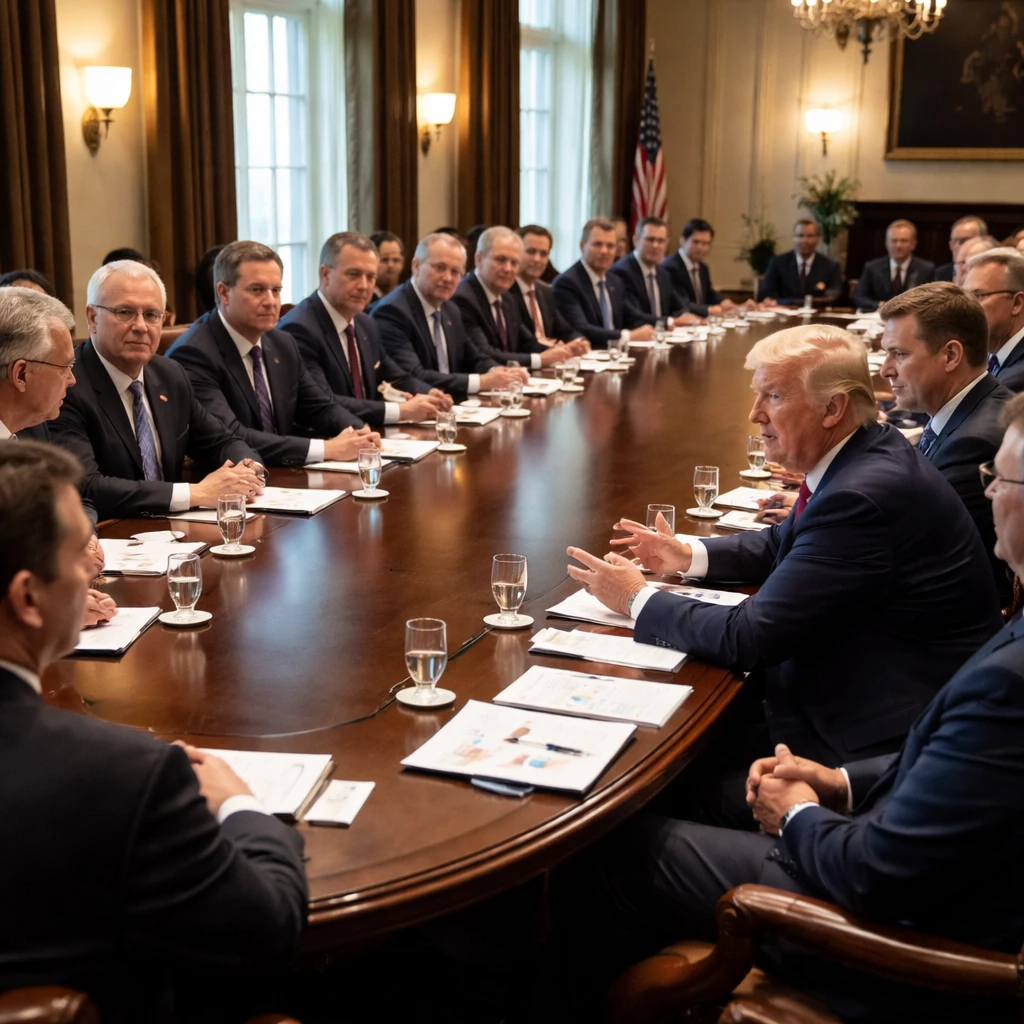
The White House has scheduled a meeting with a cross-section of refining companies - from large integrated producers to smaller independent fuel makers - to celebrate efforts to keep supply flowing and to discuss steps to reduce pump prices, which are averaging over $4 a gallon. The event is timed as gasoline prices head into the Labor Day weekend at levels the administration says are unusually high for this point in the year.
Invitations to the meeting were sent only late last week and contained few specifics about the guest list or agenda, according to people familiar with the planning. That limited notice has produced an unusual calculus for corporate leaders. Some executives and their advisers weighed the value of attending a direct conversation with the president against concerns about potential political optics and the risk of an uncomfortable encounter.
One company official who helped advise on attendance put the tension plainly: "You want to be at the table, but you also have to think about what could happen once you’re there. You don’t want your CEO to be embarrassed." Another company official acknowledged worries about optics while noting the meeting would give executives rare face time with the president to press industry priorities such as the administration’s biofuel policy and the Jones Act, which affects the cost and availability of fuel shipments between U.S. ports. "There are certainly concerns about the optics, but you also don’t want to miss an opportunity to have a direct conversation with the president about issues that are important to the industry," the official said.
Not all major refiners received invitations. At a prior White House session in January, Exxon CEO Darren Woods angered the president by calling Venezuela "uninvestable" in its then-current form; the president later said he was "inclined to keep Exxon out," describing the company as "playing too cute." Exxon, the nation’s third-largest refiner by capacity, was not invited to the upcoming meeting, according to sources. The White House did not comment on the attendee list, and Exxon did not respond to requests for comment.
People familiar with the plans said invited companies include Marathon Petroleum, Delek US Holdings, Chevron, PBF Energy and Valero Energy. The companies did not provide comment on whether they had concerns about attending the meeting.
Administration focus: expanding refining capacity
According to a White House official, the meeting will concentrate on ways to expand U.S. refining capacity. The administration argues that years of Democratic policies contributed to refinery closures and discouraged investment in new capacity or expansions. With the country operating at nearly 100% of existing refining capacity, the official said the administration is pressing for "concrete, near-term steps" that could increase capacity and ultimately reduce gasoline prices for consumers.
The official also said the meeting comes as the administration is working to increase flows of Venezuelan crude to U.S. refineries. The president has made lowering energy costs a central element of his economic agenda, even as he has increasingly singled out refiners for criticism as pump prices have stayed elevated.
Gasoline prices rose sharply after the Iran conflict began in late February and climbed above $4 a gallon in the spring. Heading into the Labor Day weekend, prices are at their highest level ever for this point in the year, and the American Automobile Association has said August is on track to be the most expensive on record for that month.
Profitability and political pressure
U.S. refiners posted strong second-quarter returns as margins for gasoline and diesel increased and overseas buyers turned to U.S. fuel amid global supply disruptions. Three of the largest U.S. refiners - Marathon, Phillips 66 and Valero - reported a combined $12.6 billion in second-quarter profits, according to reporting on their results.
That backdrop of elevated margins and profits has drawn sharp public commentary from the president, who has accused refiners of profiteering even while courting their support for policies to expand U.S. energy output.
Some industry advisers urge caution. Stephen Brown, a former Washington energy lobbyist and consultant who has advised CEOs on presidential politics, said he would not advise sending a chief executive to the event given the president’s recent rhetoric toward the industry. "This event is a made-for-TV moment, strictly performative, that can only embarrass the company," Brown said.
What is at stake
For executives, the meeting presents both a risk and an opportunity: risk in terms of public optics and an unpredictable encounter with the president, and opportunity to press directly on policy matters that affect refining economics, shipping costs under the Jones Act and the administration’s biofuel rules. For policymakers, the gathering is positioned as a step toward tangible actions to relieve price pressures at the pump by increasing refining throughput and seeking additional crude supplies.
Given the tight utilization of existing capacity and the recent surge in margins and profits, the administration’s push and the industry’s response will be closely watched by consumers, market participants and lawmakers alike.