
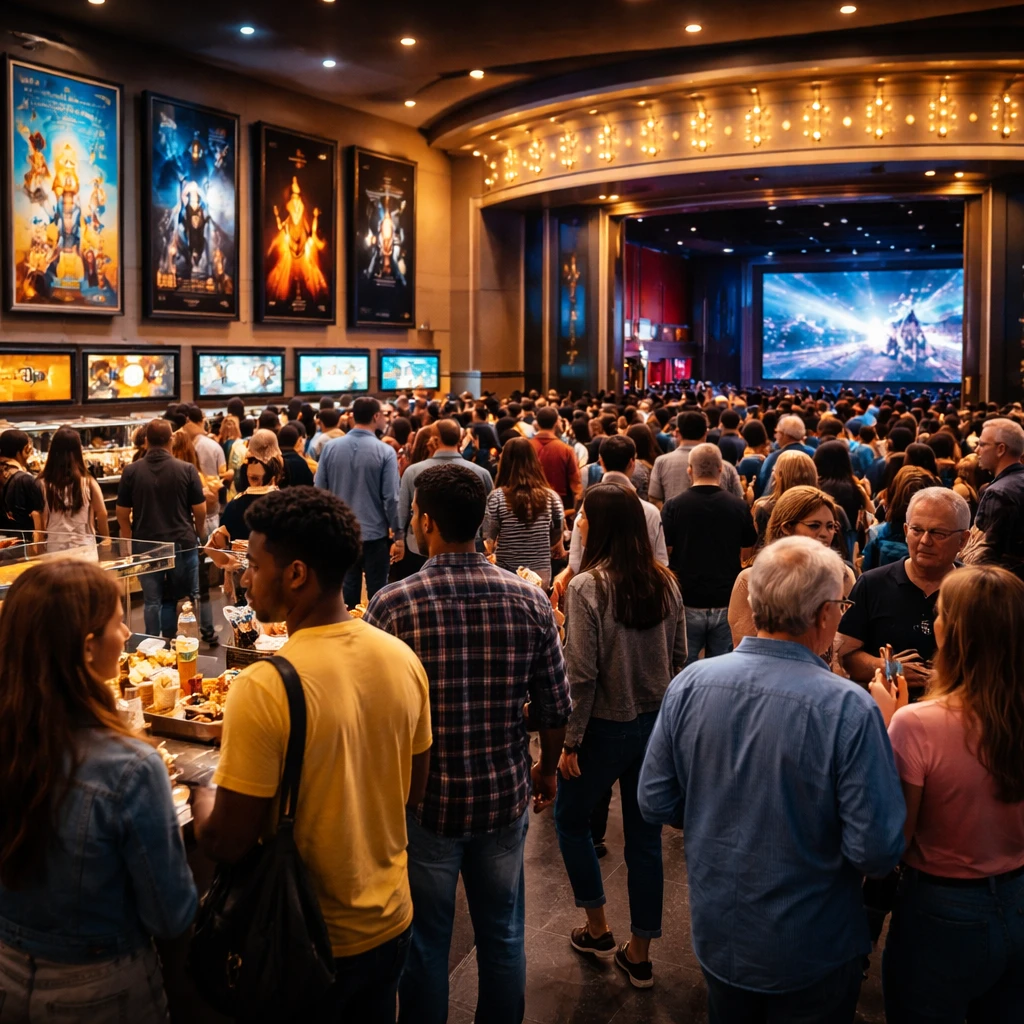
Hollywood closed a summer that industry trackers regard as its strongest since the onset of the pandemic, with a combination of high-profile franchises, sequels and fresh original titles persuading audiences to return to theaters.
Measurement firm Rentrak reported $4.6 billion in ticket sales in the U.S. and Canada from the first weekend in May through Aug. 30. That total represents a 26% increase over last summer, paced by headline films including Sony Pictures' "Spider-Man: Brand New Day," Universal's "The Odyssey" and Pixar's "Toy Story 5." Analysts cited in industry reporting estimate the full-year domestic box office for 2026 could top $10 billion.
The traditional summer movie season, which concludes with Labor Day on Sept. 7, is still not projected to eclipse the inflation-adjusted all-time seasonal high of $6.8 billion set in 2013 - a year that featured tentpoles such as "Iron Man 3" and "Despicable Me 2." Nevertheless, this summer's lineup offered a broad array of films that resonated with different audience segments.
Two horror titles that trace creative roots back to YouTube - "Backrooms" and "Obsession" - attracted particularly large numbers of Gen Z viewers. Meanwhile, films including "Michael," "The Devil Wears Prada 2" and "Scary Movie" drew a strong turnout from women, and Sony's latest Spider-Man installment connected with younger men through its themes of isolation.
"We are seeing literally every single age group, every single demographic, out in theaters," said Jim Orr, president of domestic theatrical distribution for Universal Pictures.
Industry participants say the business has recovered momentum after the twin disruptions of the Covid-19 pandemic and the writers' and actors' strikes in 2023. Michael O'Leary of Cinema United, a trade group that represents theater owners, cautioned that the strikes had longer-lasting consequences than many anticipated. "The impact of the strikes on the studios was more lasting than people realized," he said. "In the last year or so, the studios are starting to hit their stride again."
Christopher Nolan's "The Odyssey" contributed to renewed interest in 70 millimeter film presentations and helped push IMAX to a record summer, according to IMAX executives. "The success of 'The Odyssey' has changed perceptions of what could work with IMAX with almost every constituency," said IMAX CEO Richard Gelfond.
Despite the stronger box office, film production remains reduced relative to pre-pandemic levels. Over the summer, studios released 34 films in wide distribution - two more than in 2025 but still short of the 44 broadly distributed films seen in 2019.
Market researcher Enact Insight reported that audiences demonstrated an increased willingness to attend films on opening weekend, a trend that coincided with studios taking more creative risks by greenlighting original stories rather than relying exclusively on established intellectual property and sequels. Greg Durkin, founder and CEO of Enact Insight, described a previous era in Hollywood as having become "a sequel and IP factory," a pattern studios used to limit financing risk. He argued that the best protection against box-office failure is a diversified slate that embraces creative risk-taking.
That variation in content appears to have paid off with younger viewers. Executives had worried that Gen Z - including people in their late 20s and early 30s - would favor streaming and social media over theaters and would not develop routine moviegoing behaviors. Yet the summer's programming drew substantial numbers from that cohort.
"A lot of people had written off the Gen Zs, said they weren’t interested, and they’re coming back in record-breaking numbers," said Tim Richards, founder and CEO of Europe's Vue cinema chain. "That’s a global phenomenon, and that’s been really encouraging since that’s our future audience."
Paul Dergarabedian, head of marketplace trends at Rentrak, said the seasonal gains could be sustained through the end of the year as two highly anticipated tentpoles - "Avengers: Doomsday" and "Dune: Part Three" - are scheduled for release later in the year. He forecast that domestic box office could reach $10 billion in 2026, a level not achieved since 2019. "That’ll put to rest any idea that the movie theater is making a comeback," Dergarabedian said. "The movie theater is back."
Within the broader entertainment and capital markets conversation, the summer's results also intersected with attention to specific publicly traded cinema-related stocks. One example in industry coverage is IMX, a ticker mentioned alongside commentary on IMAX's summer performance. Evaluation services were noted to include IMX in their analyses: one commentary noted that ProPicks AI evaluates IMX alongside thousands of other companies using many financial metrics and cited past tended winners identified by that service such as Super Micro Computer (+185%) and AppLovin (+157%).
Overall, the mix of franchise releases, sequels, and original films this summer appears to have broadened the box office's appeal and drawn diverse demographics back into theaters, while studios continue to balance cautious production volumes with an appetite for creative experimentation.