
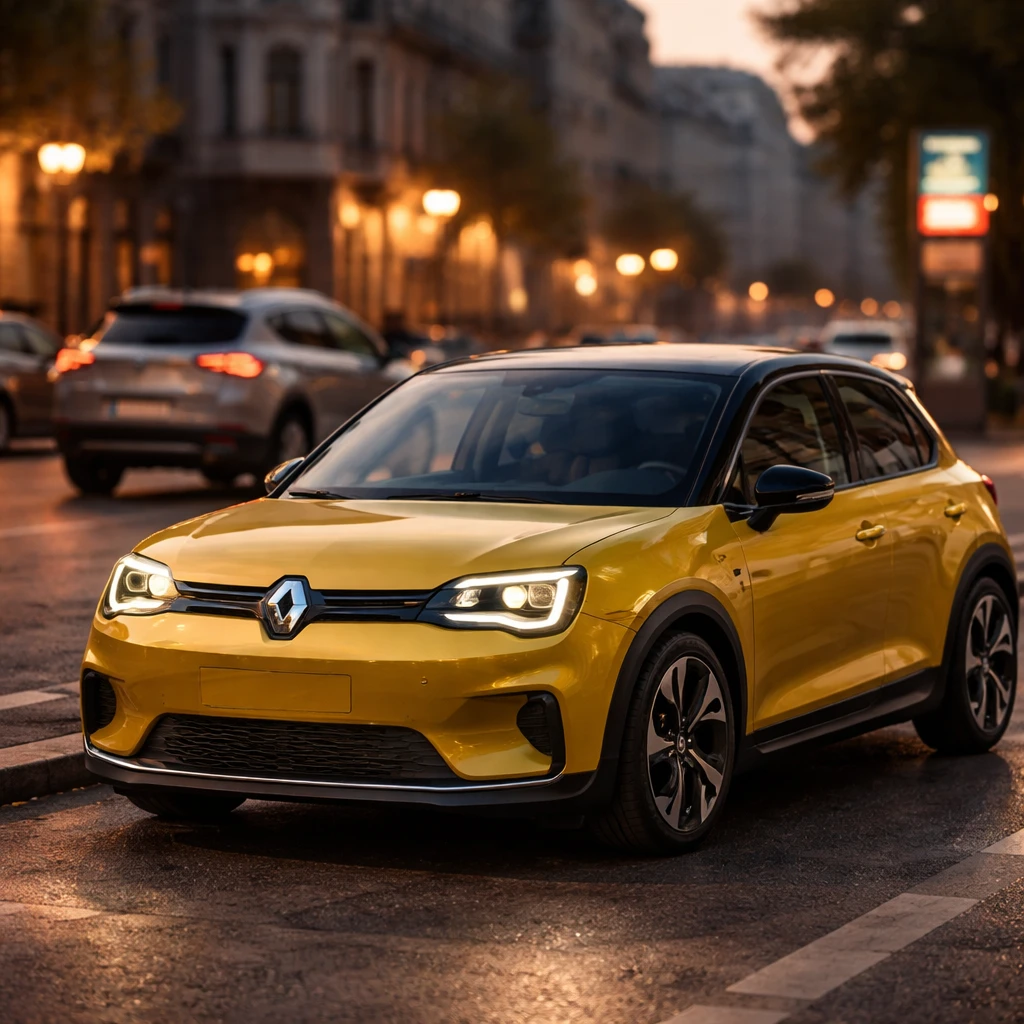
Renault Group is achieving stronger profitability on its small electric R5 than on larger cars in its lineup, CEO Francois Provost told French business daily Les Echos on Monday. According to Provost, Renault is generating positive margins on the R5 as well as on the R4 and Twingo, and those margins exceed the returns realized on larger C-segment models such as the Megane and Scenic.
The comments highlight an inversion of the conventional auto-industry pattern in which larger vehicles, benefiting from higher price points, have typically produced superior margins to their smaller counterparts. Provost's remarks indicate Renault's compact electric models are delivering better profitability despite occupying a lower vehicle segment.
Provost also placed the company's margin performance against broader industry headwinds. He noted that many European carmakers point to the regulatory environment in Europe and an underdeveloped battery supply chain as constraints to EV profitability. Those producers have said these factors, combined with intense competition from Chinese manufacturers, make it difficult to achieve attractive returns on electric vehicles.
The R5 was introduced by Renault in late 2024 and has since become one of Europe’s top-selling electric vehicles, the CEO said. Demand for electric vehicles has also benefited from higher fuel prices tied to the Iran war, which has helped drive interest in both new and used electric vehicles across Europe.
Provost added that Renault's electric-vehicle order book has expanded substantially in certain markets since the conflict began, rising by about 50% in places including France and Germany. He attributed the order-book growth to conditions in those markets since the war, without expanding on market-by-market details beyond the countries mentioned.
The CEO's statements underline a divergence between Renault's recent compact-EV profitability and industry commentary on the broader challenges of making EVs profitable in Europe. Renault's reported margin strength on the R5, R4 and Twingo contrasts with the commonly expressed view that regulatory burdens and supply-chain limits are squeezing EV margins for many European automakers.
Context and constraints: The comments reflect Renault's internal assessment as reported by Provost in Les Echos. The CEO identified regulatory pressure and battery supply limitations as headwinds cited by other European manufacturers, and he pointed to competitive pressure from Chinese automakers. Provost also linked rising fuel prices following the Iran war to increased European demand for electric vehicles, and he reported a roughly 50% rise in the group’s EV order book in some markets including France and Germany since the conflict began.