
What happened
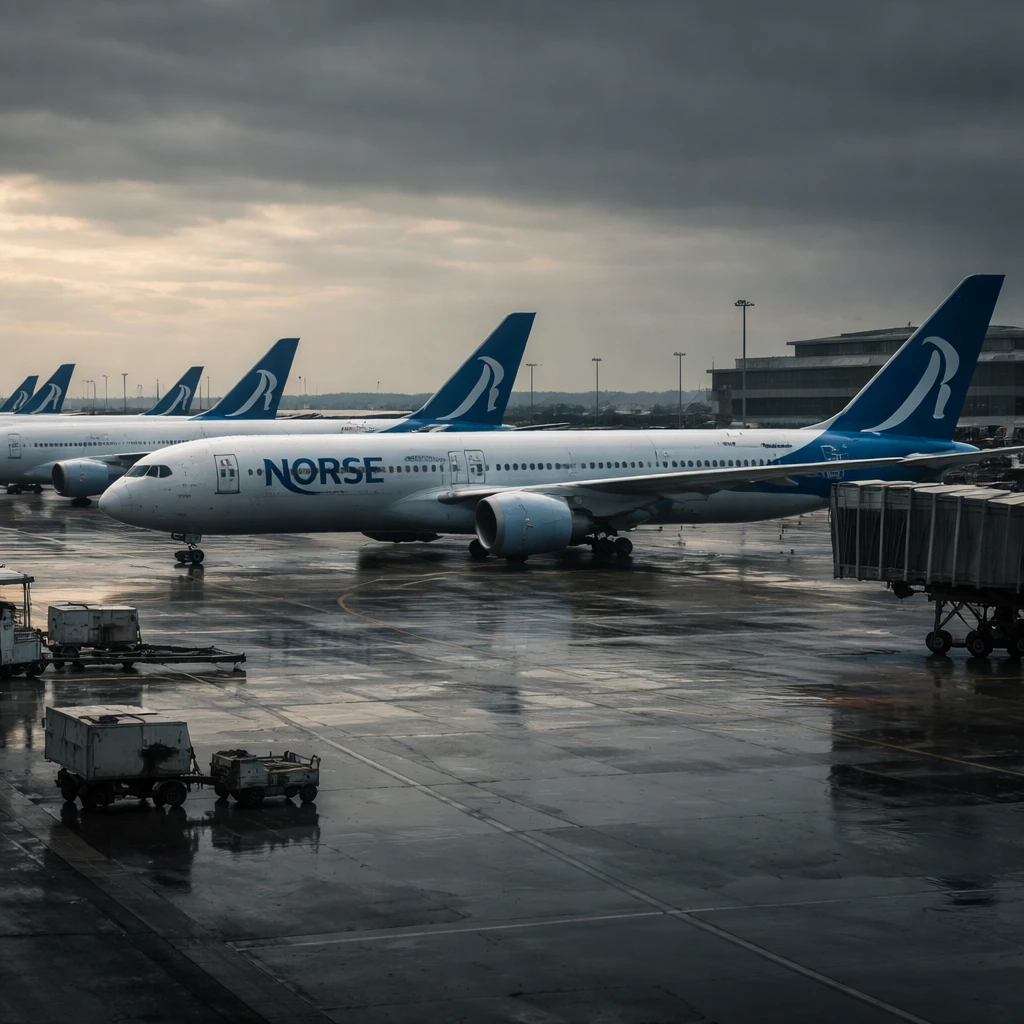
Norse Atlantic ASA shares tumbled, falling 40.7% to trade at NOK 0.017 following the company's disclosure that aircraft lessors have issued termination notices for the lease agreements on every one of its 12 Boeing 787 Dreamliners. The carrier announced on 27 November 2026 that it had received the termination notices and said it is disputing their validity while continuing to pursue short-term financing; it cautioned that there is no assurance a workable financing outcome will be secured.
Sequence of recent events
The lessors' termination notices are the most dramatic development in a rapid deterioration that accelerated earlier in the week. On 25 November 2026, Norse Atlantic told investors its liquidity position had become critical and that additional capital was necessary to sustain operations. The following day, on 26 November 2026, the airline suspended all flights and warned it would have to file for bankruptcy unless it obtained urgent financing.
Norwegian aviation analyst Hans Jørgen Elnæs told local media that the firm's value was largely tied to its leasing arrangements, and that the lessors' action could be fatal to prospects for a rescue or takeover.
Operational and financial strain
Throughout 2026, Norse has suffered from multiple structural and cyclical pressures. The carrier does not hedge its jet fuel requirements, a policy that has left it fully exposed to swings in fuel prices. Soaring fuel costs, linked in the company's reporting to disruptions tied to the US-Israeli war with Iran, have eroded cash reserves. Management launched a formal sale or merger process in July and had been in discussions with other airlines about leasing some of its Boeing 787 aircraft.
Financial results highlight the severity of the deterioration. Norse reported a first-half net loss of $94.6 million, compared with a $20.8 million loss a year earlier. Scheduled capacity fell 59% year over year to about 493,000 seats in summer 2026 as the airline cut Berlin, Paris, and Los Angeles from its network.
The International Transport Workers' Federation also reported that Norse notified staff it had been unable to pay salaries.
Market reaction and equity outlook
The company's shares have been decimated this year, with turmoil wiping out 99% of Norse's market value. The stock, which traded as high as NOK 7.35 over the past 52 weeks, reached a new 52-week intraday low of NOK 0.014. Today's collapse, driven by the lessor terminations and financing uncertainty, stands in contrast to broader U.S. equity markets, which were firmly positive on the day, underscoring that the move was company-specific rather than market-wide.
Why the lessors' move is pivotal
Leasing agreements form a core component of Norse's asset and cash-flow profile. If the termination notices are upheld, the carrier could lose control of the aircraft that underpin its network and any potential sale or restructuring value. Management's contest of the notices and parallel search for short-term funding leave the firm's immediate future unresolved.
Current state and implications
The convergence of a full-fleet termination notice, suspended operations, an ongoing emergency financing search, unpaid wages and an industry-wide fuel cost shock has placed the airline on the brink of formal insolvency. Investors are pricing in a near-total loss of equity value given the stack of adverse developments and the lack of any assured financing solution.
Key context retained from company statements
- Lessors issued termination notices for lease agreements covering all 12 Boeing 787 Dreamliners in Norse's fleet - disclosed 27 November 2026.
- Norse is contesting the validity of those notices while seeking short-term financing, with no assurance of success.
- The company suspended all flights on 26 November 2026 and warned it could file for bankruptcy without urgent funding.