
Stock Markets July 8, 2026 04:00 PM

NHTSA Orders Rapid Fixes After Autonomous Vehicles Disrupt Emergency Scenes

Agency documents recurring failures by driverless cars to detect and respond to emergency responders and warning devices, and will meet developers by month-end

By Marcus Reed
Share
Twitter Reddit Facebook LinkedIn
GOOGL AMZN TSLA

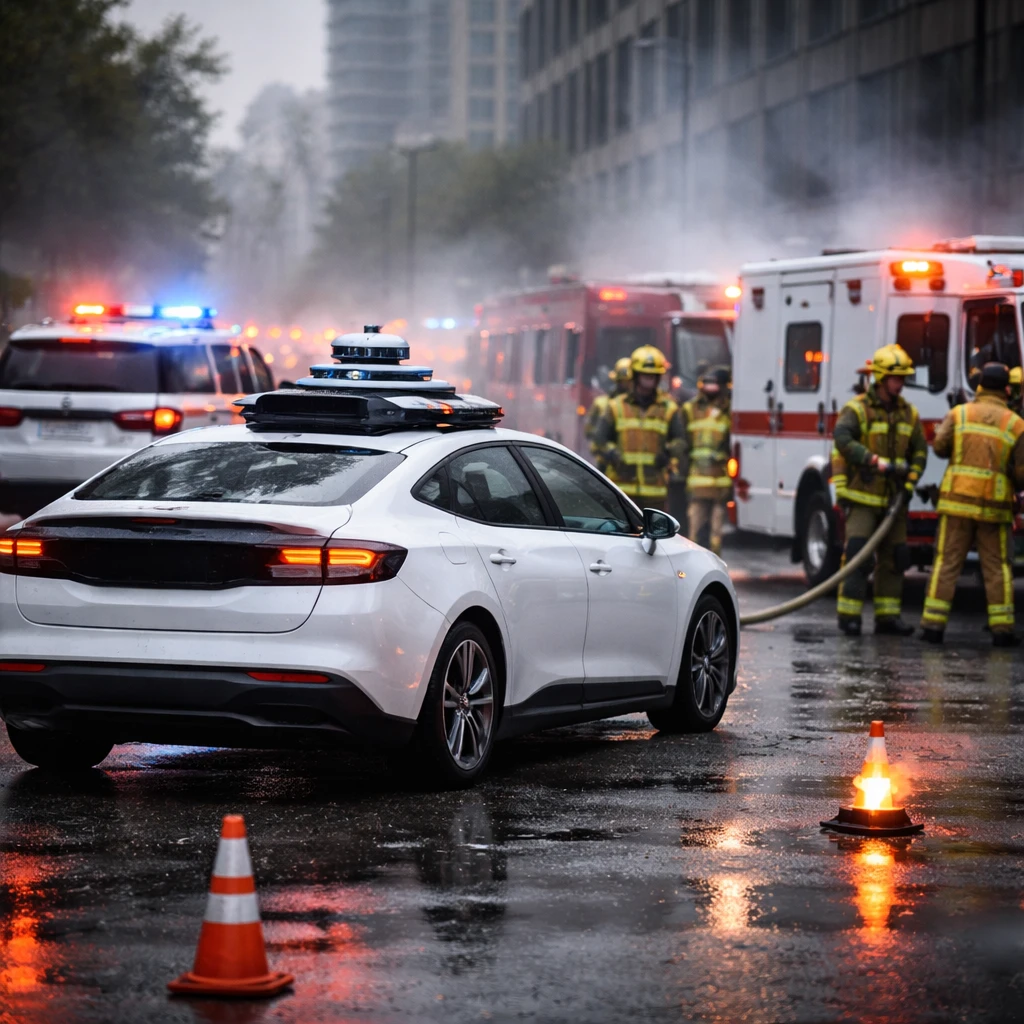
The head of the U.S. National Highway Traffic Safety Administration has formally instructed autonomous vehicle companies to address a documented pattern of driverless vehicles impeding law enforcement and first responders. NHTSA said it has recorded multiple cases in which autonomous systems drove into active emergency scenes, obstructed ambulances and firefighting units, or failed to respond to fundamental safety signals such as flashing lights, flares, smoke, fire, and traffic cones. The agency described the situation as unacceptable and announced plans to convene meetings with vehicle developers by the end of this month to discuss corrective measures.

NHTSA Orders Rapid Fixes After Autonomous Vehicles Disrupt Emergency Scenes
GOOGL AMZN TSLA
Summarize with
ChatGPT Perplexity Claude Grok Gemini

Key Points

  • NHTSA has documented multiple instances where autonomous vehicles interfered with active emergency scenes by driving into them or blocking first responders.
  • The regulator reported failures by driverless cars to detect or respond to basic safety indicators, including flashing lights, flares, smoke, fire, and traffic cones.
  • NHTSA will convene meetings with vehicle developers by the end of this month to review the incidents and hear proposed fixes.

Jonathan Morrison, director of the U.S. National Highway Traffic Safety Administration (NHTSA), has delivered a written admonition to companies developing autonomous vehicles, warning they must remedy a "clear pattern" of operational failures that have interfered with emergency response activity.

In the communication to the industry, NHTSA cited multiple documented cases in which autonomous vehicles drove "directly into active emergency scenes, blocked the paths of ambulances and firefighters, or failed to recognize and respond to basic safety conditions like flashing lights, flares, smoke, fire, and traffic cones." The agency characterized that record as unacceptable.

As a next step, NHTSA said it will schedule meetings with self-driving vehicle developers by the end of this month to review the incidents and hear the companies' plans for addressing the problems. The agency's action indicates a demand for prompt technical and operational fixes to ensure autonomous systems better detect and yield to emergency situations.

For transportation networks and municipal emergency services, the account from NHTSA highlights a persistent operational gap between autonomous vehicle sensing and the situational awareness required around active incidents. The agency's letter signals regulatory scrutiny focused specifically on interactions between driverless platforms and first responders, rather than broader performance metrics.

While the agency's statement stops short of prescribing specific remedies in its public comments, the planned meetings are intended to give developers an opportunity to present solutions and timelines. NHTSA's emphasis on documented examples underscores the agency's reliance on incident data to evaluate safety performance.


Context for stakeholders

  • Automakers and technology firms developing autonomous systems will be asked to demonstrate how they will prevent vehicles from entering or interfering with active emergency scenes.
  • Municipal emergency services and public safety officials are directly implicated by the documented interference and may press for verification that autonomous platforms can reliably recognize emergency warnings and physical scene control devices.
  • Regulatory follow-up before the end of the month will focus on developer responses and proposed mitigation steps.

The communication from NHTSA and the resulting meetings aim to prompt tangible corrections by developers. The agency's characterization of the incidents as unacceptable makes clear that it expects timely action rather than continued observation.

Risks

  • Continued operational failures by autonomous vehicles at emergency scenes could increase friction with public safety agencies and prompt intensified regulatory oversight - impacting the autonomous vehicle and transportation sectors.
  • If developers cannot demonstrate reliable detection and response to emergency indicators, companies may face reputational and operational challenges that affect deployment timelines and public acceptance - affecting automakers and technology providers.
  • Unresolved recognition issues for basic safety conditions (flashing lights, flares, smoke, fire, traffic cones) create uncertainty around when and how driverless vehicles can be safely integrated into areas with active emergency response.

More from Stock Markets

S&P Lowers Harley-Davidson Credit Rating, Citing Extended Margin Recovery Jul 8, 2026 Colombian equities climb as COLCAP posts modest gain; industrials, services and agriculture lead Jul 8, 2026 Leidos Secures $27.2 Million Modification to Supply AGM-190A All Up Rounds Jul 8, 2026 Moscow Stocks Close Higher as Energy Names Lead Gains; Precious Metals and Select Miners Slide Jul 8, 2026 GoPro Shares Rise After CEO Agrees to $20M Senior Secured Loan Jul 8, 2026