
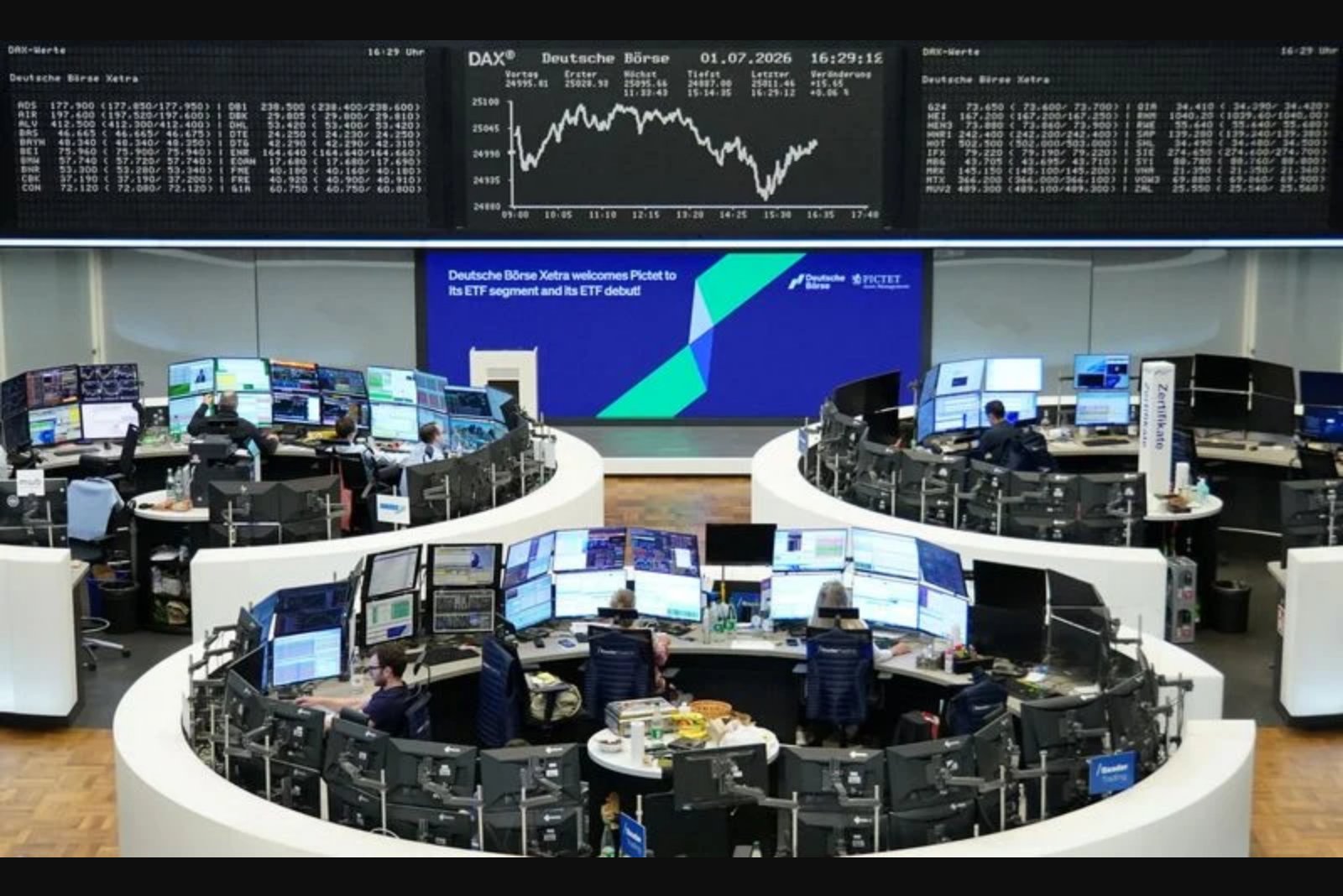
July 9 - European equity markets traded higher on Thursday in a session marked by swings in sentiment as technology names recovered some lost ground and investors considered the implications of recent statements and military actions related to the Middle East.
The pan-European STOXX 600 index climbed 0.4% to 638.66 by 0710 GMT. The technology sector was among the top sectoral performers, registering a 1.6% rise. Within the group, chip manufacturers led the advance: Siltronic jumped 7.4%, Soitec gained 5.5% and ASML rose 2.5%.
The move in tech suggested a pause in selling pressure that followed an exceptionally strong quarter for the sector. After logging its strongest quarterly performance since 2001 in June, parts of the technology cohort had stepped back, but Thursday's gains indicate that concerns about stretched valuations were, at least temporarily, less dominant for investors. The sector, however, remained the worst performer on the STOXX 600 so far this month.
Investor sentiment also received a boost from reporting that China could permit some domestic artificial intelligence firms limited access to Nvidia's H200 chips, a development that could support demand for AI infrastructure equipment.
Energy markets were subdued, with crude oil prices marginally lower. Europe, which imports significant energy supplies, was sensitive to comments from U.S. President Donald Trump about Iran - Trump said Iran wanted to "make a deal" - and to fresh U.S. strikes on Iran after he said a deal with Tehran was over on Wednesday. Those developments had previously contributed to a sharp market reaction, with the STOXX 600 recording its biggest one-day drop since March amid worries over economic repercussions.
Regionally, Spanish stocks outperformed, rising 0.9% and rebounding from a three-week low reached on Wednesday. That slide followed comments from President Trump calling Spain "very generous" in the context of his order to halt trade with the country over its NATO contribution.
Not all moves were positive: AstraZeneca shares fell 8% after its nerve disease drug Wainua - developed in partnership with U.S.-based Ionis - failed to meet the main goal in a late-stage trial. The trial did not show a reduction in cardiovascular deaths and recurring heart problems, prompting the sharp sell-off in the drugmaker's stock.
Overall, trading was choppy as investors balanced a technology rebound and potential AI demand drivers against geopolitical uncertainty and a notable clinical trial setback in the pharmaceutical sector.