
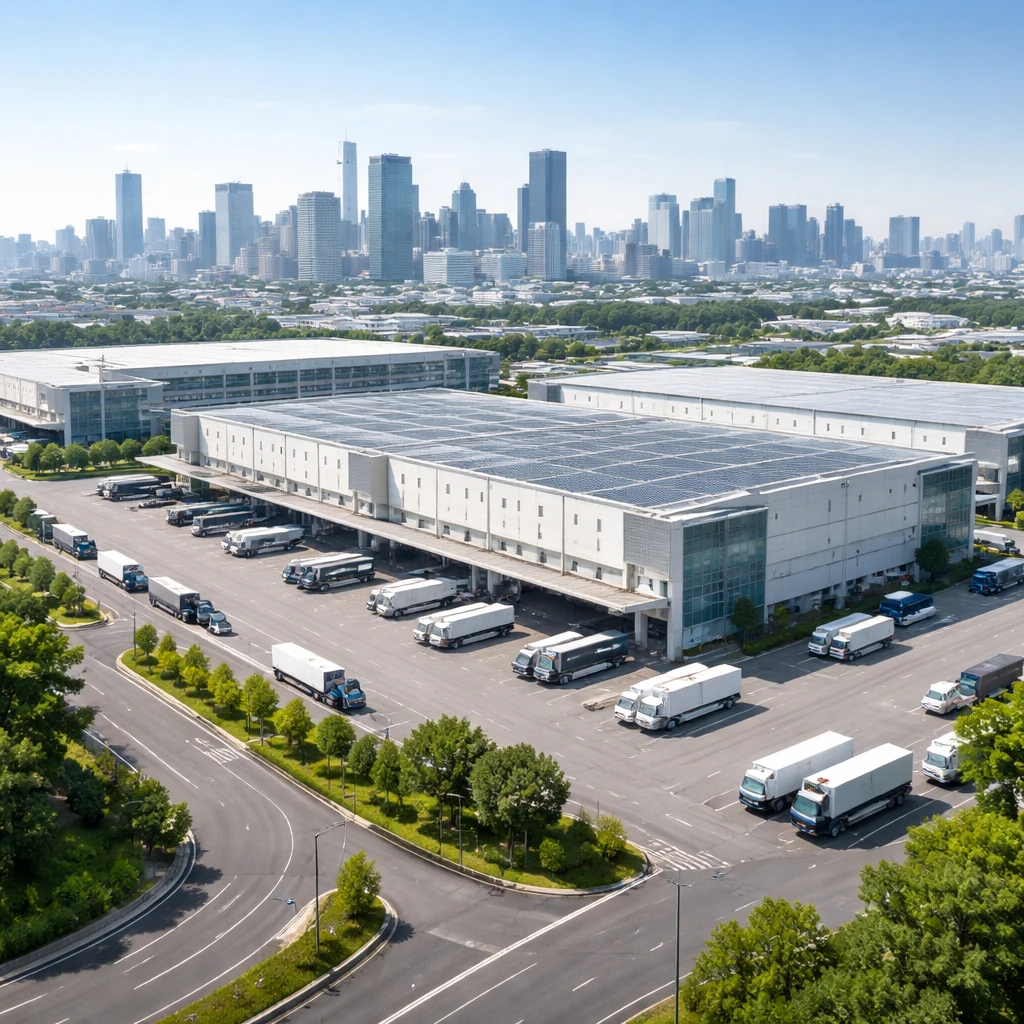
Ares Management’s real estate division has secured 612 billion yen, equivalent to $4 billion, for its fifth Japan logistics development fund, the firm said on Tuesday. The vehicle, Japan Logistics Development Partners V LP, closed at its maximum target - a hard cap - and represents the largest closed-end institutional fundraise the unit has completed so far.
The new fund is almost 50% larger than the group’s previous Japan logistics vehicle raised in 2021, according to the statement. Its stated focus is on developing contemporary logistics assets in Japan’s core metropolitan markets, including Greater Tokyo, Greater Osaka and Nagoya.
Ares noted that third-party research has identified upward pressure on rents for large multi-tenant logistics facilities in Japan’s major metropolitan hubs, projecting rental increases by late 2027 as demand for modern logistics space expands. The group did not provide additional forecasts beyond that observation.
Investor participation in the fund spans a broad range of institutional types and regions. Ares said the fund attracted capital from pension funds, sovereign wealth funds, insurers, financial institutions and other large investors based across North America, the Asia-Pacific region, Europe and the Middle East.
Canada Pension Plan Investment Board, which has backed every Japan logistics fund since the strategy was launched in 2011, served as a cornerstone investor for this latest vehicle, committing 150 billion yen, the firm stated. Gilles Chow, managing director and head of real estate Asia Pacific at CPP Investments, was quoted by Ares as saying: "We continue to see value in modern logistics infrastructure supported by resilient demand, evolving supply chains and a positive outlook for rental growth."
Ares disclosed that the fund sits within a broader investment capacity. The vehicle has 1.7 trillion yen of total investment capacity and the firm has already committed to projects representing approximately 450 billion yen of total investment.
Operational responsibility for development and asset management of the fund’s projects will rest with Marq Logistics, Ares’ global logistics real estate platform. Ares reported that Marq manages about 120 million square feet (11 million square meters) of logistics real estate in Japan and more than 655 million square feet globally, with these figures measured as of June 30.
On a parent-company level, Ares Management reported having more than $671 billion in assets under management as of June 30, while Ares Real Estate managed roughly $121 billion in assets, according to the group’s statement. The announcement did not include additional commentary on fundraising terms or timelines for specific project starts.
Key points
- The fund closed at a hard cap of 612 billion yen ($4 billion), the largest closed-end institutional raise by Ares’ real estate unit to date.
- Capital will be directed toward developing modern logistics facilities in major Japanese metropolitan markets - Greater Tokyo, Greater Osaka and Nagoya - leveraging Marq Logistics for development and operation.
- Institutional investors across multiple regions participated, with CPP Investments committing 150 billion yen as a cornerstone investor; the fund has 1.7 trillion yen of total investment capacity and has pledged roughly 450 billion yen to projects.
Risks and uncertainties
- Execution risk related to development projects - the fund has committed to projects representing about 450 billion yen of investment, which introduces construction and development execution risk for the real estate and construction sectors.
- Market rental outcomes - projections cited in the announcement anticipate rental growth for large multi-tenant logistics facilities by late 2027, but the fund’s returns will depend on actual rental and leasing market performance, affecting institutional investors and logistics property operators.
- Concentration in core metropolitan markets - the fund’s geographic focus on major Japanese metros concentrates exposure to those regional property markets and their local economic conditions.