
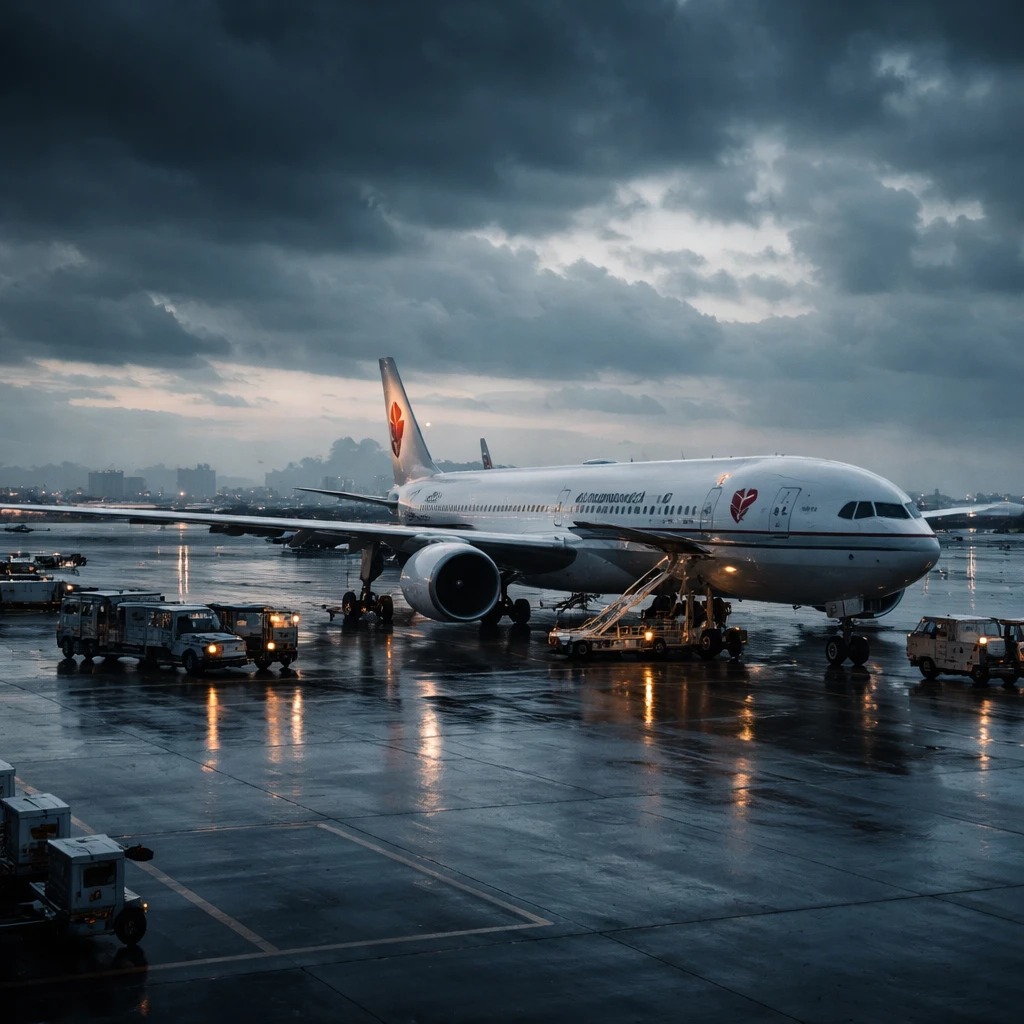
Air China shares fell sharply on Monday, sliding nearly 4.9% to close at HK$3.78, the lowest level in 22 years. The drop followed the Beijing-based carrier's release of first-half 2026 results that showed a deeper loss attributable to shareholders.
The company reported a net loss attributable to shareholders of roughly RMB 2.29 billion for the six months ended in the first half of 2026, a deterioration of about 26.8% compared with the prior year. On a per-share basis, the loss was RMB 0.13.
Those results came even as top-line performance improved. Air China recorded H1 revenues of RMB 89.268 billion, up 10.5% year-over-year. Management attributed the revenue increase to greater passenger capacity, improved load factors and stronger yields. The contrast between rising revenues and a widening loss highlights a gap between demand-driven revenue growth and the company's ability to translate that growth into profitability.
One key factor behind the expanded deficit is the continued pressure of elevated operating costs. The carrier cited mounting cost burdens, including fuel expenditures that have remained high amid geopolitical disruptions affecting global oil markets in 2026. Those cost headwinds appear to have eroded margin improvement that might otherwise have followed from higher revenue and better passenger metrics.
The deterioration at Air China did not occur in isolation. Other major airline stocks also moved lower after oil prices spiked following a resurgence in U.S.-Iran military action, a development that increased input-cost concerns across the sector. The broader market reaction included a 0.8% decline in the Hang Seng index.
In sum, Air China faces a mix of revenue momentum and cost escalation. Increased capacity utilization and yield improvements supported a notable revenue gain, but persistent inflation in operating expenses - led by fuel costs amid geopolitical strain on oil markets - more than offset those gains, producing a deeper net loss for the period.
Summary
Air China reported a wider H1 2026 net loss of about RMB 2.29 billion despite 10.5% revenue growth to RMB 89.268 billion. Shares dropped to HK$3.78, a 22-year low, as elevated operating costs, including fuel, outpaced top-line gains. The sector reacted to higher oil prices tied to renewed U.S.-Iran military tensions, and the Hang Seng fell 0.8%.