
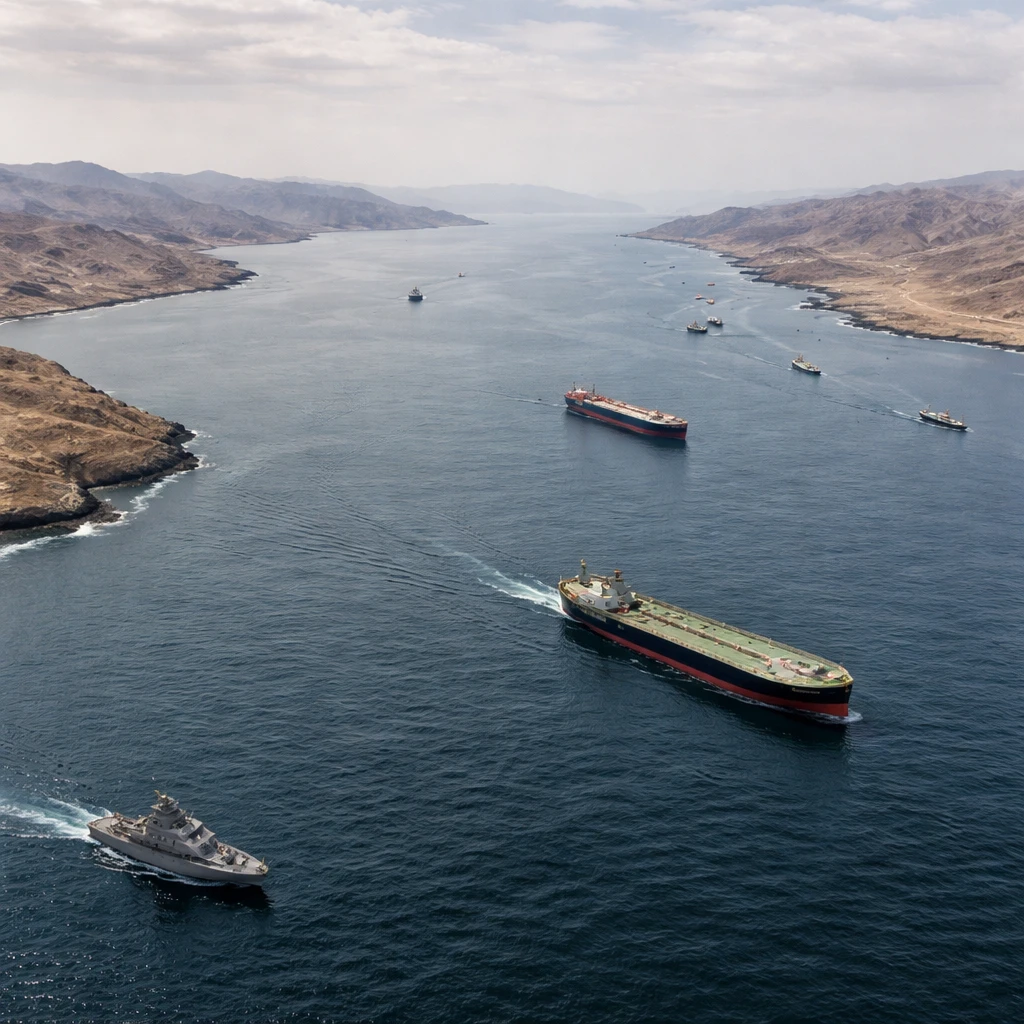
Ship traffic through the Strait of Hormuz declined significantly over the past week following attacks on commercial vessels and a rapid escalation in hostilities between Washington and Tehran.
Data from trade intelligence firm Kpler showed that 14 ships transited the strait on Sunday, including four crude oil tankers. That figure represents a drop of about 60% from the 37 vessels that passed on the same day a week earlier.
The fall in transits comes after a marked deterioration in security around Hormuz during the prior week. Iran has repeatedly attacked commercial ships using a southern sea lane along the coast of Oman - a corridor that has historically been protected by U.S. forces - while Tehran has insisted that vessels should take a northern route through Iranian territorial waters.
Kpler reported that traffic along the Omani route had nearly disappeared over the weekend, and that an increasing number of ships have chosen the Iranian route following the vessel attacks. The firm also reported that more than 9.2 million barrels of Iranian crude have passed through Hormuz since President Donald Trump declared the ceasefire with Tehran to be over on July 8, according to Matt Smith, director of commodity research at Kpler.
U.S. Central Command said the Strait of Hormuz remains open and that traffic continues to flow through the waterway. However, the command noted that some vessels transit the southern route with their transponders deactivated, complicating efforts to determine the exact number of ships using that corridor.
The decline in visible traffic has unfolded against a backdrop of reciprocal military actions. The U.S. has carried out multiple rounds of strikes on Iran in response to the ship attacks, and Tehran has in turn fired on U.S. allies in the Gulf.
Summary
Ship movements through Hormuz have fallen sharply - roughly 60% week-on-week - after a period of escalating attacks on commercial vessels and subsequent U.S.-Iran military exchanges. While some shipping is shifting into Iranian territorial waters, the Omani route has seen near disappearance of traffic, and transponder shutdowns are making tracking less reliable.
Key points
- Vessel counts fell to 14 on Sunday from 37 the previous week, with four of those vessels identified as crude oil tankers - a roughly 60% decline, per Kpler.
- Traffic on the southern Omani route has nearly vanished over the weekend, while more ships are reportedly taking the northern, Iranian-controlled corridor.
- U.S. Central Command maintains the strait is open, but tracking is impaired when vessels turn off transponders.
Risks and uncertainties
- Security risk: Continued attacks and reciprocal strikes could further suppress visible shipping through established lanes, affecting maritime operations in the Gulf - particularly the shipping and energy sectors.
- Data uncertainty: Vessels operating with transponders switched off make it difficult to establish precise transit counts, reducing confidence in public traffic estimates.
- Route shift: The near disappearance of traffic on the Omani route and increased use of the Iranian route introduce uncertainty for insurers, shippers and energy markets tied to crude flows through Hormuz.