
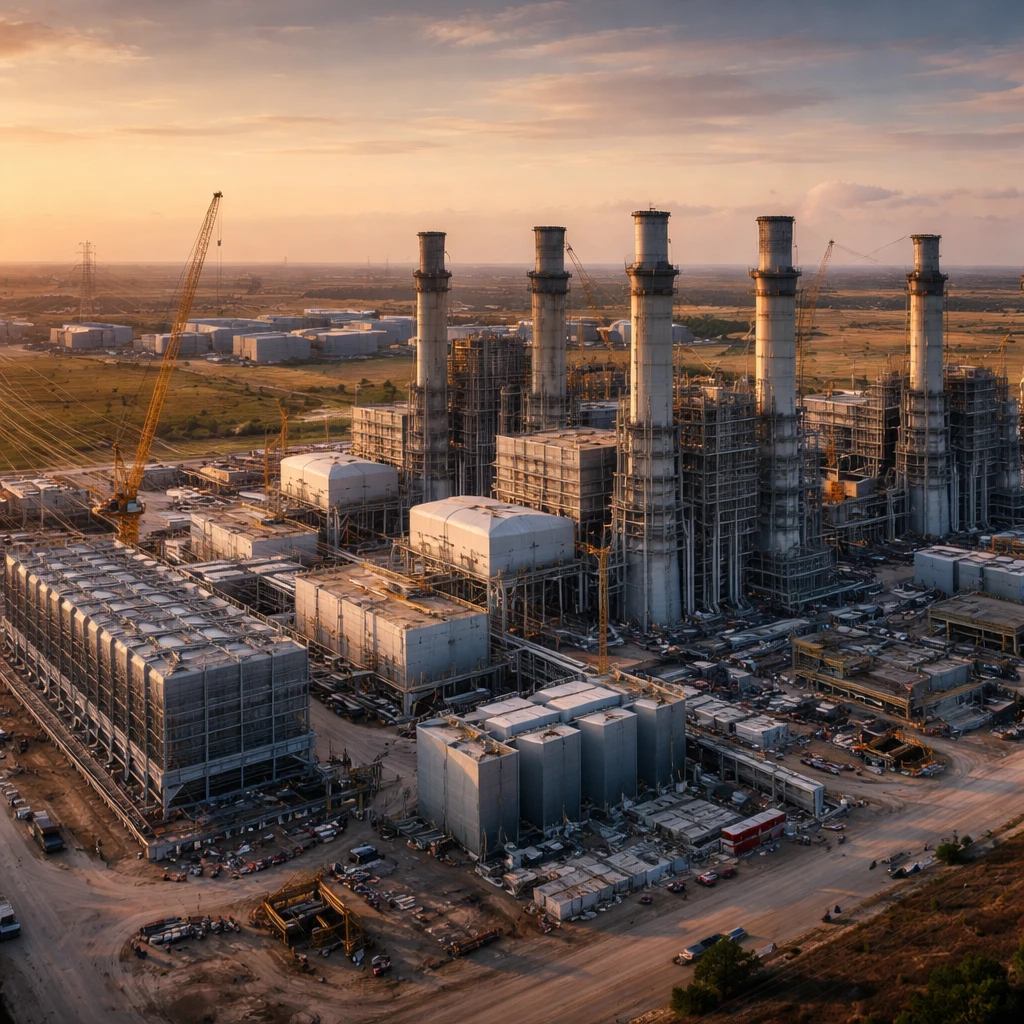
South Korea is considering a $19.8 billion commitment to construct a liquefied natural gas combined-cycle power plant in Encinal, Texas, according to a report by Korea Economic Daily that cited unnamed government officials. The proposed facility would deliver 6.3 gigawatts of generating capacity.
Officials involved in the selection process highlighted the project's steady revenue model as a principal reason for advancing the plan. That stability, they said, is underpinned by arrangements to supply electricity to nearby data centers, which are expected to provide long-term off-take for power production.
At present, South Korean authorities are engaged in final-stage consultations with the U.S. Commerce Department. The government could request review by the Korea-U.S. Strategic Investment Committee as early as next month before moving to notify the U.S. investment committee, the sources said.
Approval from President Donald Trump would be required to confirm this initiative as South Korea's inaugural U.S. investment under the terms of the bilateral trade agreement, according to the reporting. Project backers have already secured the physical site for the plant and long-term LNG supply contracts, the officials added.
First-phase commercial operations for the Encinal facility are scheduled to commence in 2030, per the information provided to authorities. While the Industry Ministry in Seoul has acknowledged that a review of the proposal is underway, it emphasized that no final decision has been reached on which project will be designated as the first under the trade pact.
The proposal combines large-scale capital deployment with long-term fuel and offtake commitments. As the review progresses through both South Korean and U.S. processes, the timetable and the final designation under the trade agreement remain contingent on the upcoming intergovernmental consultations and required approvals.
Quick summary: South Korea is evaluating a $19.8 billion LNG combined-cycle power plant in Encinal, Texas, planned to generate 6.3 GW and supply local data centers, with first-phase operations slated for 2030. The project is in advanced consultations with U.S. authorities but has not been finalized by Seoul.