
Summary
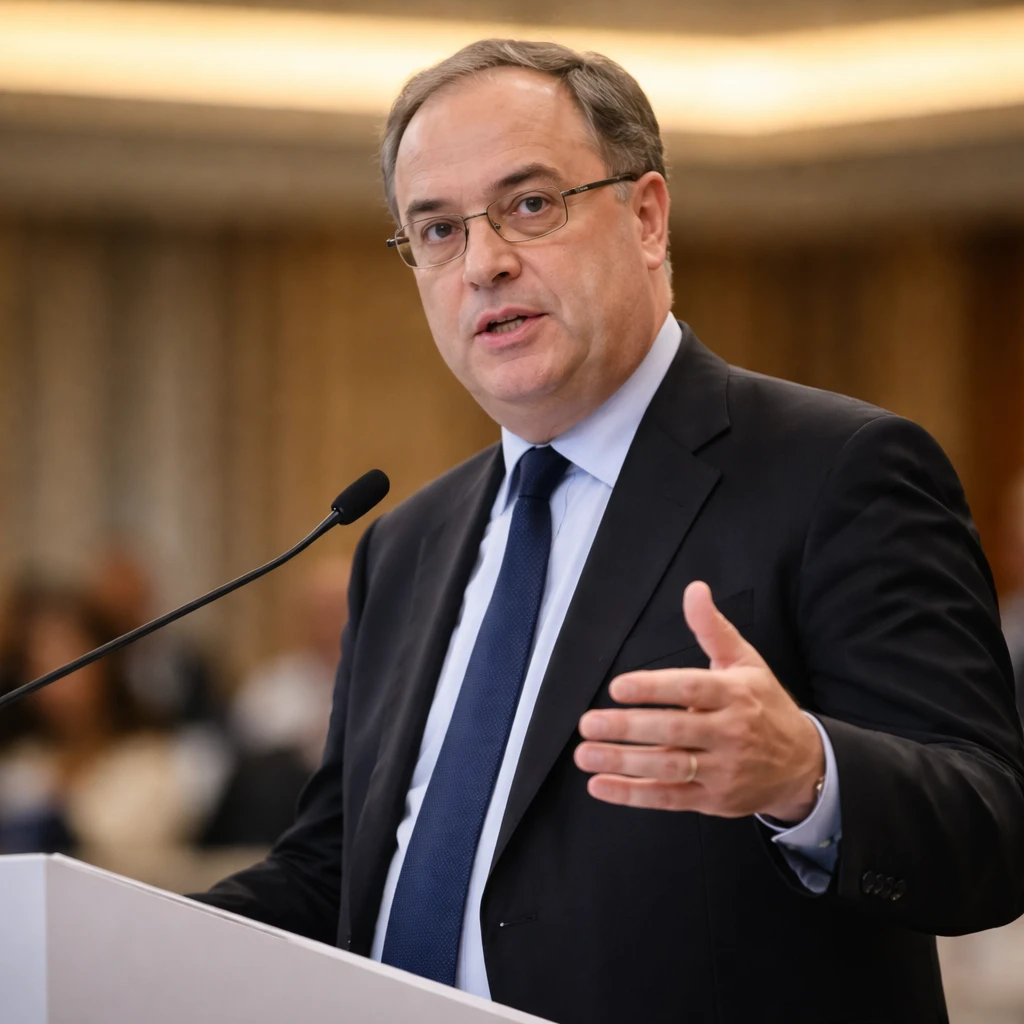
Bank of England Governor Andrew Bailey said in an interview that the central bank will not move hastily in response to the recent rise in oil prices, maintaining that inflation is still expected to return to the 2% target. Speaking to CNBC in Sintra, Portugal, while attending a European Central Bank conference, Bailey described a path in which inflation climbs before subsiding toward the target.
Details from the interview
Bailey told the broadcaster that prior increases in oil prices point to a likely uptick in British inflation to around 3.2% later this year. He noted that current oil prices are not markedly above the levels seen before the Iran war began at the end of February, a detail he used to frame the present situation for energy costs.
The governor emphasised the role of financial conditions in allowing the Bank of England some leeway. In his words, "We’ve had some tightening built into the (bond yield) curve, which gives us some time then to judge the pass-through (of higher energy prices)." This, he said, creates a window to observe how higher energy costs filter through to inflation and the broader economy before changing policy settings.
Bailey also acknowledged a timing issue: while inflation is expected to move back toward the 2% objective, the return will occur later than the bank would prefer. He did not provide an altered target or a revised timetable, reiterating that the current outlook still points toward eventual achievement of the 2% goal.
Key takeaways
- Governor Andrew Bailey signalled the Bank of England will not rush to tighten policy solely in response to recent oil price rises.
- He estimated inflation could rise to approximately 3.2% later this year before moving back toward the 2% target.
- Bailey pointed to tightening in the bond yield curve as affording the bank time to monitor the pass-through of energy costs.
Context and implications
The comments were made during a CNBC interview in Sintra, Portugal, where Bailey was attending a European Central Bank conference. He framed the current oil price environment as not substantially higher than just before the Iran war began at the end of February, and he stressed the importance of observing how higher energy prices translate into consumer prices.
Risks and uncertainties
- The extent of inflationary pressure remains uncertain as Bailey cited a likely rise to around 3.2% later this year.
- There is uncertainty over how quickly inflation will return to the 2% target, which Bailey acknowledged will occur later than preferred.
- The degree and timing of pass-through from energy prices into overall inflation are not yet determined and will influence future policy decisions.
This report is based on remarks made during the interview and reflects the governor's stated views and projections.