
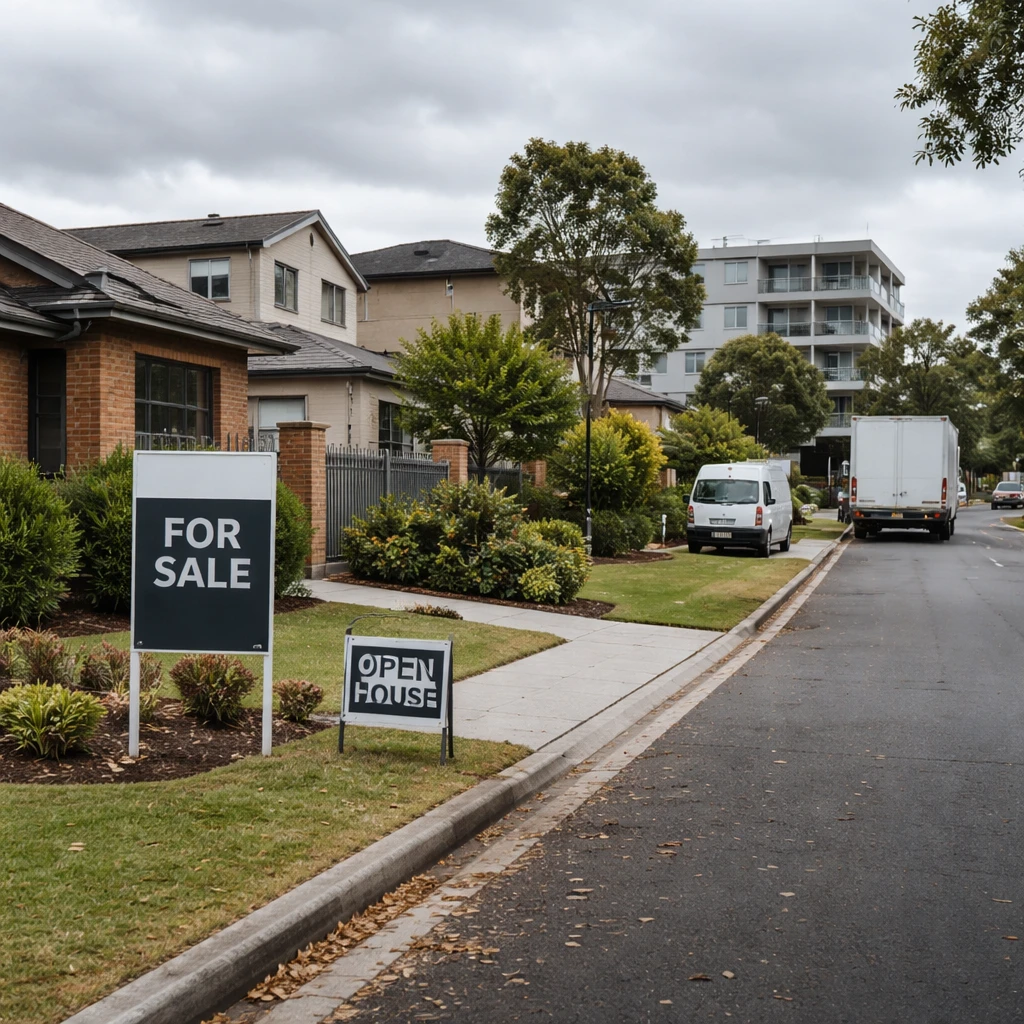
Australia’s housing market is showing pronounced signs of cooling, marking the sharpest pullback since the pandemic as borrowing costs rise and recent tax changes damp demand. Buyers and sellers have adopted a more cautious posture after decades of sustained price growth, shifting expectations that home values will climb inevitably.
Evidence of the slowdown is visible across major markets. House prices in Sydney and Melbourne are down nearly 5% so far this year. Open-house attendance has fallen, auction clearance rates have tumbled, mortgage enquiries have plunged and property sales volumes have slid. The slowdown is already affecting firms that depend on housing activity, with real estate agents, removalists and tradespeople reporting reduced workloads, and state governments preparing for large reductions in stamp-duty receipts.
In June, the New South Wales government cut its stamp-duty forecasts by A$5.3 billion over the next four years. The trimming of these revenue expectations reflects both lower transaction volumes and weaker price growth, a direct fiscal consequence of the housing market pullback.
Household wealth effects are another channel through which the housing slump may influence the broader economy. With about two-thirds of Australian households owning their homes, elevated property prices have historically supported consumer confidence and spending by underpinning collateral values for borrowing. As home prices moderate, that dynamic is strained.
Jason Zhang, a 36-year-old owner of a kitchen renovation business in Sydney, said many of his clients are postponing projects. "Unless interest rates come down, there won’t be much change," he said. "Everyone is bracing for a long haul." His comments highlight how slower housing turnover and reduced renovation activity are already being felt by small businesses tied to the construction and home-improvement sectors.
The current retreat in prices follows an exceptionally large run-up. The combined value of Australia’s 11.5 million homes increased 87% this decade to A$12.8 trillion, a rise that helped push property onto the list of the world’s most expensive.
Policy actions have played a central role in the reversal. The Reserve Bank of Australia raised interest rates three times between February and May in an effort to rein in inflation that the bank has linked to higher oil prices and the Iran war, reversing the policy easing of the previous year that had helped fuel record home prices.
RBA Governor Michele Bullock described the housing market as "a bit of litmus test" for whether financial conditions are tight enough to bring inflation back down. She added: "If it looks like that inflation is not coming down, then I think the board have some difficult decisions to make." Governor Bullock also acknowledged that "we have seen the housing market slow more than we were expecting."
Beyond interest rates, a government reform of investor tax settings has intensified pressure on the market. The overhaul curbed negative gearing on established homes and removed a generous tax discount for investors, cooling investor demand and altering the attractiveness of property as an investment class.
Credit analytics from Equifax show mortgage inquiry levels dropped 14% in June from a year earlier, a sharp reversal from January when enquiries were nearly 11% higher year-on-year. The pullback is most pronounced among younger buyers with limited savings, who are more sensitive to rising borrowing costs. Property data from Cotality indicates that, in Sydney and Melbourne, higher borrowing costs have meant that properties are not materially more affordable despite recent price falls.
"Even though the market drops and there are more accommodative government policies, a lot of first home buyers are hesitant to commit to a long-term liability," said Liza Cheong, a mortgage broker in Sydney. She added that investors who had planned to use negative gearing have largely withdrawn from the market and that "the energy from clients is completely different from before."
The slowdown poses a direct threat to bank earnings as competition for a smaller pool of borrowers intensifies. The overall index of bank shares has fallen 12% since February, erasing more than A$60 billion in market value. Lower mortgage activity and slower transaction volumes could compress lending margins and fee income for lenders.
Retailers are also starting to feel the effect. Department store Myer saw its shares plunge 10% on Monday after it warned of a consumer spending slowdown in June and July, citing a "weaker housing market" among the pressures on household budgets.
Market indicators point to longer sales cycles. New property listings have declined even as the total stock of homes for sale has climbed, suggesting properties are remaining unsold for longer periods. Sydney unit sales dropped to just 2,495 in June, the lowest level in at least five years aside from the usual seasonal January lull. Over the four weeks to July 11, open-home attendance averaged 2.1 people, according to real estate agency Ray White.
With oil prices remaining elevated, market expectations of Reserve Bank policy easing next year have largely dissipated, reducing hopes for a rapid housing recovery. Sebastian Watkins, CEO at Lendi Group, Australia's largest retail mortgage broker, said: "We will get used to the new trading conditions and we’ll resume business as usual at some point." He added: "Is it six months? Is it 12 months? It’s really hard to say."
($1 = 1.4302 Australian dollars)