
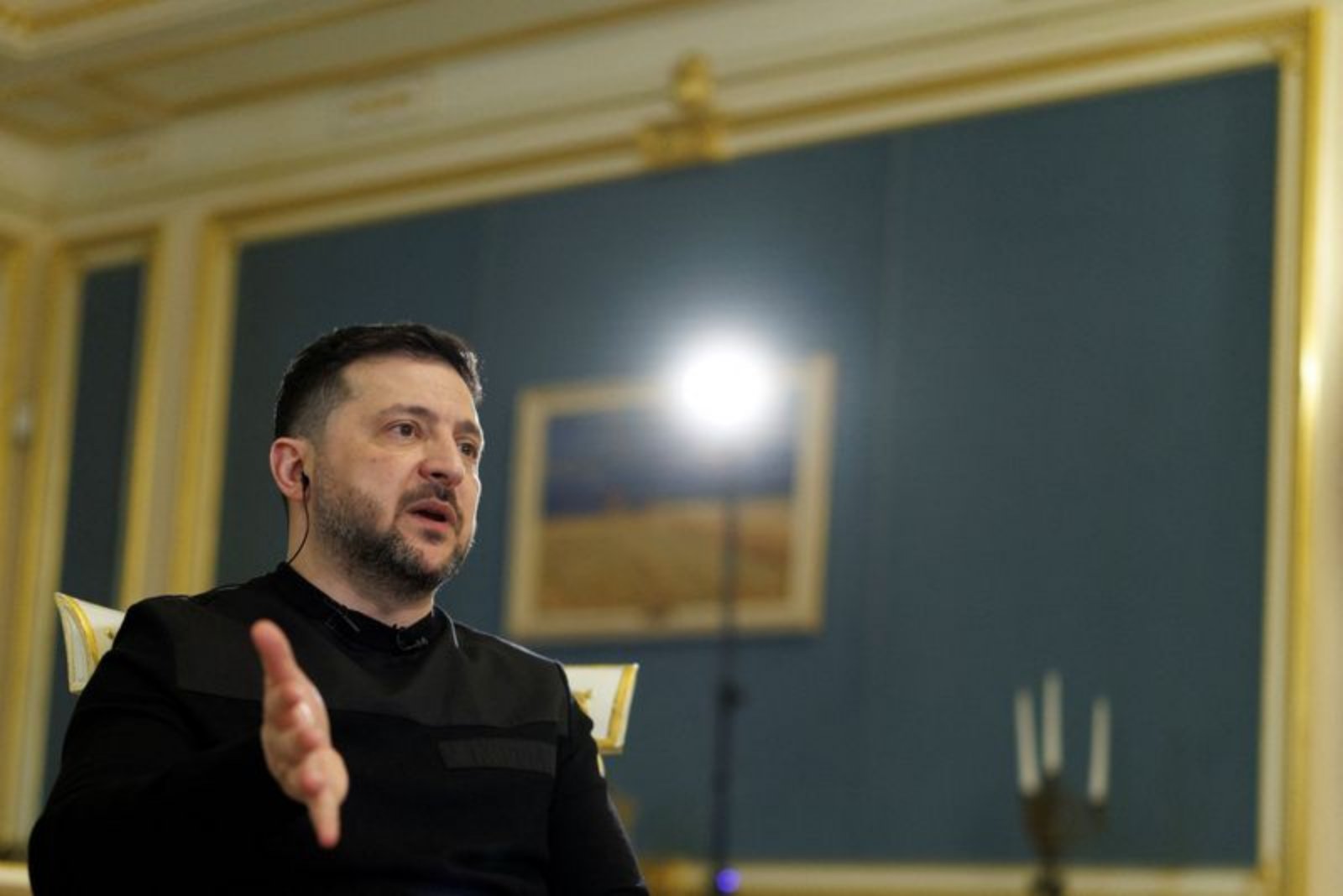
KYIV, April 3 - President Volodymyr Zelenskiy described the frontline situation facing Ukrainian forces as the strongest it has been in the past ten months, and said Kyiv’s troops had defeated a Russian offensive that had been planned for March.
In remarks released by his office on Friday, Zelenskiy said: "The offensive they were planning for March was thwarted by the actions of our armed forces. That is why the Russians will now simply step up their assault operations."
The president also said he extended an invitation to U.S. negotiators to visit Kyiv during an online meeting earlier this week, and that he had received what he characterized as "positive signals" in response to his proposal.
Addressing the broader battlefield situation, Zelenskiy said: "Overall, the front line is holding ... The situation is complex, but the best it has been in the last 10 months," citing data from the Ukrainian and British intelligence.
Taken together, the president’s statements convey a view that recent operations by Ukrainian forces had disrupted an expected Russian move in March, and that Kyiv is engaging diplomatic channels with at least preliminary encouragement from U.S. interlocutors. Zelenskiy’s comments reference both military reporting and intelligence assessments without elaborating on operational details or offering new figures.
For observers monitoring the conflict, the remarks underscore two concurrent threads: a continued focus on frontline military dynamics and parallel diplomatic outreach. The president framed the frontline as holding while acknowledging the situation remains complex and that Russia may intensify assaults following the thwarted plan.
Because Zelenskiy cited Ukrainian and British intelligence in assessing the condition of the front, the statements reflect shared analytical inputs rather than unilateral appraisal. The president's note about receiving "positive signals" from U.S. negotiators describes an initial diplomatic response but does not specify next steps, timelines, or agreed outcomes.
The public remarks remain limited in operational detail. They report an improved frontline posture relative to the prior ten months, a foiled offensive planned for March, the expectation of escalated assault operations by Russia, and nascent diplomatic engagement with U.S. negotiators characterized as positive.