
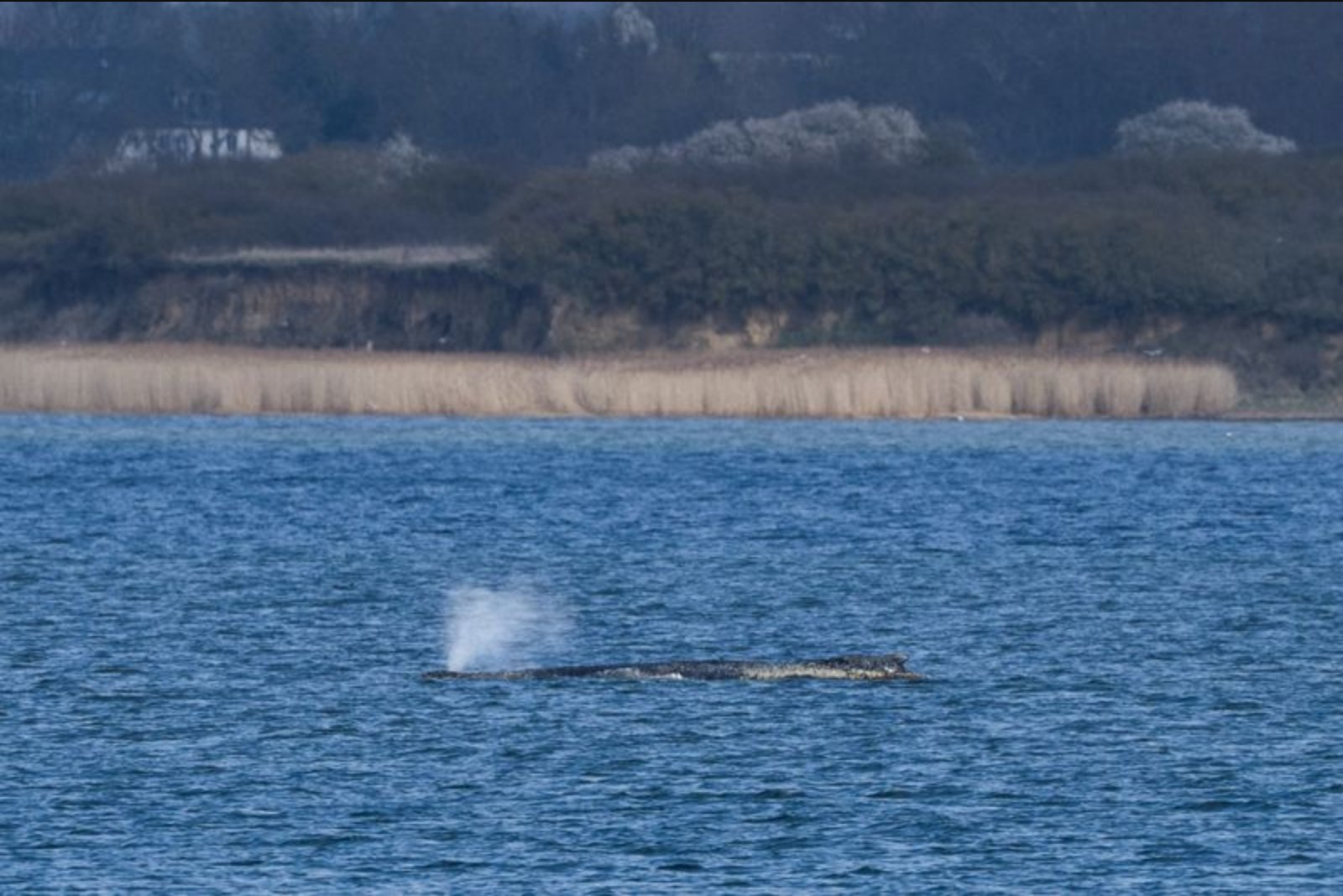
BERLIN, March 29 - A young humpback whale that rescuers have named Timmy continued to struggle on Sunday morning as it remained trapped in shallow bays along Germany's Baltic coast following a week-long ordeal that has raised doubts about its survival.
Rescuers estimate the animal is between 12 and 15 metres in length. The size of the whale has complicated efforts to free it, with teams deploying dredging machinery and boats in attempts to shepherd the animal back along a long route toward the Atlantic Ocean.
After multiple days of hands-on rescue work, those involved in the operation said they are now placing some hope in the whale's ability to make its own way out of the shallow waters.
"The whale is quite weak. We’re still hopeful that it will pull through," Daniela von Schaper, a marine expert at Greenpeace, said.
The animal's gender has not been determined. Rescuers named it Timmy after Timmendorfer Strand, the white sandy beach on Germany’s resort-filled Baltic coastline where the whale was first seen stranded on a nearby sandbank on Monday.
Repeated efforts to free Timmy have so far not resulted in a permanent escape. Greenpeace and partner organisations have documented an animal under severe stress, noting skin irritation and the presence of fishing gear entangled in the whale’s mouth.
There were brief moments of optimism over the weekend when the whale freed itself on two occasions, only to get into difficulty again afterwards.
Humpback whales are not native to the Baltic Sea. While large whales in the area are uncommon, von Schaper said they are sighted in the region every couple of years.
Conservationists have pointed to factors such as disrupted migration routes and human influence as contributors to whale strandings worldwide, while also noting that animals can become disoriented while searching for food. As von Schaper put it:
"Some of them find their way out again, others unfortunately do not."
Summary of situation
- A juvenile humpback named Timmy has been trapped in shallow bays off Germany's Baltic coast for a week.
- Rescuers used dredging equipment and boats to try to guide the whale back to the Atlantic; efforts have not produced a lasting escape.
- The whale shows signs of severe stress, skin irritation, and has fishing gear entangled in its mouth.
Key points
- Rescue operations face logistical challenges due to the whale's large size; this affects marine rescue and conservation efforts.
- Local tourism and coastal communities near Timmendorfer Strand may be indirectly affected by the ongoing rescue and public attention.
- Fishing activity is implicated by the entanglement, linking the situation to the fishing sector and marine safety concerns.
Risks and uncertainties
- The whale's survival is uncertain after a week in shallow waters and signs of physical stress.
- Entanglement with fishing gear increases the risk of injury or inability to feed, posing a direct threat to the animal's recovery.
- It is unclear whether human interventions or natural disorientation caused the stranding; the exact drivers remain uncertain.