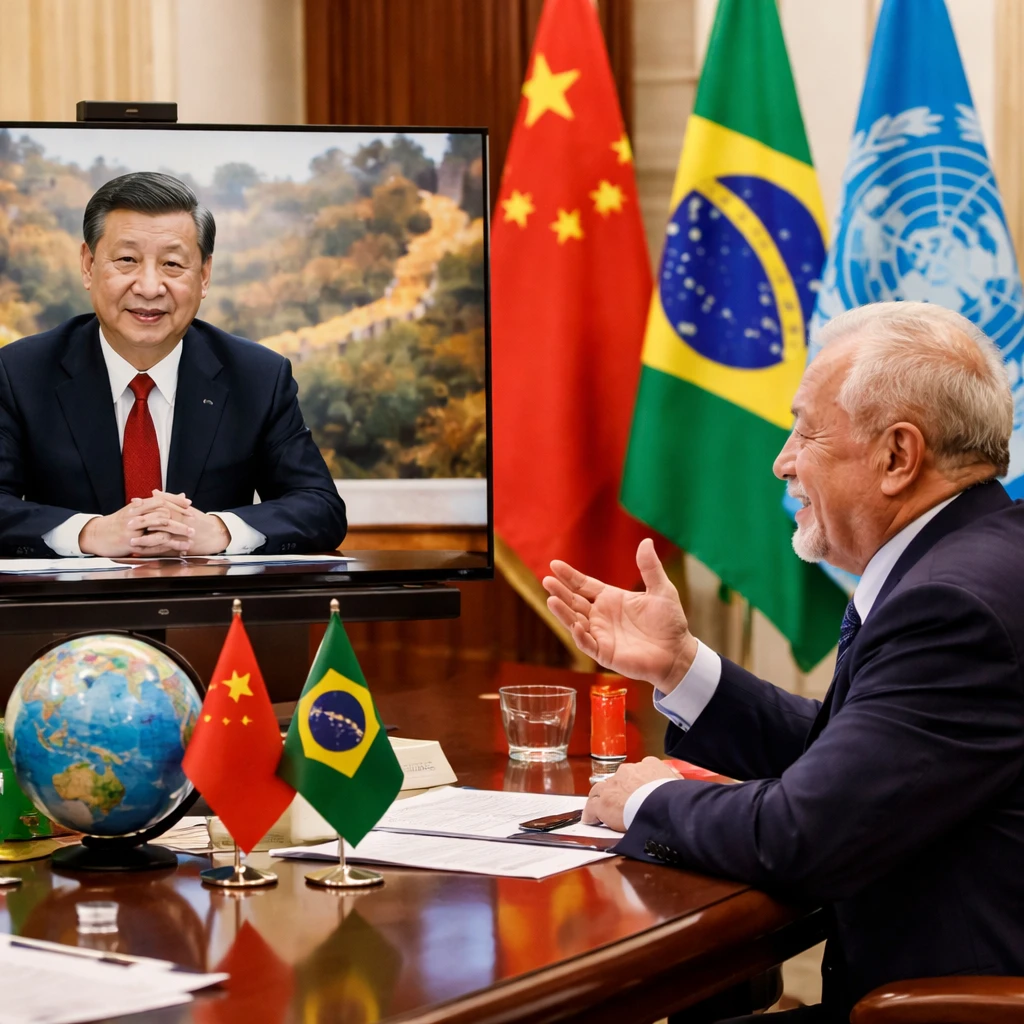
In a recent telephone conversation, Chinese President Xi Jinping urged Brazilian President Luiz Inacio Lula da Silva to jointly protect the collective interests of Global South countries and reinforce the United Nations’ fundamental role in global affairs. Xi highlighted the constructive roles both nations play in promoting world peace and improving governance while reaffirming China's commitment to Latin America and the Caribbean. A strategic 2024 partnership aligning China’s Belt and Road Initiative with Brazil’s development plans exemplifies their cooperation. These discussions coincided with regional concerns following the U.S. prosecution of Venezuela’s President Nicolas Maduro, which has stirred political uncertainty and criticism on legal grounds from the United Nations.
Key Points
- Chinese President Xi Jinping emphasized the importance of China and Brazil jointly defending the interests of Global South nations and upholding the central role of the United Nations in global governance.
- The 2024 strategic partnership between China and Brazil aims to align the Belt and Road Initiative with Brazil’s priorities in agriculture, infrastructure, and energy transition, showcasing cooperation among Global South countries.
- The discussion took place amid regional political tensions following the U.S. prosecution of Venezuelan President Maduro, eliciting concerns across Latin America and criticism from the United Nations regarding respect for international law.
Chinese President Xi Jinping conveyed to Brazilian President Luiz Inacio Lula da Silva the necessity for China and Brazil to jointly uphold the shared interests of Global South nations and preserve the United Nations’ key position in international decision-making. The dialogue, conducted via telephone and reported by the official state news source Xinhua on Friday, positioned both countries as active contributors to promoting global peace and enhancing governance mechanisms worldwide. Xi reiterated China's longstanding stance to remain a dependable partner and friend to nations in Latin America and the Caribbean, expressing willingness to advance a community with these regions based on shared futures and mutual development.
A focal point of the conversation was the strategic partnership set for 2024, which seeks to integrate China’s Belt and Road Initiative with Brazil’s domestic objectives, including agricultural development, infrastructure expansion, and transitioning energy systems. Xi described this collaboration as a demonstration of solidarity and cooperative progress among Global South countries, reinforcing the commitment to foster sustainable growth and connectivity.
Earlier during the year, Xi announced new measures during a Group of 20 meeting aimed at bolstering the Global South's capabilities, particularly through initiatives in science, technology, and the Belt and Road framework. This underscores China’s broader policy of supporting emerging economies through strategic partnerships and technological cooperation.
The timing of this high-level interaction occurs amid heightened regional insecurity triggered by recent U.S. actions concerning Venezuela. Specifically, the United States has initiated prosecution against Venezuelan President Nicolas Maduro on narcotics charges, an event that has introduced political instability for Caracas and concerns about possible similar interventions in neighboring countries throughout Latin America and the Caribbean.
The United Nations has formally criticized the U.S. operation, describing it as a breach of international law and cautioning against the dangerous precedent such actions pose for regional sovereignty and stability. This climate of uncertainty influences the geopolitical dynamics in which Brazil and China seek to reinforce cooperation as advocates for Global South interests and the respect for international legal norms.
Risks
- The U.S. prosecution of Venezuela’s president and associated political instability raise regional uncertainty that could affect cooperation and stability in Latin America, impacting sectors such as energy and infrastructure.
- The criticism of U.S. actions by the United Nations highlights potential challenges to international norms and law, which may influence diplomatic relations and economic collaborations involving Global South nations.
- Geopolitical tensions and interventions in Latin America could undermine initiatives like the Belt and Road alignment with Brazil, potentially disrupting planned development projects in agriculture, energy, and infrastructure.