
The lapse of the New START treaty on February 5 would mark the first time since the Cold War that the United States and Russia face no formal limits on their long-range nuclear arsenals. With fewer than seven days available before expiration, negotiators and policymakers from both countries are weighing whether an eleventh-hour agreement can preserve constraints that have governed strategic forces for decades.
Russian President Vladimir Putin has proposed keeping the existing missile and warhead ceilings in place for one more year to provide breathing room to negotiate what would come next. The White House has not formally accepted or rejected that proposal. President Donald Trump has publicly said "if it expires, it expires," adding that the treaty should be replaced by a better agreement.
Absent New START, there would be no bilateral limits on the number of deployed strategic warheads and delivery systems between the two nuclear peers - a situation unseen since treaties first emerged to manage the Cold War rivalry begun in the 1970s. The original arms control framework that evolved into New START was intended to reduce the risk of costly competitive buildups and to reduce the chances that misunderstandings about force posture could produce crisis instability.
Why the treaty matters
Arms control agreements like New START do more than set numerical ceilings. They also establish channels for exchanging information and conducting mutual verification. Those elements provide a forum to assess each side’s posture and to better understand the other’s motivations and developments. Darya Dolzikova of the RUSI think-tank in London said the information-sharing features of the treaty are "a critical channel to try to understand where the other side is coming from and what their concerns and drivers are."
Without those mechanisms, analysts and decision-makers on both sides would have to plan according to worst-case assumptions about the pace and scope of weapons development, testing and deployment by the other. Nikolai Sokov, a former Soviet and Russian arms negotiator, warned this dynamic becomes self-reinforcing: "It’s a self-sustaining kind of process. And of course, if you’ve got an unregulated arms race, things will get quite destabilising."
Technical and political barriers to a new accord
Replacing New START is not a straightforward exercise. The current treaty, signed in 2010 by U.S. President Barack Obama and Dmitry Medvedev, set specific limits: no more than 1,550 deployed strategic warheads on each side, and no greater than 700 deployed delivery systems, whether by intercontinental ballistic missile, submarine-launched missile or heavy bomber.
Since the treaty was negotiated, Russia has developed a number of novel systems that do not fit neatly into New START’s framework, including the Burevestnik cruise missile, the hypersonic Oreshnik and the Poseidon torpedo. At the same time, U.S. plans for missile defences in space, notably a proposed "Golden Dome" system, have been viewed by Moscow as potential drivers of strategic imbalance.
Complicating the picture further is China’s expanding arsenal, which is not constrained by bilateral agreements between Washington and Moscow. Estimates in the public record suggest Beijing now has roughly 600 warheads, with the Pentagon projecting that number could top 1,000 by 2030. That trajectory has prompted U.S. officials and a bipartisan Congressional commission to conclude that the United States faces nuclear challenges from more than one peer simultaneously.
Options open to Washington and Moscow
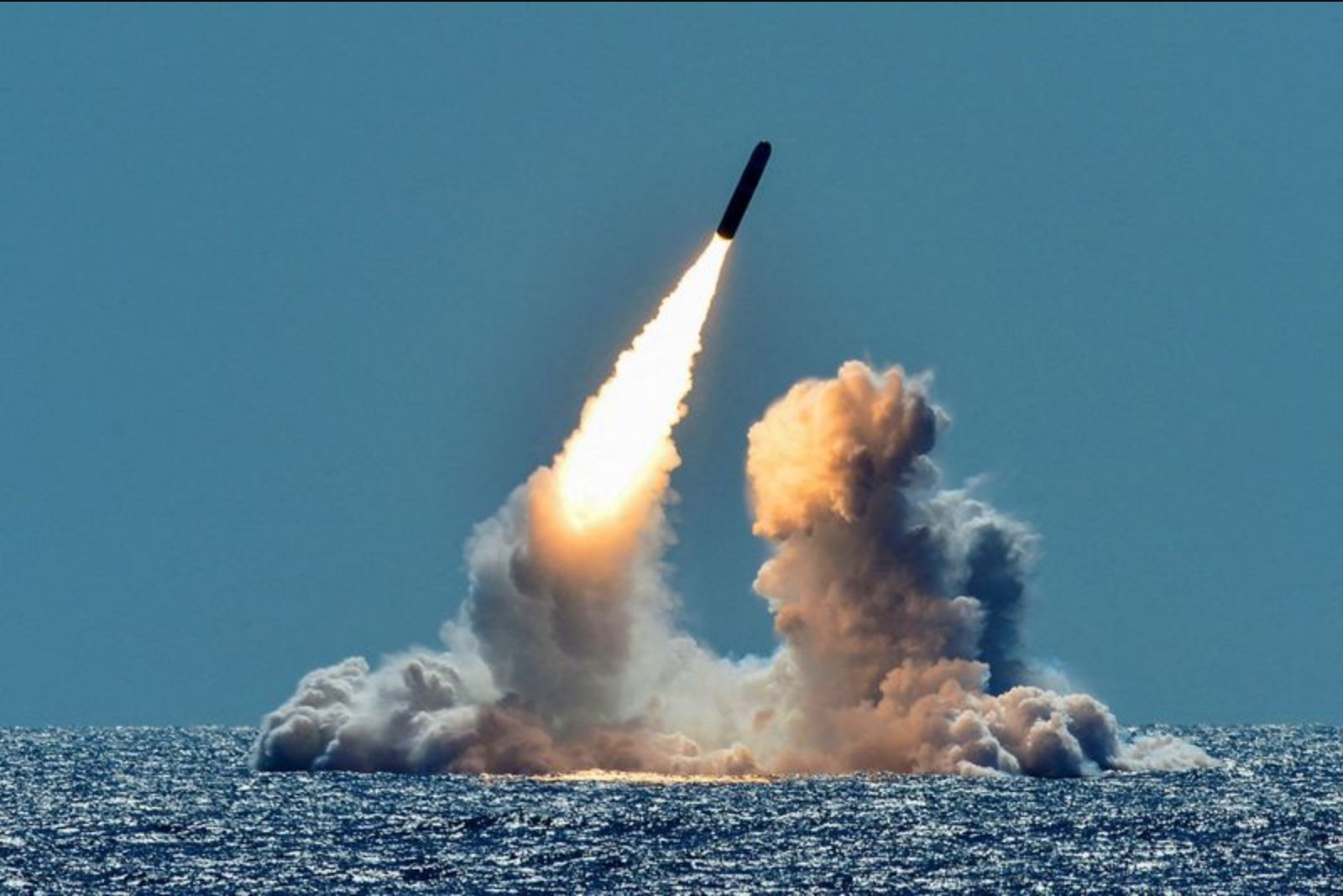
A recent bipartisan Congressional commission recommended that the United States prepare to return to reserve stockpiles some strategic nuclear warheads removed under New START. Those could include warheads formerly pulled from Minuteman III intercontinental ballistic missiles and Trident D5 submarine-fired missiles, as well as returning about 30 B-52 strategic bombers that were converted to carry only conventional payloads to a nuclear role.
One former senior U.S. official involved in nuclear policy, speaking on condition of anonymity, noted that those options would not require new manufacturing. "The warheads are there. The missiles are there. You’re not buying anything new," the former official said, and suggested any reloads under a Trump order might be "modest."
Other analysts paint a broader potential shift. Kingston Reif, formerly with the Pentagon and now at the RAND research organization, said in a recent webinar that on the high end the United States could "roughly double" its deployed warheads from the New START limit, and that Russia could add roughly 800 warheads. He cautioned that making substantial changes at that scale would take both sides "at least the best part of a year" to execute.
Divisions within U.S. policy circles
Within Washington, opinion is split over whether to accept Moscow’s one-year extension proposal. Advocates of arms control argue that agreeing to Putin’s offer would reduce the risk of an expensive, destabilizing arms competition and would lower the chances of a catastrophic misinterpretation in a crisis. Paul Dean of the Nuclear Threat Initiative said the United States should take steps "to reduce the risk of a wasteful nuclear arms race and to reduce the risk of a catastrophic misinterpretation (of the other side’s intent) that could spiral out of control during a crisis."
Those voices also note the fiscal strain already borne by U.S. taxpayers to maintain and modernize nuclear forces. The nonpartisan Congressional Budget Office has estimated that modernization, sustainment and operations of the U.S. nuclear arsenal will cost nearly $1 trillion between 2025 and 2034. Arms control proponents, including Democratic Senator Ed Markey, warn that exceeding New START limits would prompt reciprocal moves by Russia and provide China with further pretext to expand.
By contrast, proponents of a tougher stance note that Moscow suspended mutual inspections under New START in 2023 against the backdrop of U.S. support for Ukraine, undermining the verification regime. Franklin Miller, a member of the bipartisan Congressional commission, argued that contemporaneous threats from Russia and China require an uplift in deployed U.S. strategic warheads so that American forces can deter both adversaries simultaneously. "The force that the treaty confined the U.S. to in 2010 is not sufficient to address Russia and China together," he said, adding any increase would likely be incremental and unfold over several years.
Political signalling and next steps
President Trump has asserted that a successor treaty should be "better," but the administration so far has left its formal response to Moscow’s extension offer pending. A White House official told reporters the president "will decide the path forward on nuclear arms control, which he will clarify on his own timeline."
In Moscow, Dmitry Medvedev, who signed New START as Russian president in 2010, emphasized that Russia will be prepared for multiple outcomes. Responding to comments about the unpredictability of U.S. policy, Medvedev told the Kommersant newspaper that "Russia is prepared for any development. New threats to our security will be promptly and firmly countered."
What this means for budgets and markets
For governments, the options under consideration have clear budgetary implications. Reconstituting warheads from reserve stockpiles and reprioritizing platforms taken out of nuclear roles would not necessarily require new production lines, but sustaining and operating enlarged strategic forces would entail significant programmatic and budgetary commitments. The Congressional Budget Office’s nearly $1 trillion estimate for modernization through 2034 already represents a major expense for the U.S. fiscal outlook.
For the defence sector and related suppliers, potential increases in demand for maintenance, life-extension work and delivery-system sustainment could alter procurement priorities and cash flows. Conversely, a diplomatic path that preserves limits for the near term could stabilize expectations about future orders and spending trajectories for those companies.
Summary
The imminent expiration of New START presents a choice: either secure a temporary extension and preserve verification and numerical limits while negotiating a follow-on accord, or allow the treaty to lapse and face a period in which both sides operate without formal constraints. Moscow has proposed a one-year continuation of limits; Washington has not yet formally accepted. The debate in the United States juxtaposes concerns about runaway costs and crisis instability with arguments that current threats from Russia and China call for a larger deployed deterrent. Any meaningful increases in deployed arsenals would take time to implement and carry significant budgetary implications.