
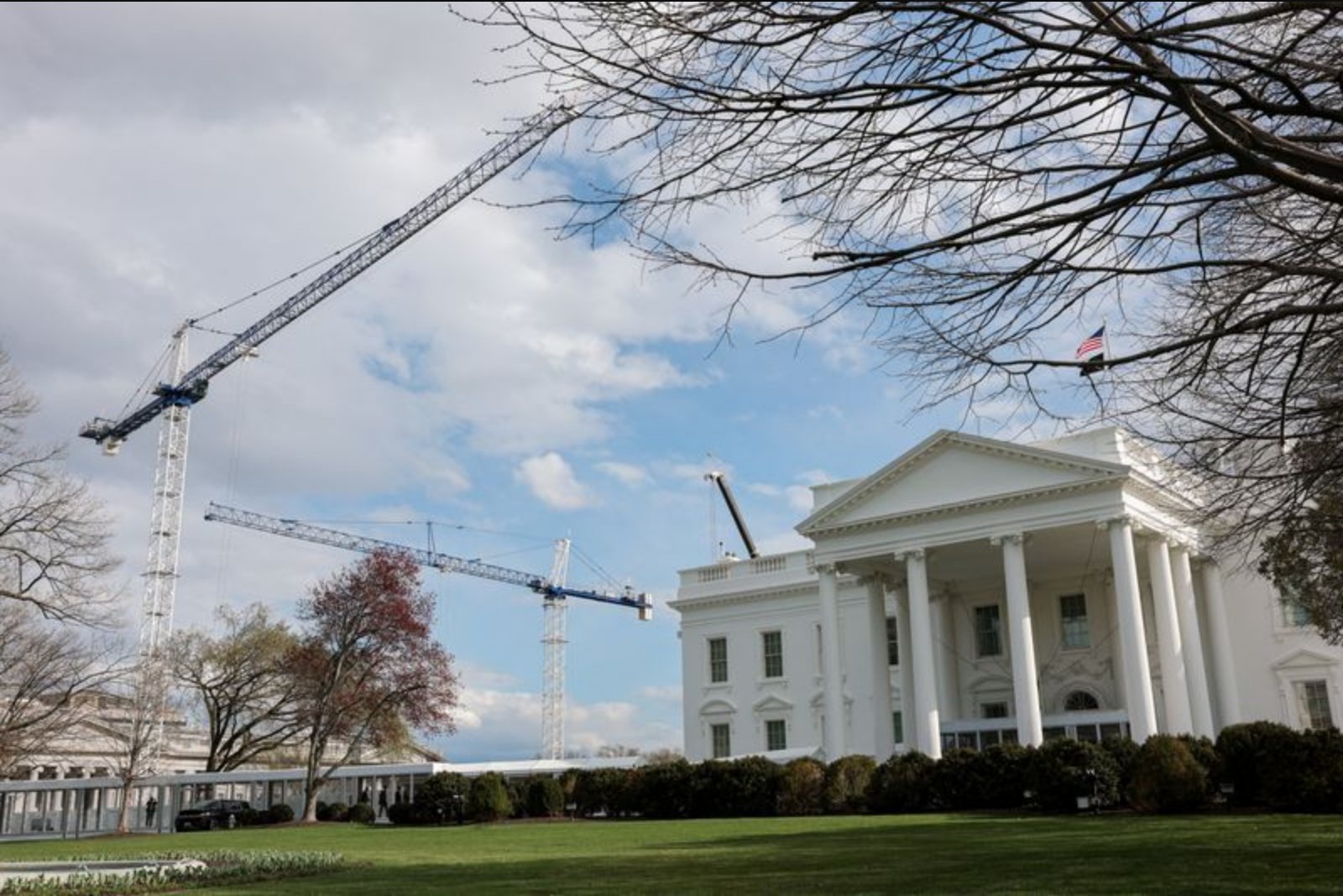
The White House confirmed on Monday that the U.S. military is carrying out upgrades to its facilities as part of the project to build a new East Wing ballroom, following public statements by President Donald Trump describing a fortified complex under the planned structure.
At a briefing, White House spokeswoman Karoline Leavitt said: "The military is making some upgrades to their facilities here at the White House, and I’m not privy to provide any more details on that."
The spokeswoman's remarks followed comments by the president about the wider renovation, which he has said will cost $400 million and will replace the East Wing that was demolished in October. On Sunday, while aboard Air Force One, Mr. Trump displayed a large rendering of the proposed building to reporters and emphasized a number of security attributes, including what he described as "bulletproof glass" and a "drone-proof roof."
Trump also described the substructure beneath the ballroom, saying:
"Now the military is building a big complex under the ballroom, which has come out recently because of a stupid lawsuit that was filed. But the military is building a massive complex under the ballroom, and that’s under construction."
He added:
"The ballroom essentially becomes a shed for what’s being built under ... including from drones and including from any other thing."
The planned ballroom is to be a 90,000-square-foot (8,360-square-meter) facility intended to replace the former East Wing. When complete, the space is expected to accommodate roughly 1,000 people, according to statements by the president that characterize the project as an upgrade from what he described as cramped and dated reception facilities at 1600 Pennsylvania Avenue Northwest.
Under the previous East Wing was the Presidential Emergency Operations Center, an emergency bunker for the president. The demolition of that wing and the decision to proceed with the new construction have prompted criticism and legal action. Lawmakers, historians and preservation advocates have voiced objections, and an ongoing lawsuit challenges aspects of the project.
Critics have faulted the decision to demolish the old structure without federal reviews or public comment, and have raised aesthetic and historical concerns about the scope of the new facility. The National Capital Planning Commission, one of two federal entities required to approve the project, has a vote on the proposed changes scheduled for Thursday.
Officials have not provided additional operational details about the military upgrades at the White House beyond the acknowledgments quoted above. The public record for the project currently reflects the cost estimate, the stated capacity and the schedule for federal review while legal and preservation challenges continue.